
#1.Classic Cast Iron Stove for Timeless Warmth
A cast iron wood-burning stove is one of the most dependable choices you can make. I have worked with homes where the same cast iron stove has been in use for over thirty years and still performs beautifully. These stoves retain heat long after the fire dies down, which means your room stays warm without constant feeding.
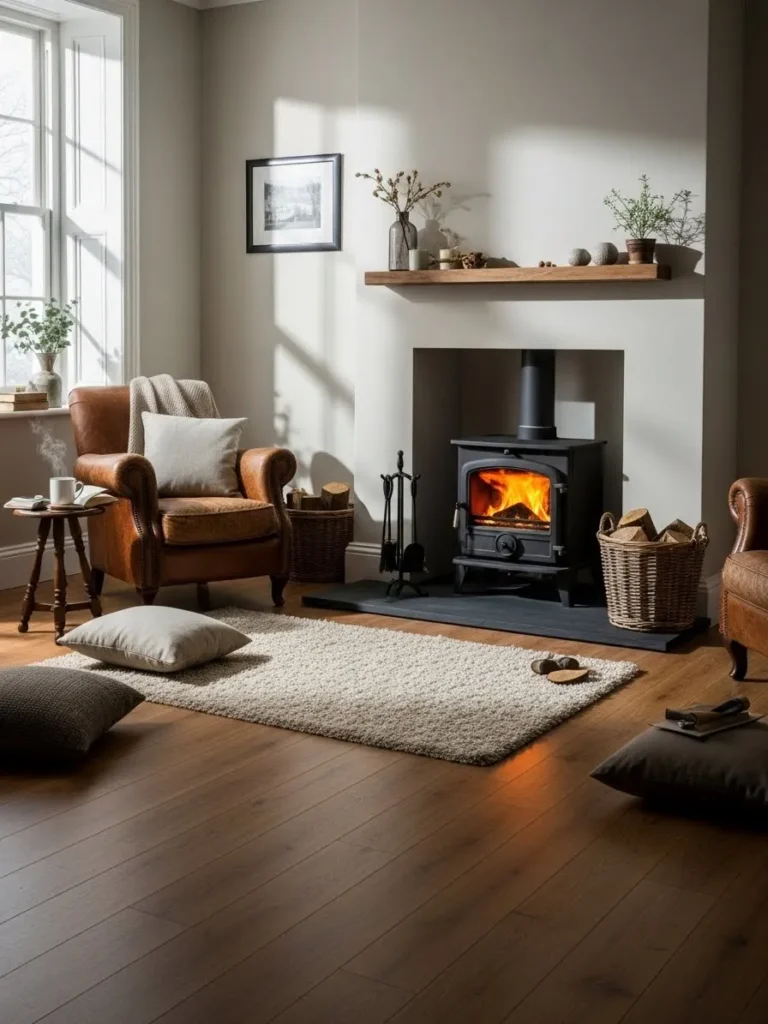
They work especially well in traditional homes, cottages, and older properties where the structure already supports slower, deeper heat. Visually, cast iron stoves feel grounded and solid. They make a room feel anchored. If you want a stove that never feels outdated, this is one of the safest long-term investments.
#2.Modern Minimalist Stove for Clean Interiors
In homes with clean lines and simple finishes, a modern wood-burning stove blends better than people expect. Slim steel designs with large glass fronts allow the fire itself to become the focal point without visual clutter. Over the years, I have installed these in many contemporary homes where owners initially worried a stove would feel out of place.
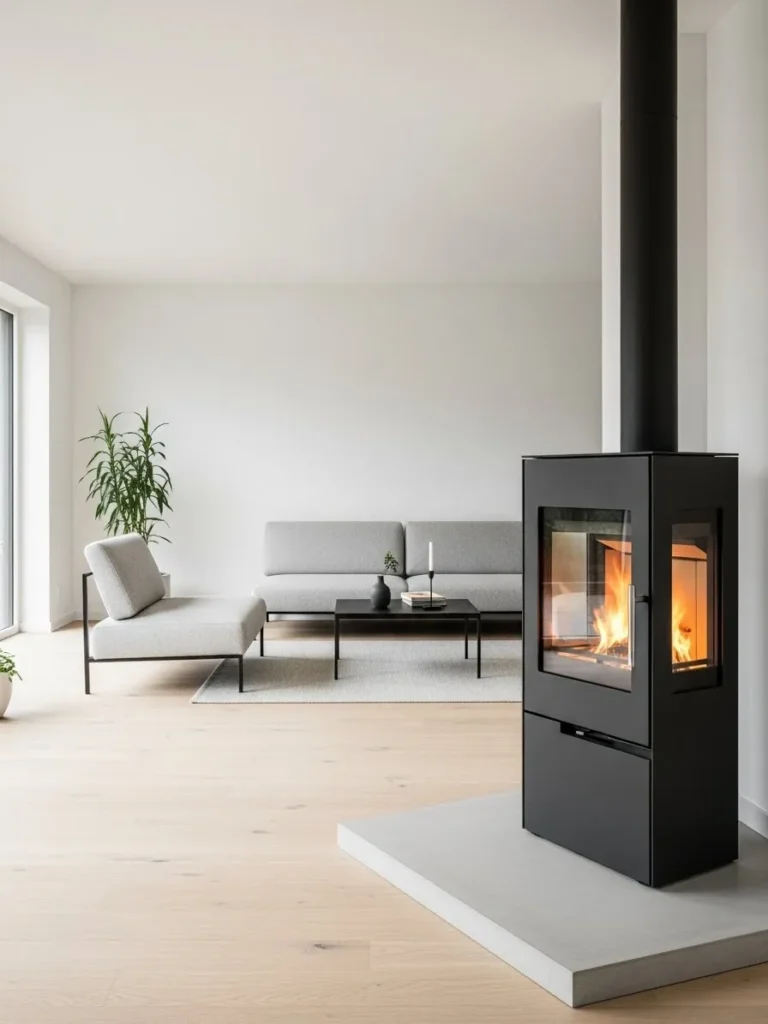
The key is choosing a design with smooth surfaces and a neutral finish. These stoves pair beautifully with concrete floors, light wood, and open layouts. They offer the warmth and comfort of a fire while keeping the overall space calm and uncluttered.
#3.Wood-Burning Stove Built Into Natural Stone
Nothing pairs with fire like stone. A stove set into a natural stone surround feels permanent, safe, and deeply cozy. I have seen this approach transform ordinary living rooms into spaces people naturally gather in.
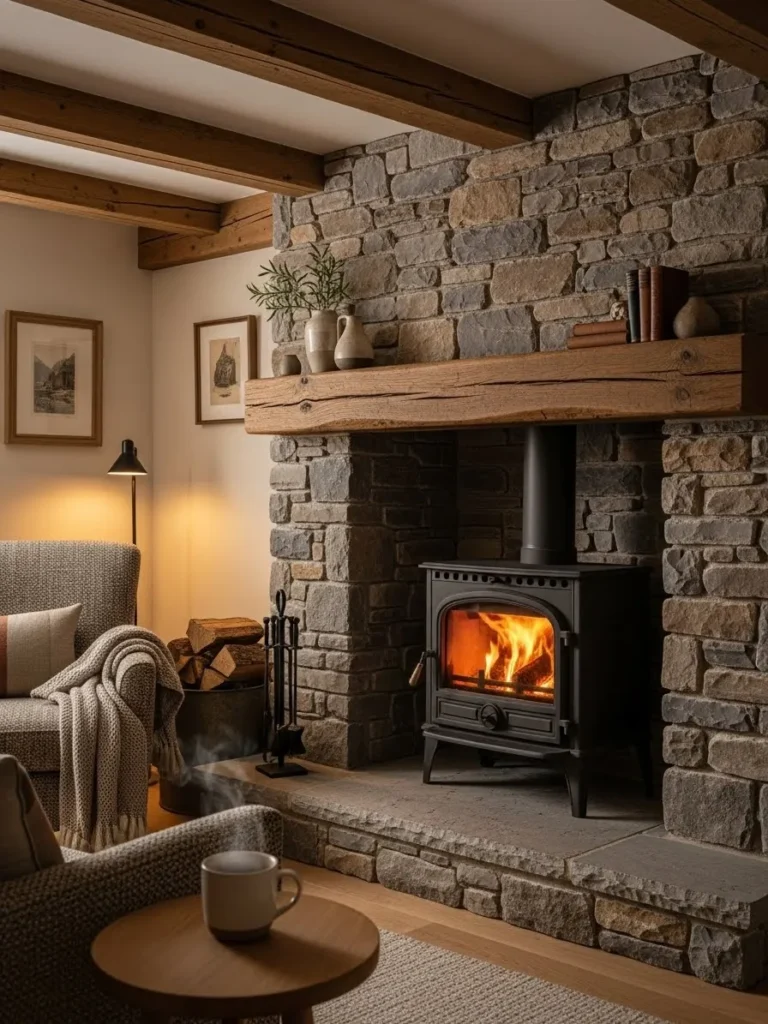
Stone holds heat and releases it slowly, adding efficiency alongside beauty. Whether you choose slate, limestone, or river rock, the result is a grounded, earthy look that works especially well in mountain homes or country settings. This idea stands the test of time and adds real value to a property.
#4.Corner Wood-Burning Stove for Small Rooms
Many homeowners think they do not have space for a wood-burning stove. In reality, corner installations solve that problem beautifully. I have recommended corner stoves for decades, especially in smaller living rooms and cabins.
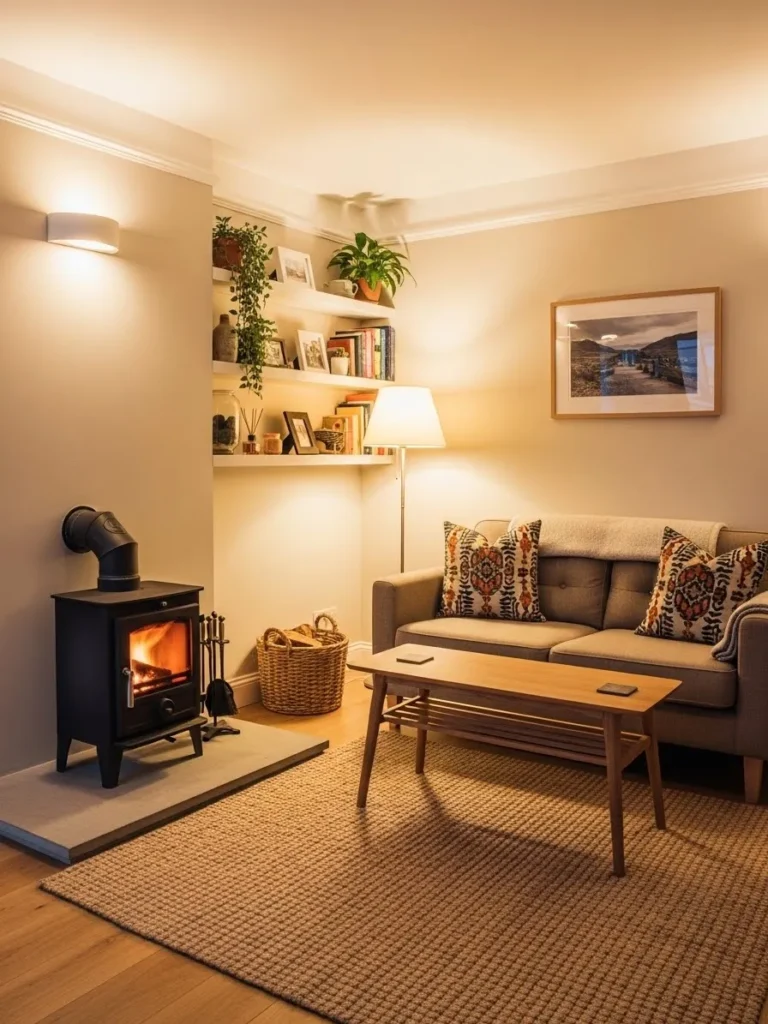
By using a corner, you free up wall space and improve heat circulation. The stove becomes visible from multiple angles without overwhelming the room. With the right hearth design, a corner stove can feel intentional rather than squeezed in.
#5.Freestanding Stove as a Central Feature
A freestanding wood-burning stove placed centrally in a room creates heat that spreads evenly and naturally. I have seen this setup work extremely well in open-plan homes and converted barns.

When installed correctly, a central stove becomes a gathering point. People instinctively arrange seating around it. The fire is visible from every direction, and the warmth feels more balanced. This idea requires thoughtful planning and professional installation, but the result is unmatched comfort.
#6.Wood-Burning Stove with Built-In Wood Storage
Practical details often define how much people enjoy their stove. Built-in wood storage beneath or beside the stove keeps fuel within reach and adds to the overall look. Over the years, I have seen homeowners appreciate this feature more than any decorative addition.
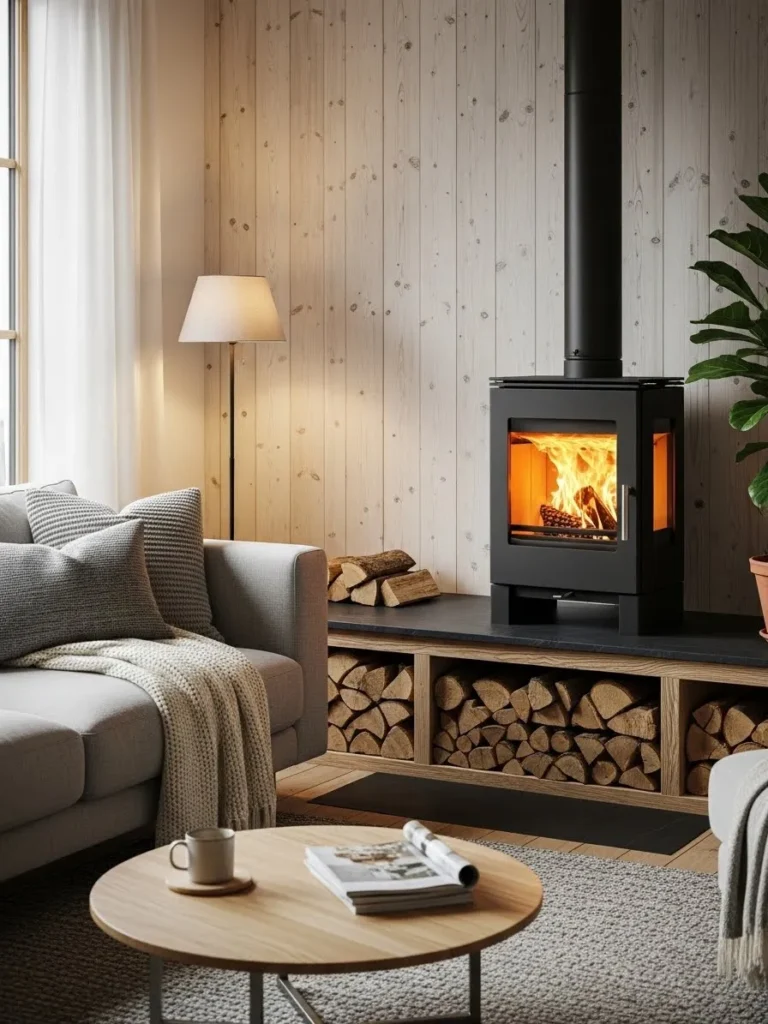
Stacked firewood adds texture and warmth to a room. It also keeps logs dry and organized. When storage is part of the design, the stove feels complete rather than like a separate object placed into the room.
#7.Stove with Large Glass Door for Fire Viewing
One of the most common reasons people love wood-burning stoves is watching the fire. Models with larger glass doors make the flame display a central part of the experience. In my experience, this feature alone increases how often people use their stove.

A well-designed glass front lets you enjoy the fire while maintaining safety and efficiency. This idea works well in living rooms, dining areas, and even larger kitchens where visual warmth matters as much as physical heat.
#8.Wood-Burning Stove in an Open-Plan Layout
Open-plan homes benefit greatly from a single, strong heat source. I have worked on many open layouts where a wood-burning stove replaced or supported traditional systems with impressive results.
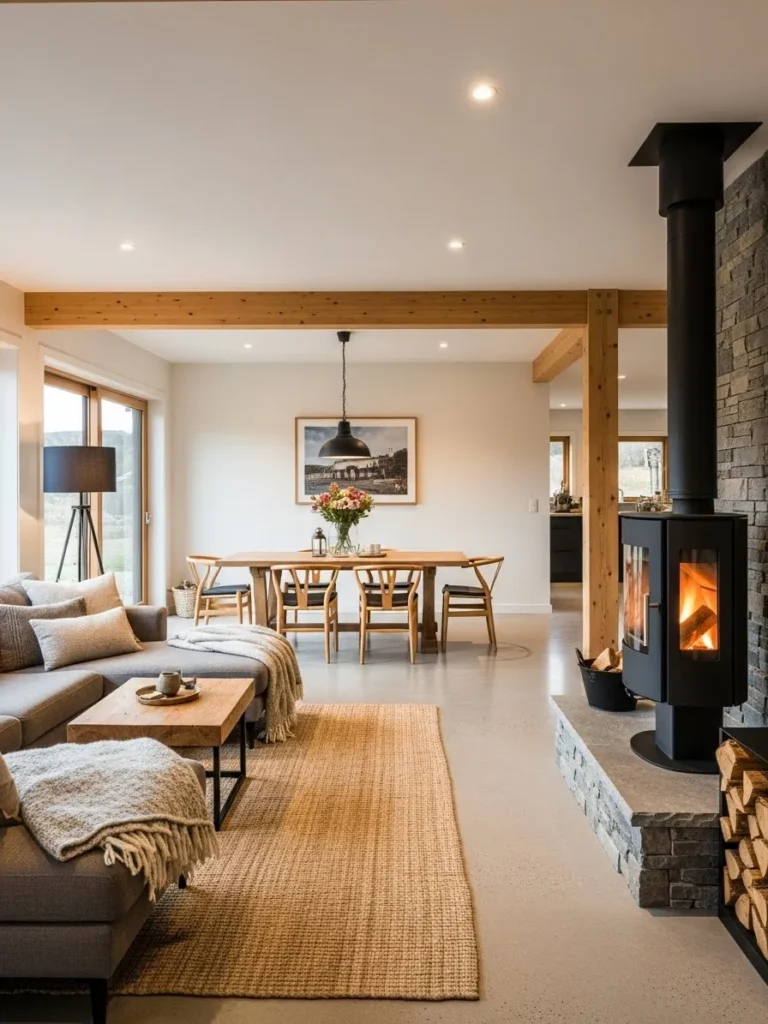
The stove naturally creates zones without walls. The warmth draws people together while still spreading through the space. Choosing the right size and output is critical here, but when done properly, the result is efficient heating and genuine comfort.
#9.Rustic Stove in a Farmhouse Setting
Farmhouse interiors and wood-burning stoves are natural partners. I have helped modernize many farmhouse homes while keeping the stove as the heart of the space. Simple finishes, visible textures, and solid materials all support this pairing.
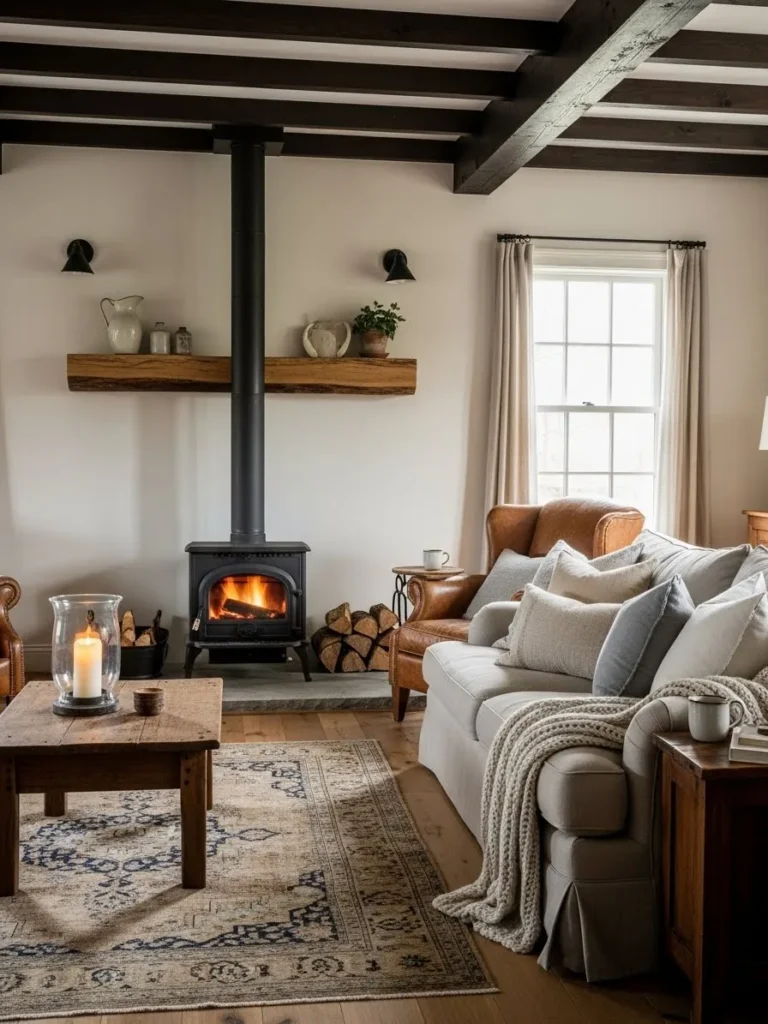
A rustic stove does not need to look old or worn. Clean lines with traditional forms often work best. The goal is warmth, simplicity, and reliability, not decoration for its own sake.
#10.Scandinavian-Inspired Stove Design
Scandinavian stove designs focus on efficiency, balance, and light. I have long admired how these stoves provide strong heat without dominating a room. They often feature tall, narrow shapes and clean surfaces.
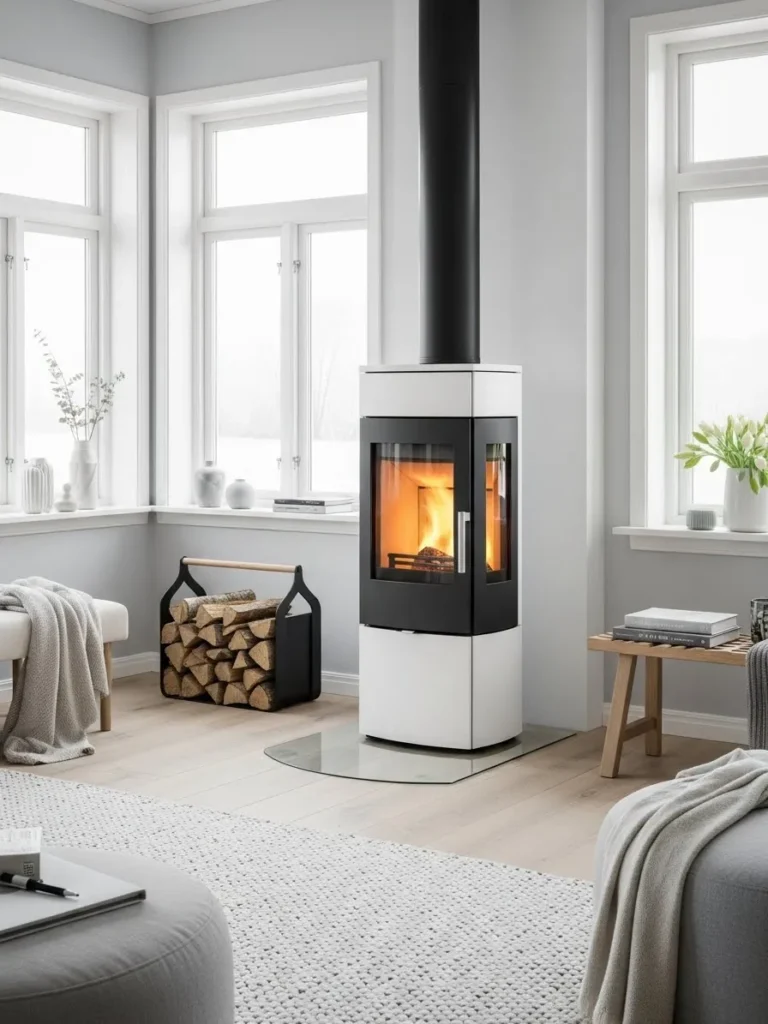
These designs work especially well in smaller homes or minimalist interiors. They provide high performance without visual heaviness. In cold climates, this approach has been refined over generations, and it shows in daily use.
#11.Wood-Burning Stove with Heat Circulation Features
Some modern wood-burning stoves include systems that push warm air further into the home. After years of troubleshooting uneven heating, I can say this feature makes a real difference.
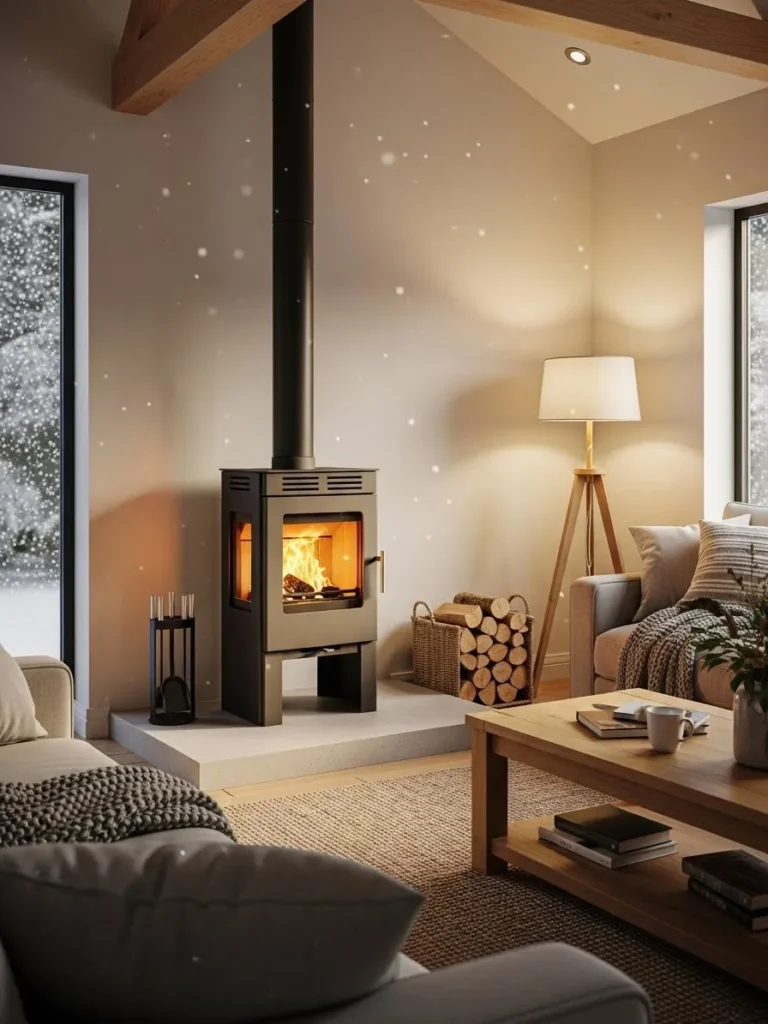
By helping heat move beyond one room, these stoves increase efficiency and comfort. This idea is especially helpful in multi-room layouts where a single stove supports the entire home.
#12.Stove Installed in a Traditional Fireplace Opening
Many older homes have fireplaces that no longer function efficiently. Installing a wood-burning stove inside the existing opening is one of the smartest upgrades available. I have overseen countless conversions like this.

The stove improves efficiency dramatically while preserving the original character of the fireplace. Heat loss is reduced, control is improved, and the home benefits from modern performance with classic charm.
#13.Compact Stove for Cabins and Tiny Homes
Small spaces demand smart solutions. Compact wood-burning stoves are designed specifically for cabins, tiny homes, and small retreats. I have spent time in many of these spaces, and the difference a well-placed stove makes is enormous.

These models provide strong heat without overwhelming the room. With careful placement and ventilation, they create powerful comfort in surprisingly small footprints.
#14.Wood-Burning Stove with Cooktop Surface
Some stoves include flat tops designed for cooking or warming food. Over the years, I have seen this feature prove invaluable during power outages and winter storms.
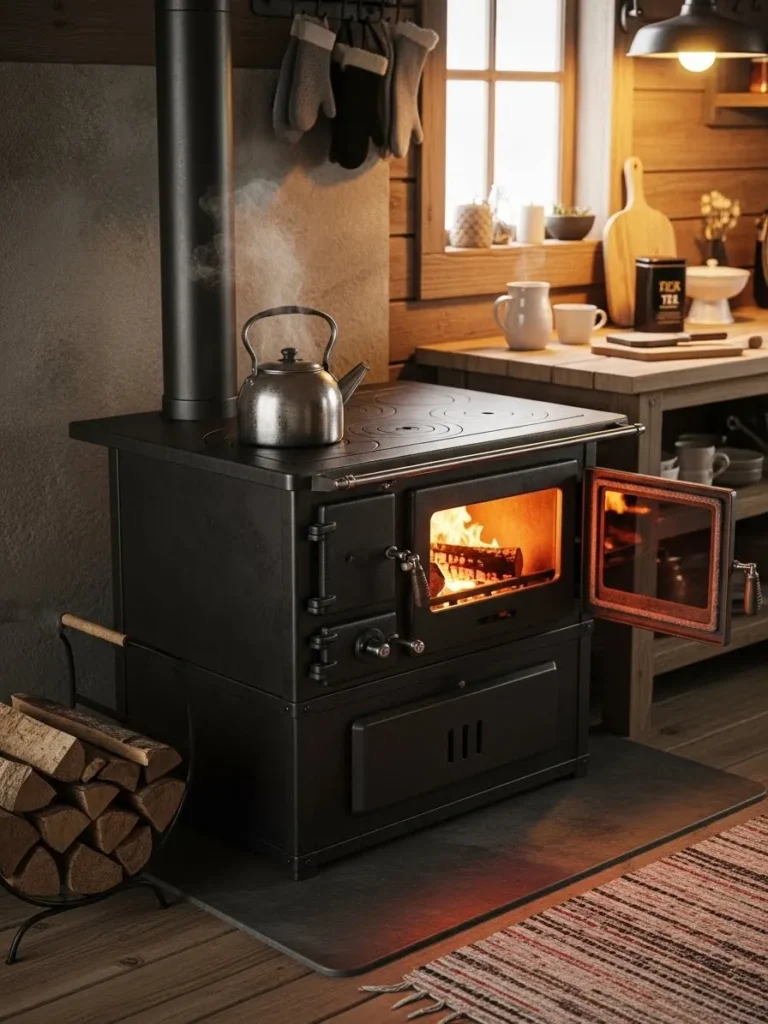
Even outside emergencies, cooking on a stove adds usefulness to your home. It allows you to heat water, simmer soups, or keep meals warm while enjoying the fire. This idea blends necessity with everyday comfort.
#15.High-Efficiency EPA-Certified Stove
Efficiency matters more today than ever. Modern EPA-certified wood-burning stoves burn cleaner, use less wood, and produce more usable heat. I strongly recommend these to homeowners looking for long-term savings and environmental responsibility.

These stoves are not just about regulations. They genuinely perform better and are easier to live with daily. Choosing one is both practical and forward-thinking.
#16.Wood-Burning Stove in a Bedroom Setting
While not suitable for every home, bedroom wood-burning stoves can create unmatched comfort when installed correctly. I have seen this work beautifully in older homes and cabins where safety and ventilation were carefully planned.

The warmth is gentle and steady, creating a restful environment. This idea requires professional input, but for the right space, it can be transformative.
#17.Stove Surrounded by Built-In Seating
Fire naturally draws people in. Surrounding a stove with built-in seating enhances that effect. Over time, I have seen families use these spaces more than any other part of the home during winter.
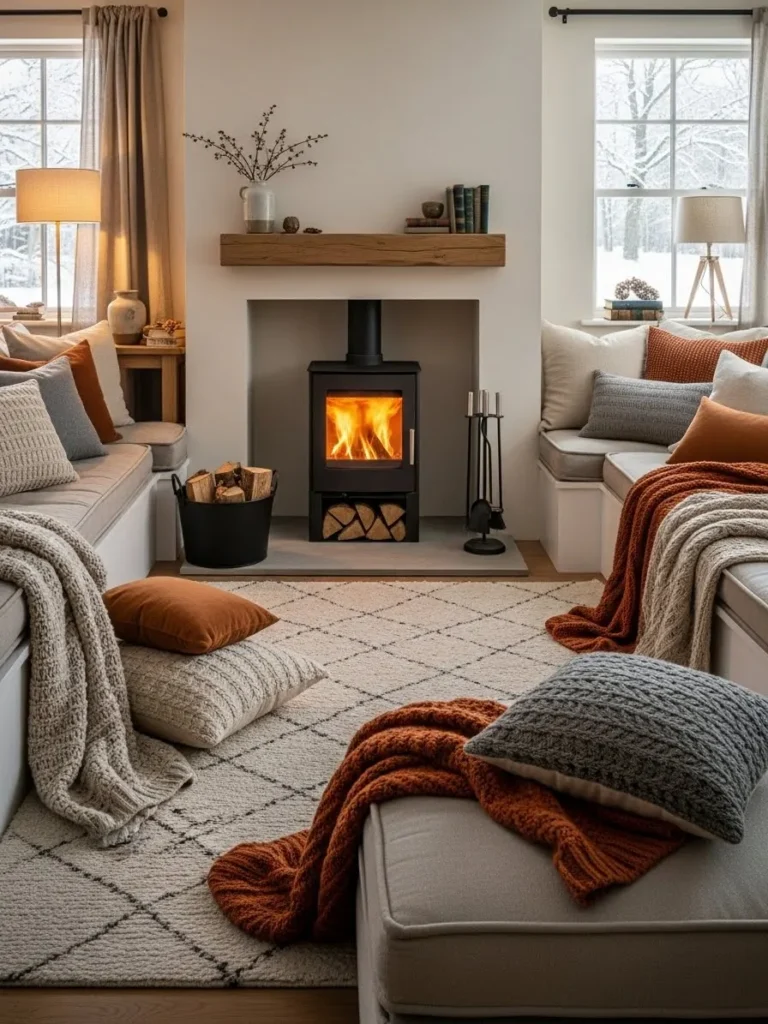
The seating does not need to be elaborate. Simple benches or low seating areas work well and help retain warmth. This approach creates a natural gathering area without forcing furniture choices.
#18.Wood-Burning Stove as the Home’s Primary Heat Source
In many rural and semi-rural homes, the wood-burning stove is not supplemental. It is the main heating system. I have designed and supported homes where this setup worked reliably for decades.

The key is selecting the right size, maintaining the system, and understanding airflow. When done properly, this idea offers independence, predictable costs, and consistent comfort.
#19.Integrating the Stove with Natural Wood Interiors
Wood interiors and wood heat belong together. I have seen countless homes where the stove enhances exposed beams, wooden ceilings, or timber walls. The materials support one another visually and functionally.
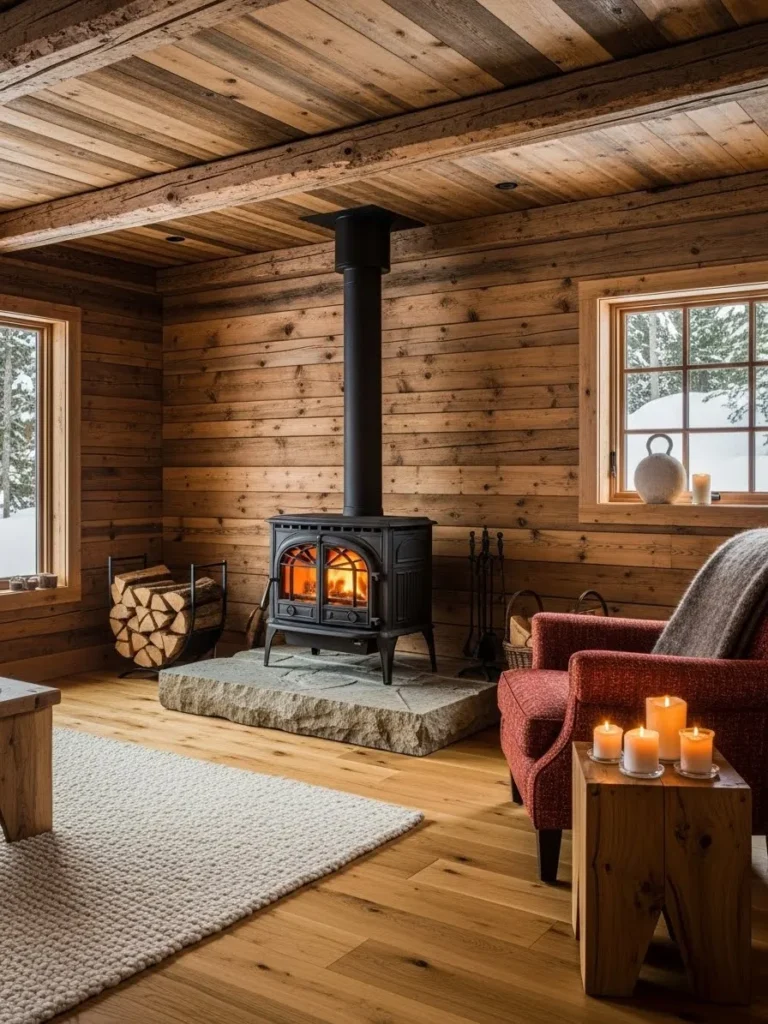
This pairing creates warmth that feels natural, not forced. The stove becomes part of the home’s structure rather than an added feature.
#20.Simple Black Stove for Easy Styling
A simple black wood-burning stove is one of the most flexible design choices available. I recommend this option often because it adapts easily as tastes change.
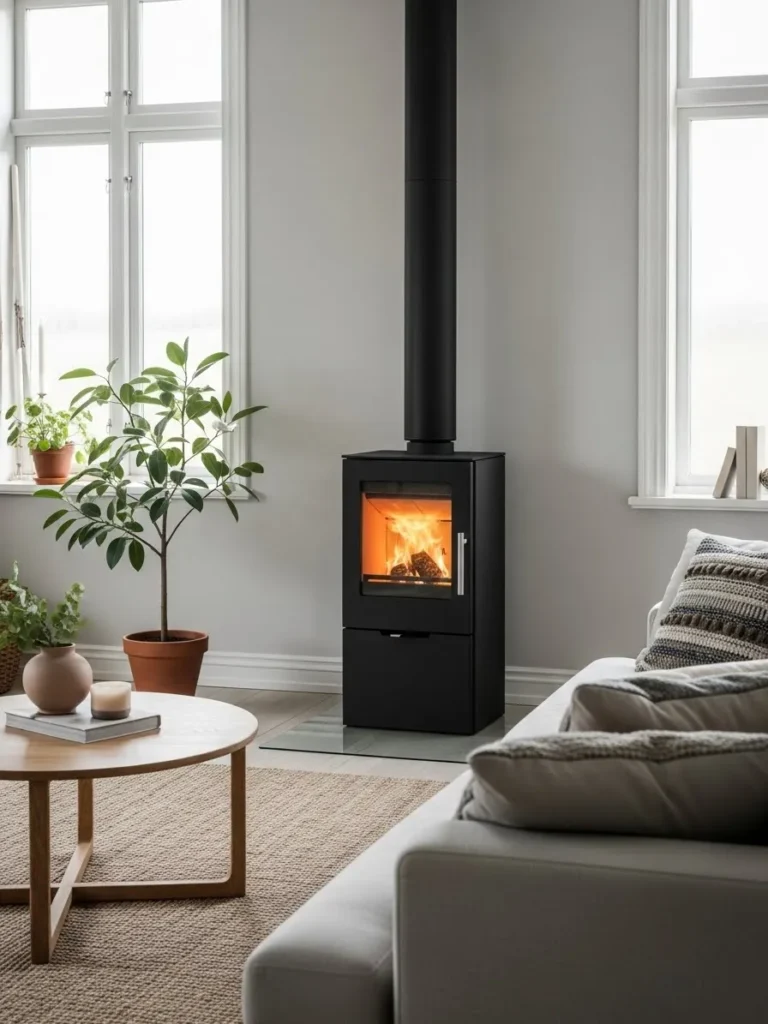
Black works in modern, rustic, traditional, and eclectic homes alike. It does not compete with décor and allows the fire itself to take center stage.
#21.Wood-Burning Stove in a Kitchen Space
Kitchens are natural gathering places, which makes them ideal for wood heat. I have worked on many homes where the stove quietly improved both comfort and usability in winter.

The warmth supports long cooking sessions, family meals, and everyday activity. With proper layout, a kitchen stove becomes one of the most valued features in the home.