
1. Choose Warm White Bulbs
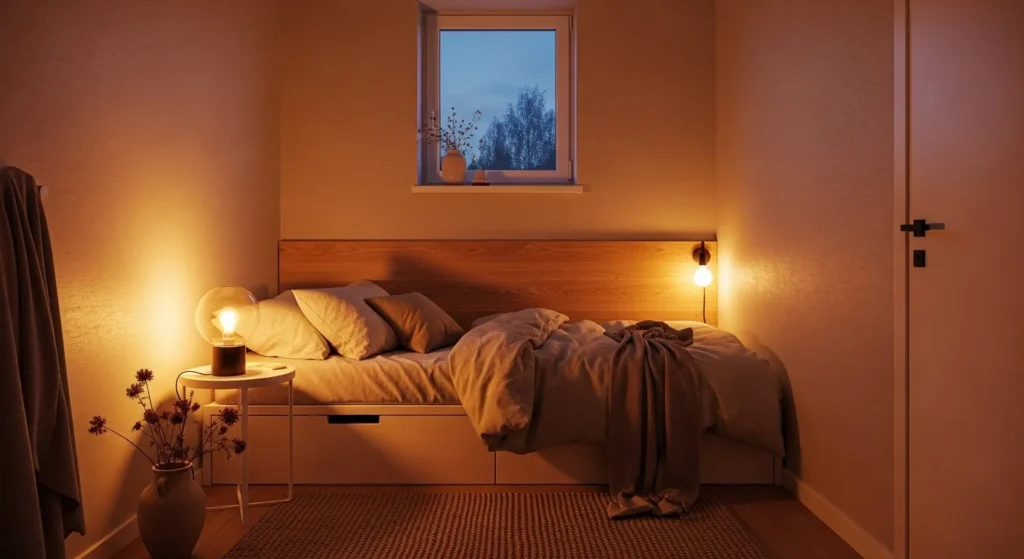
Cool white lighting often feels harsh and clinical. In a small bedroom, that kind of light makes walls feel closer and the space feel tight. Warm white bulbs, usually around 2700K to 3000K, create a soft glow that feels natural and relaxing. This warmth instantly improves the atmosphere and supports better sleep.
2. Install Dimmers on Every Main Light
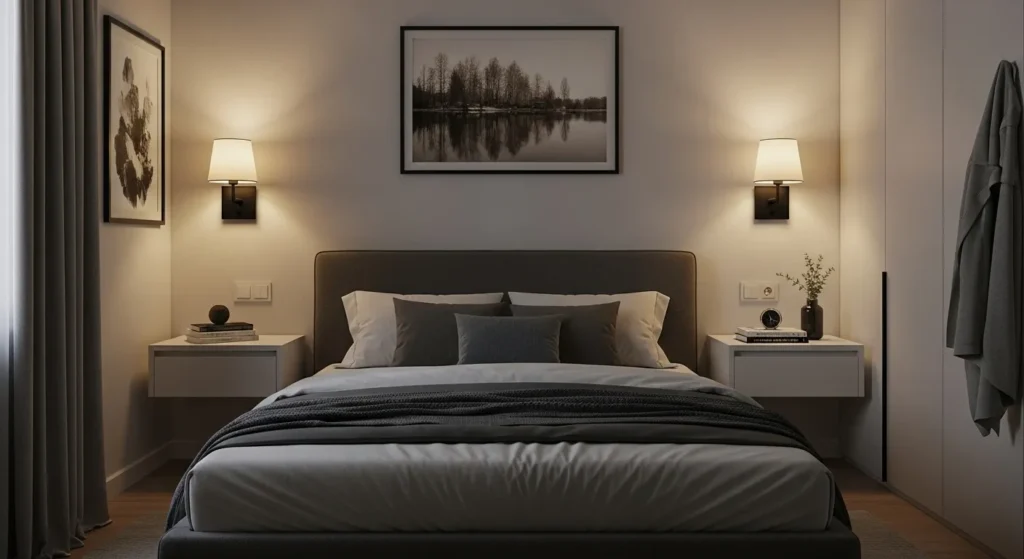
A dimmer switch is one of the most powerful tools in a small bedroom. During the day, you may need brighter light for cleaning or organizing. At night, a lower setting creates a calm and restful mood. The ability to control intensity gives flexibility without adding more fixtures.
3. Replace Table Lamps with Wall Sconces
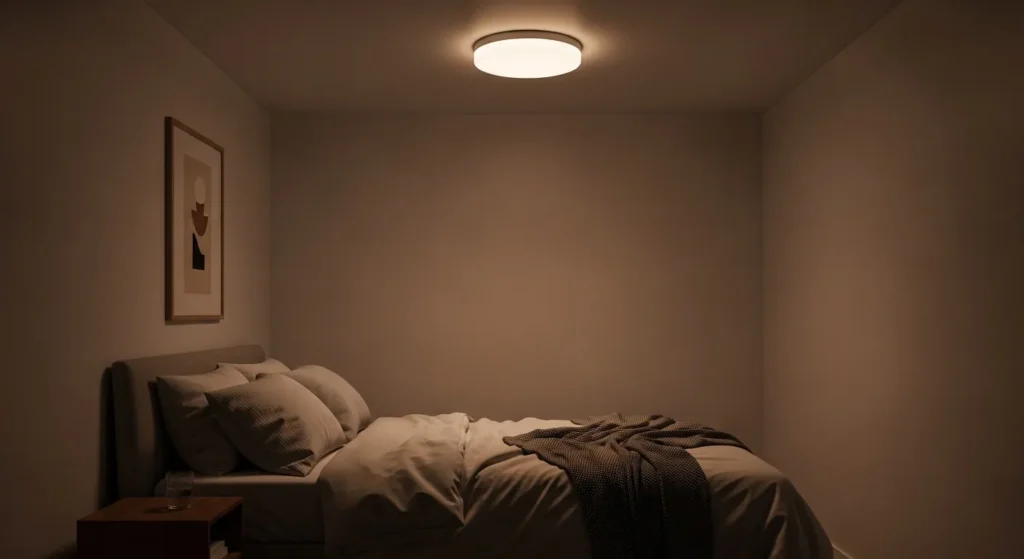
In small bedrooms, surface space is limited. Wall-mounted sconces free up nightstand space while still providing excellent reading light. They also create a cleaner, less cluttered look. Adjustable sconces are especially useful because they direct light exactly where you need it.
4. Use Flush or Semi-Flush Ceiling Fixtures
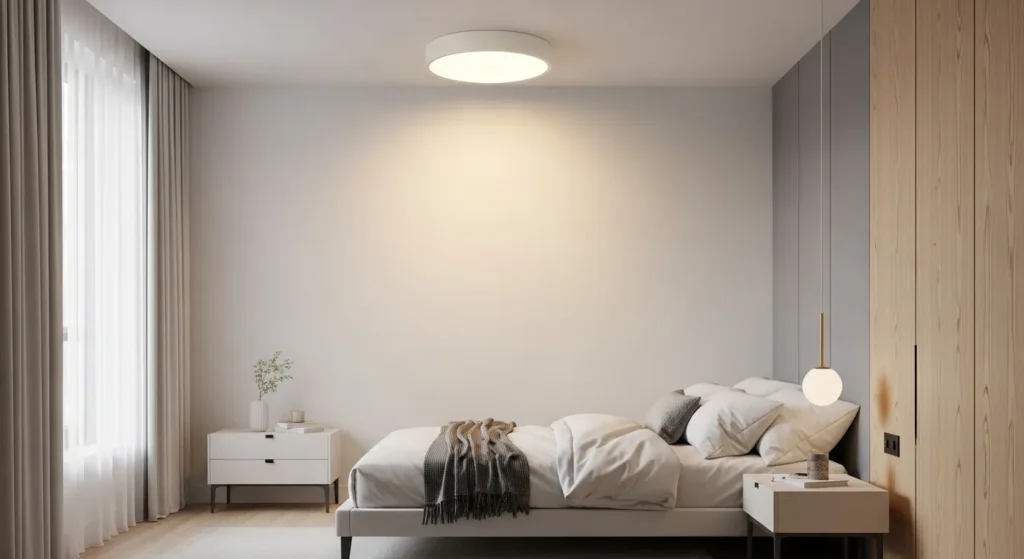
Large hanging chandeliers can overwhelm a small room, especially if the ceiling is low. Flush or semi-flush fixtures keep the ceiling line clean and open. This makes the room feel taller and less crowded.
5. Layer Your Lighting
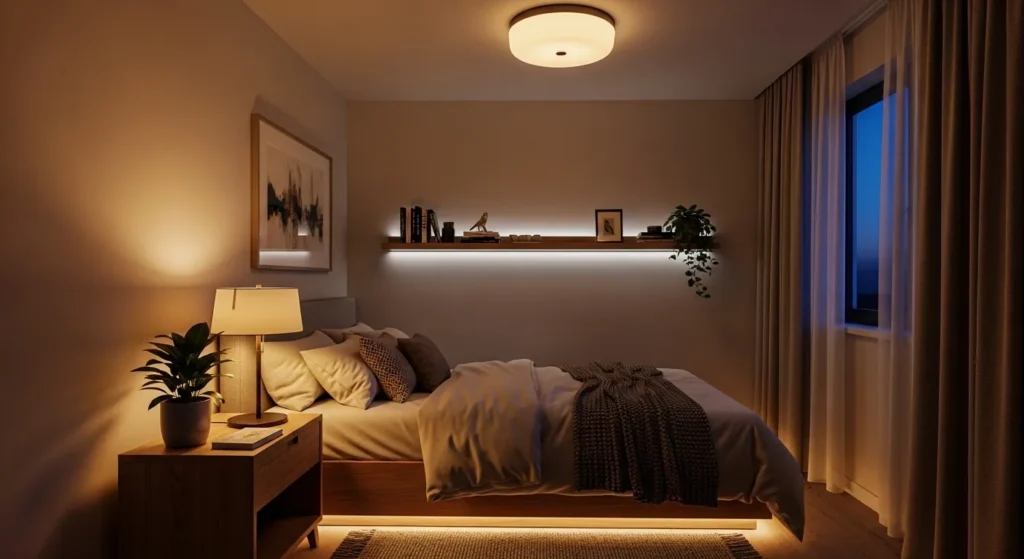
One central ceiling light is not enough. A well-designed small bedroom uses layers. Ambient lighting fills the room. Task lighting supports reading or dressing. Accent lighting adds softness. When these layers work together, the room feels balanced and complete instead of flat.
6. Add Hidden LED Lighting Behind the Headboard

Soft backlighting behind the bed creates depth. Because the light reflects off the wall, it spreads gently across the room without glare. This makes the space feel larger and more relaxing, especially in the evening.
7. Hang Pendant Lights Beside the Bed
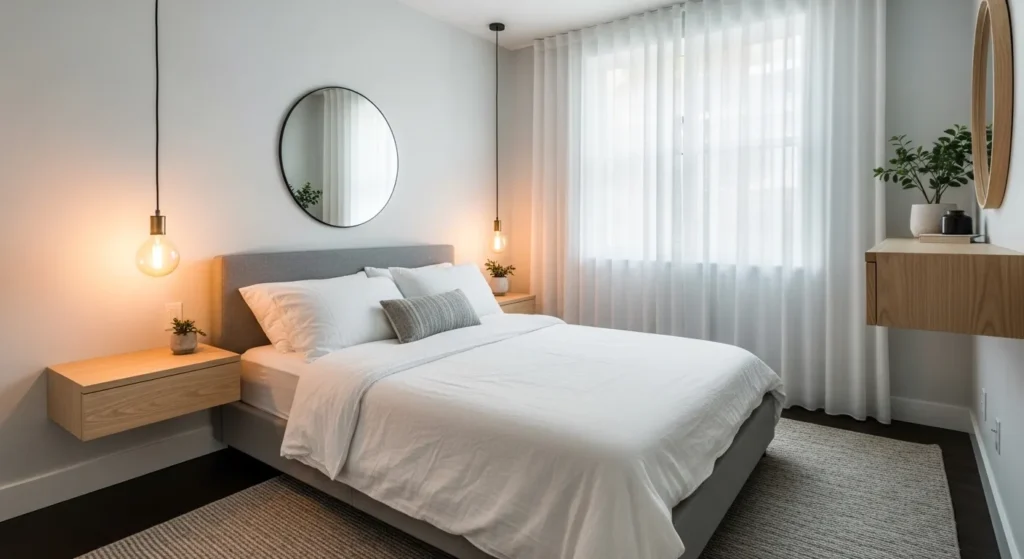
If space is very tight, pendant lights can replace bedside lamps completely. Hanging lights draw the eye upward and free up furniture space. The key is choosing compact pendants with simple shapes to avoid visual heaviness.
8. Use Mirrors to Reflect Light
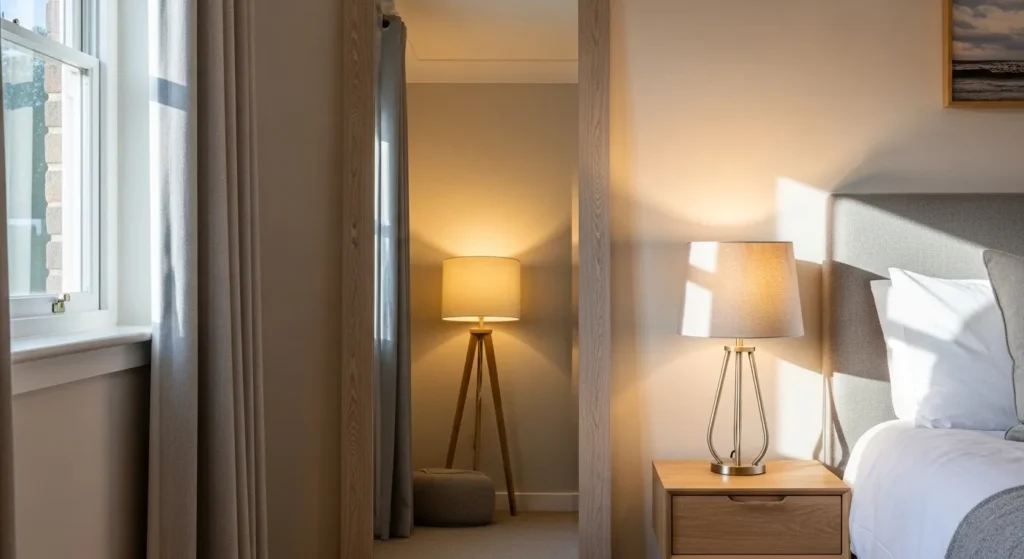
Mirrors are powerful in small rooms. When placed opposite a window or near a lamp, they bounce light around the space. This reduces shadows and visually expands the room without adding more electrical fixtures.
9. Install Recessed Lights Carefully
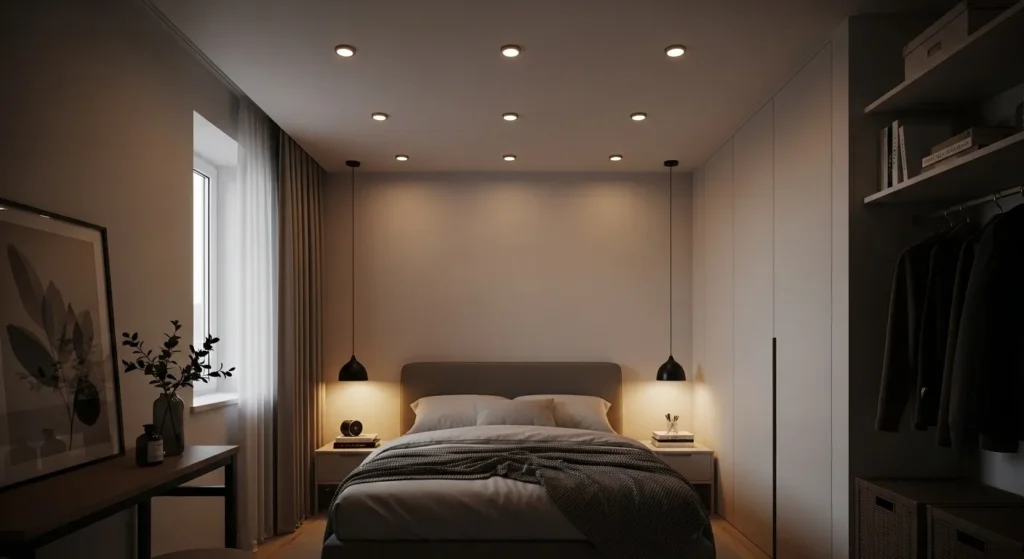
Recessed lighting can work in small bedrooms, but only when used with restraint. Too many recessed lights create a harsh, over-lit ceiling. A few well-placed fixtures with dimmers can provide even illumination without overwhelming the space.
10. Brighten Dark Corners with a Slim Floor Lamp
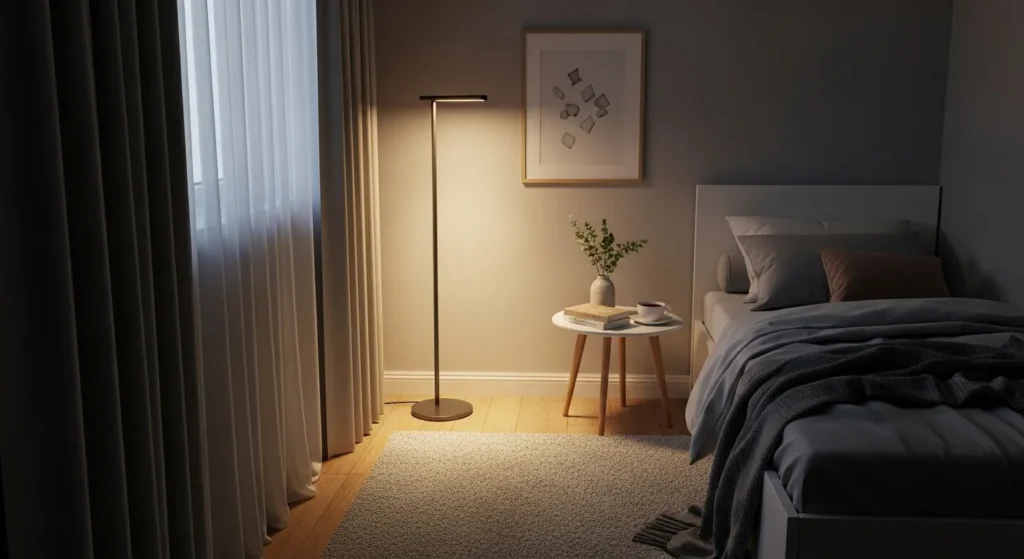
Even in small bedrooms, corners often feel dull. A slim floor lamp placed in one corner adds height and balance. Choose a narrow design that doesn’t block movement. The vertical line helps the ceiling feel taller.
11. Use Smart Bulbs for Flexibility

Smart bulbs allow you to adjust brightness and warmth easily. In a small bedroom, flexibility is important. You can shift from bright light while getting dressed to a soft, warm glow before bed without changing fixtures.
12. Highlight Artwork with Soft Accent Lighting
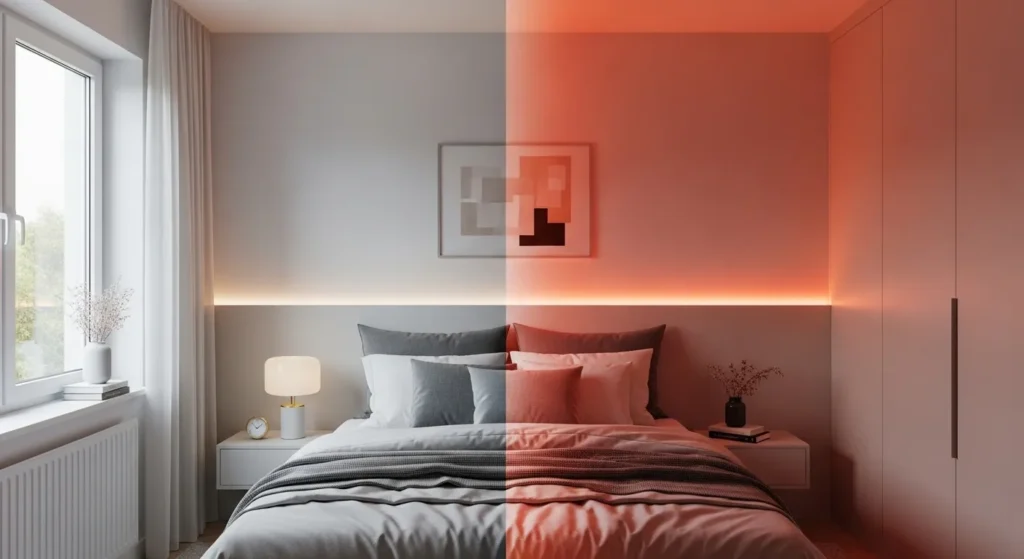
If you have artwork or a framed photo above your bed, adding a small picture light can elevate the room. It creates visual interest at eye level and adds a refined touch without taking up space.
13. Choose Open and Airy Light Fixtures
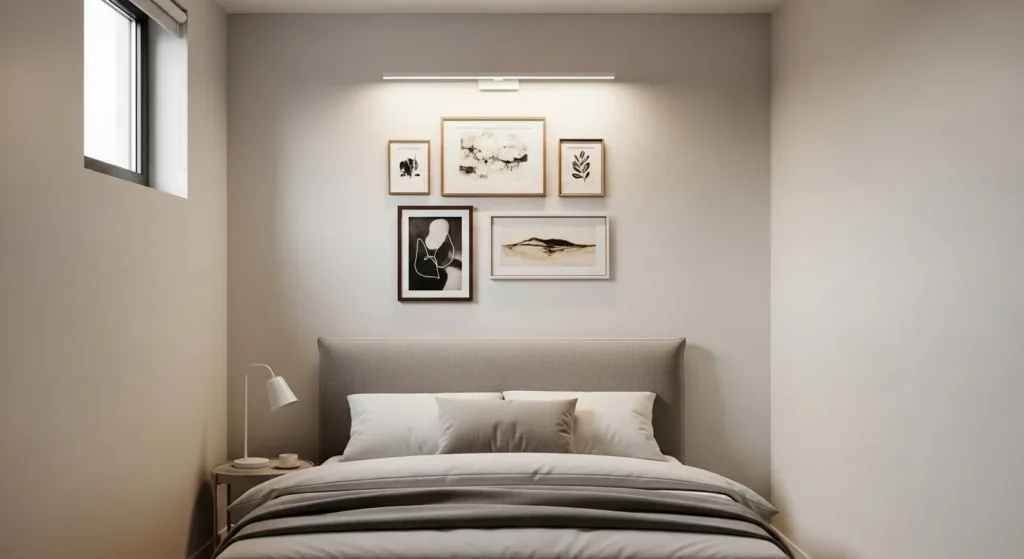
Heavy, solid light fixtures can make a small room feel crowded. Fixtures with open frames or minimal designs allow light to pass through freely. This keeps the space visually lighter and more breathable.
14. Install Under-Bed Lighting

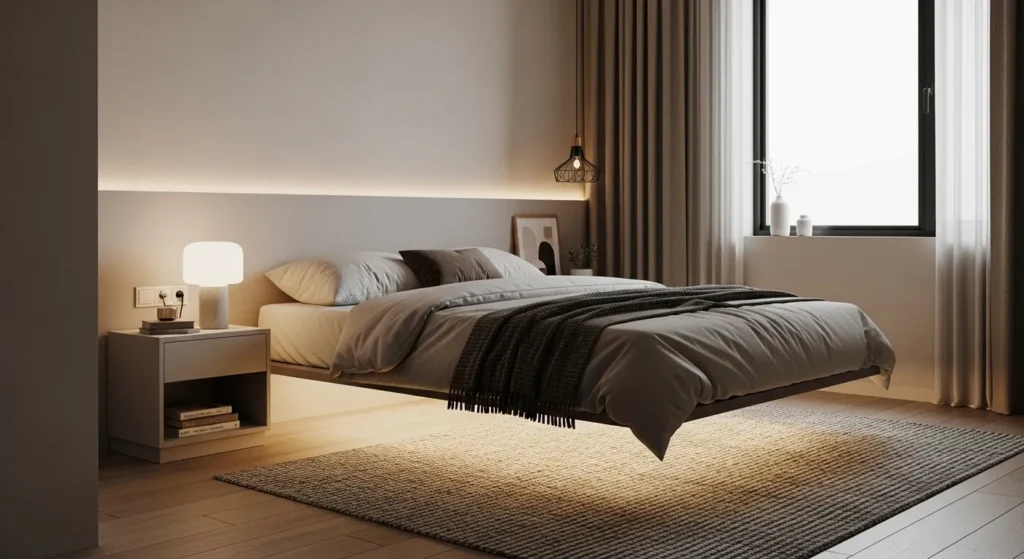
Low-level lighting under the bed creates a floating effect. It adds subtle drama while also providing practical nighttime visibility. Because it sits low to the floor, it does not overwhelm the room.
15. Maximize Natural Light
Natural light is the most valuable light source in any small bedroom. Use light-filtering curtains instead of thick, dark fabrics whenever possible. Keeping window areas open and uncluttered helps the room feel brighter and larger.
16. Position Bedside Lights at the Right Height

Lighting placed too high or too low creates glare or uneven shadows. Ideally, bedside lighting should sit around shoulder level when you are sitting in bed. Proper height ensures comfort and balance.
17. Consider Soft Ceiling Glow Lighting

Indirect ceiling lighting, such as cove lighting, adds a gentle wash of light near the ceiling line. This softens shadows and makes the ceiling appear higher. It is subtle but highly effective in compact rooms.
18. Keep Lampshades Simple

Busy patterns on lampshades create visual noise. In small bedrooms, simplicity works best. Neutral shades allow light to spread evenly and keep the room feeling calm.
19. Add a Small Lamp for Mood

Even if you have overhead lighting and sconces, a small table lamp can change the mood completely. Soft light at night creates intimacy and comfort that ceiling lights cannot provide.
20. Install Motion Sensor Night Lights

Motion sensor lights provide safety without disturbing sleep. A gentle glow near the floor guides nighttime movement without requiring bright overhead lights.
21. Use Lighting to Define Small Zones
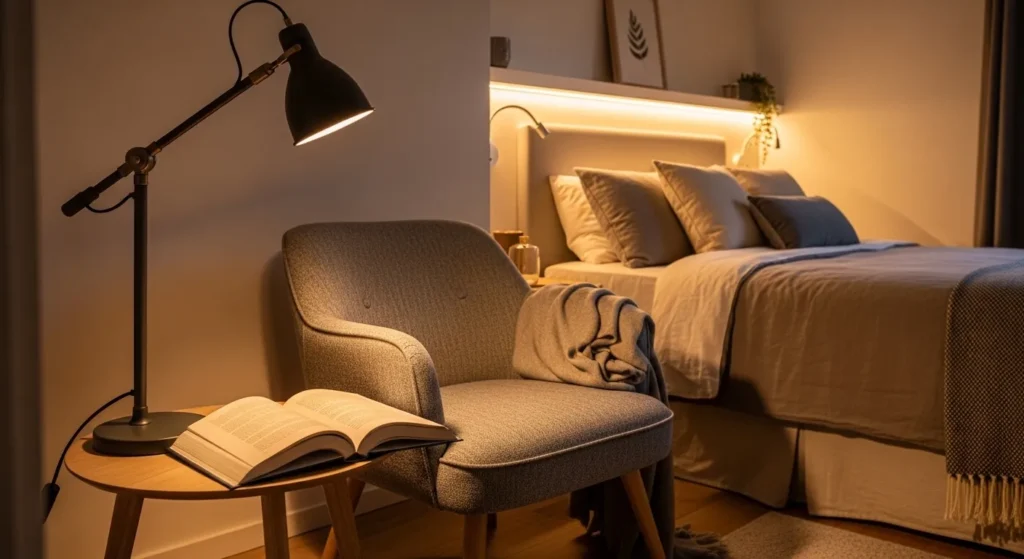
If your bedroom includes a desk or reading chair, add focused lighting to that area. This allows you to keep the rest of the room softly lit while still having enough brightness for tasks.
22. Keep the Design Balanced
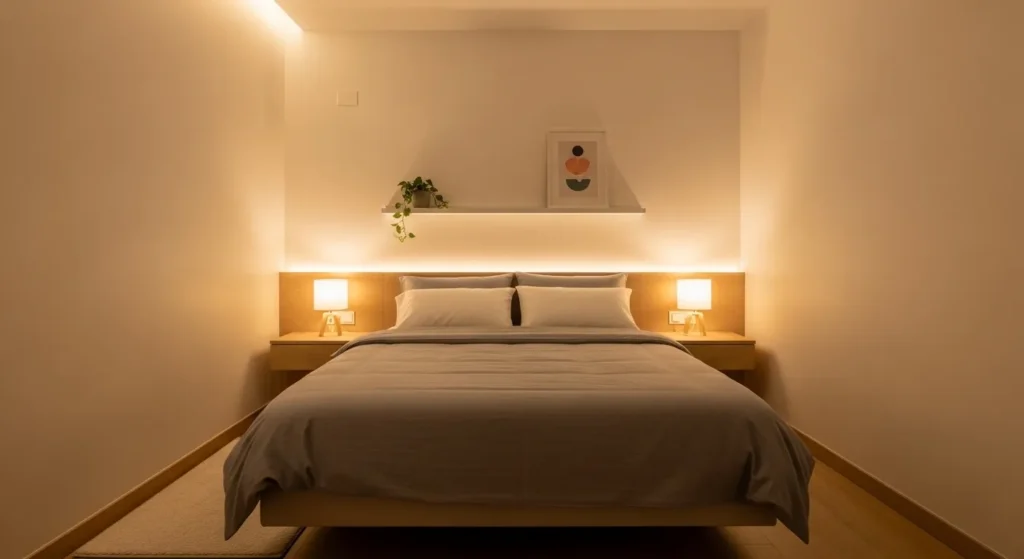
The final and most important idea is balance. Do not overload a small bedroom with too many light sources. Choose a few that work well together. Keep bulb temperatures consistent. Make sure everything is dimmable when possible.
When lighting is thoughtful and intentional, even the smallest bedroom feels welcoming.