
1. A Classic Cast-Iron Stove for True Traditional Warmth
For homeowners who want authenticity, cast iron remains one of the most reliable choices. The material is heavy, slow to heat, and slow to cool, which gives off a steady warmth long after the fire drops. Cast-iron stoves bring a timeless look that suits cabins, farmhouses, and older homes with natural wood trim. Over the years I have seen many families choose this type simply because it reminds them of their childhood or of a relative’s home. That emotional connection matters.
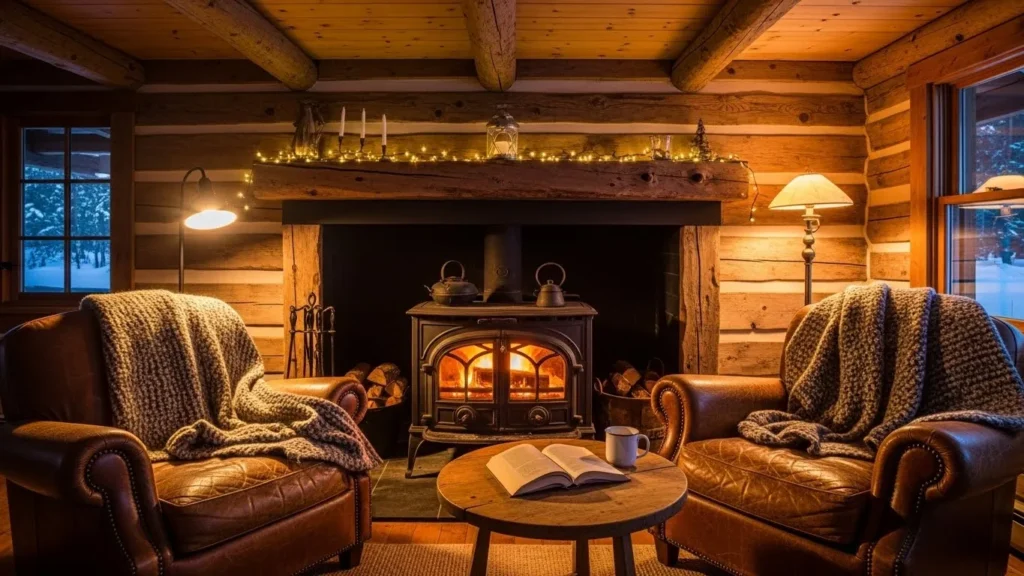
A cast-iron stove performs well in medium-sized living rooms and does not demand much visual flare. The stove itself becomes the feature. The steady heating profile means the space warms in a predictable way, which is ideal for people who want to maintain comfort without constant feeding of the fire. For long winter nights, the reliability makes a noticeable difference.
2. A Modern Steel Stove for Fast Heat and Cleaner Lines
Some homeowners want performance without rustic nostalgia. A steel-framed wood-burning stove offers a lighter weight, faster heating, and a modern look that blends well with minimal interiors. Over the years, newer builds have leaned toward contemporary styles because steel allows tighter angles and larger glass windows. This gives a more open flame view and a more polished feel.

Steel stoves also recover temperature quickly after a fresh log is added. For families who come and go, or who want heat on demand rather than hours later, this responsiveness feels more practical. When paired with neutral walls, large windows, and simple furniture, the steel stove becomes part of a clean, updated design rather than a nostalgic feature.
3. A Corner-Placed Stove to Free Up Floor Space
Corners often go underused, especially in living rooms where wall space is needed for furniture or artwork. Placing a wood stove into a corner solves that problem. It provides a concentrated point of warmth without interrupting flow, and it leaves the main walls free. This is a layout technique I have recommended for years because it satisfies safety clearances while improving room flexibility.
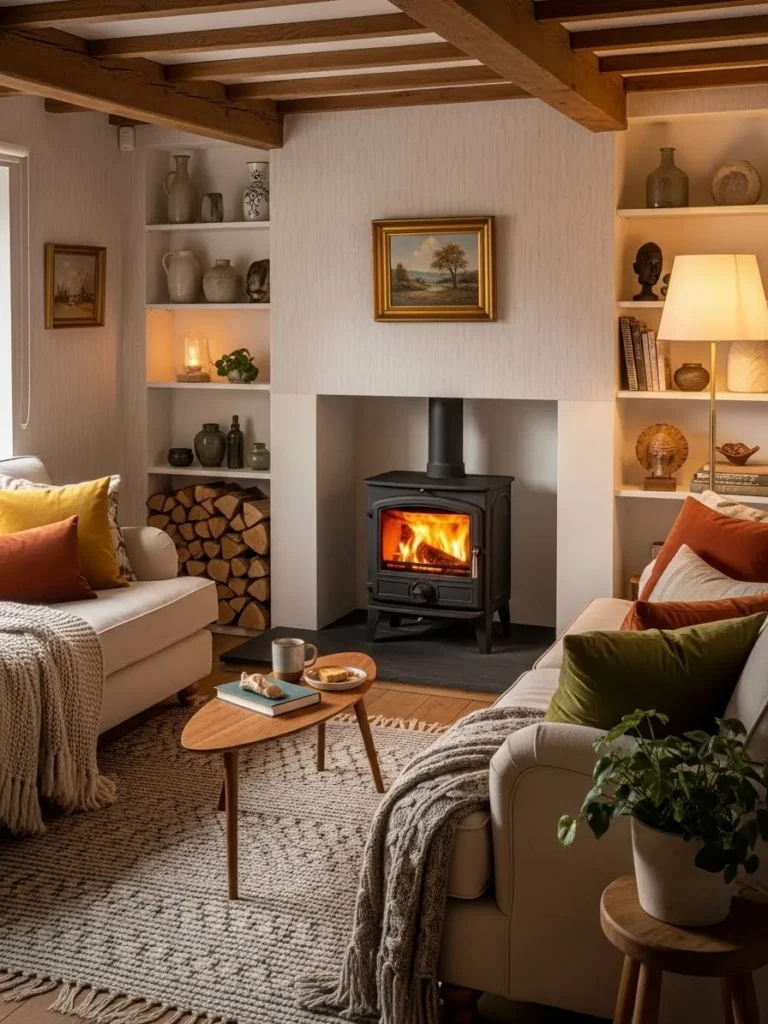
Corner placement is also helpful in smaller homes or cabins where square footage matters. By moving a stove out of the center of the room, traffic paths become more open. You still get the glow of flame, but not at the expense of circulation. When a stove sits near two wall surfaces, radiant heat spreads across a larger geometric field, which can help regulate temperature in awkward spaces.
4. A Stove Framed in Natural Stone for Rustic Permanence
Stone borders, whether built from river rock, slate, or stacked stone, bring weight and permanence to a heating zone. I have seen homeowners install thin stone veneer around steel stoves to make them feel more integrated, while others use real stone hearth extensions to satisfy safety requirements. Either way, stone connects heat to nature.
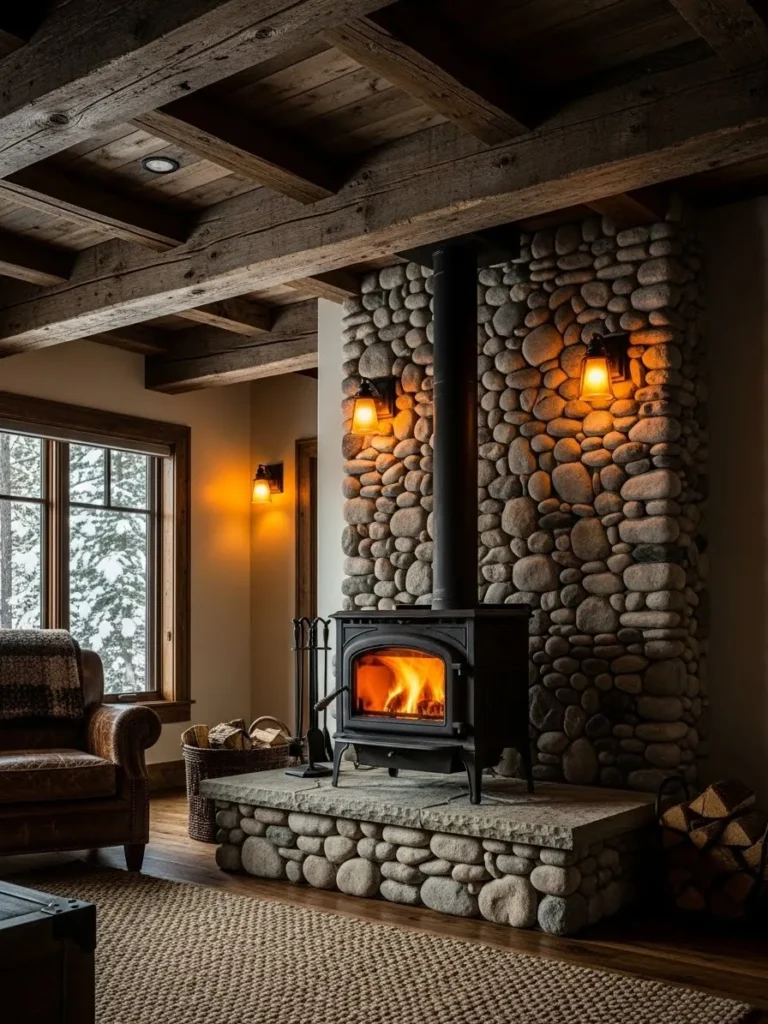
Stone surfaces also store warmth, releasing it slowly as the fire burns down. That thermal mass effect improves comfort without extra fuel. Homes with vaulted ceilings or open lofts especially benefit, because stone adds a level of stabilizing temperature control. The stone also draws the eye and elevates the stove beyond a functional metal appliance.
5. A Stove With a Full Viewfire Glass Door for Flame Watching
Some people use a stove less for heat and more for atmosphere. Modern glass fronts provide panoramic flame visibility, giving the feel of a fireplace without the construction work. Families gather around the stove just to watch the fire, and I have seen it replace television in winter evenings. The simplicity of a glass-front stove offers visual entertainment without noise or distraction.
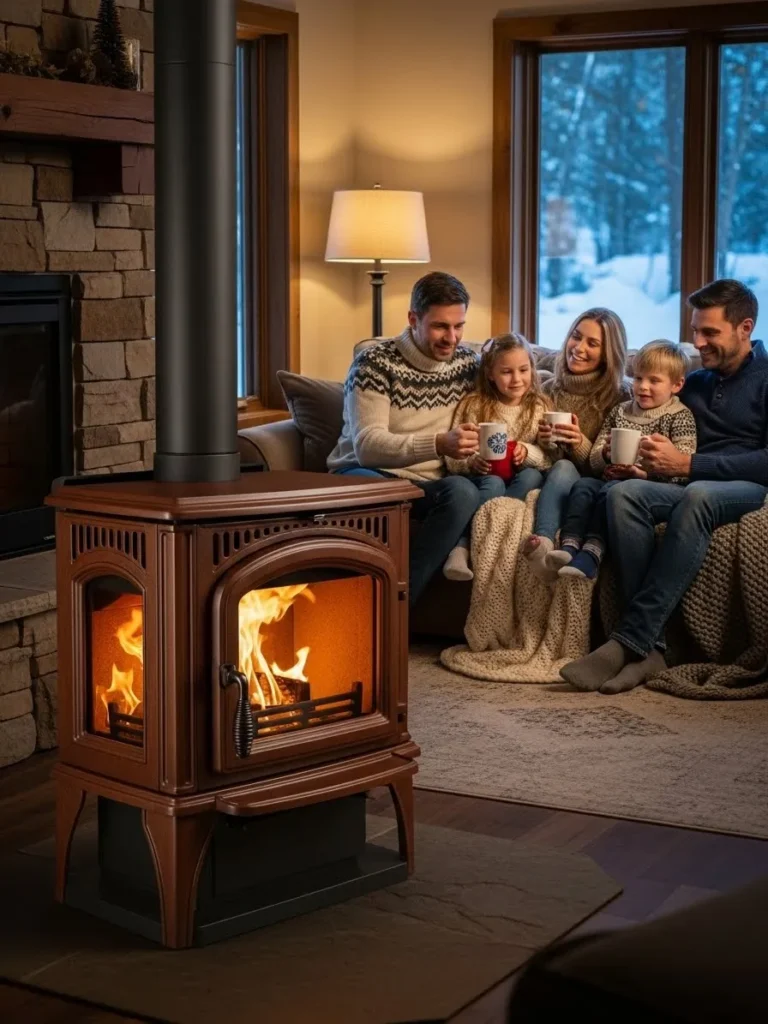
Stoves with advanced air-wash technology keep the glass cleaner, reducing soot buildup. This saves maintenance and makes fire-viewing an everyday pleasure rather than something reserved for special nights. Warmth becomes part of a ritual—light the fire, dim the lights, and unwind.
6. Mid-Room Placement to Heat Open-Concept Homes
Open-plan interiors spread heat unevenly, especially when vents rely on forced air. A wood-burning stove placed closer to the center of the space helps solve this problem. The stove radiates in all directions and warms more than one zone. I have seen this transform cold modern designs into winter-friendly homes without altering architecture.
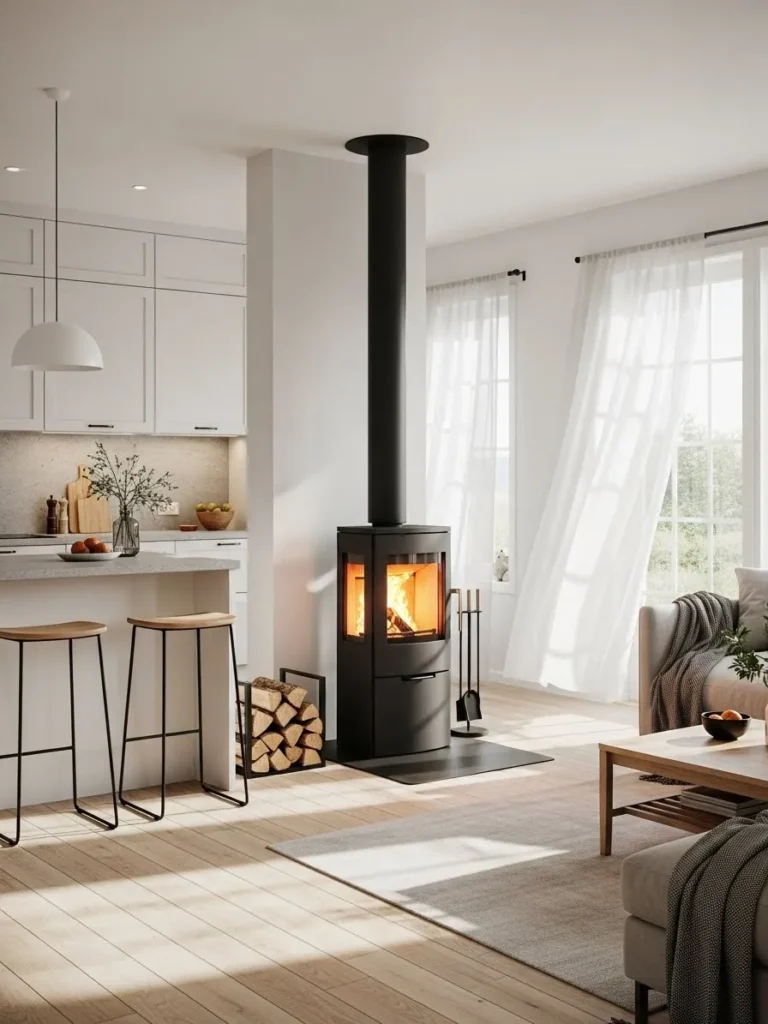
This placement demands strong flue routing and safe clearances. But once installed correctly, homeowners gain a natural hub for gatherings. Instead of heat collecting against a wall, warmth spreads evenly through living, dining, and kitchen areas. Families tend to gravitate toward the central heat source, turning an open layout into a shared comfort zone.
7. A Small Stove in a Bedroom for Night-Long Warmth
Some people like to sleep cold. Others wake up miserable when temperatures drop. A small-format wood stove in a bedroom turns night heating into a gentle background presence. With properly controlled airflow, the heat does not overwhelm the space. Instead, it provides a quiet warmth that lasts for hours.
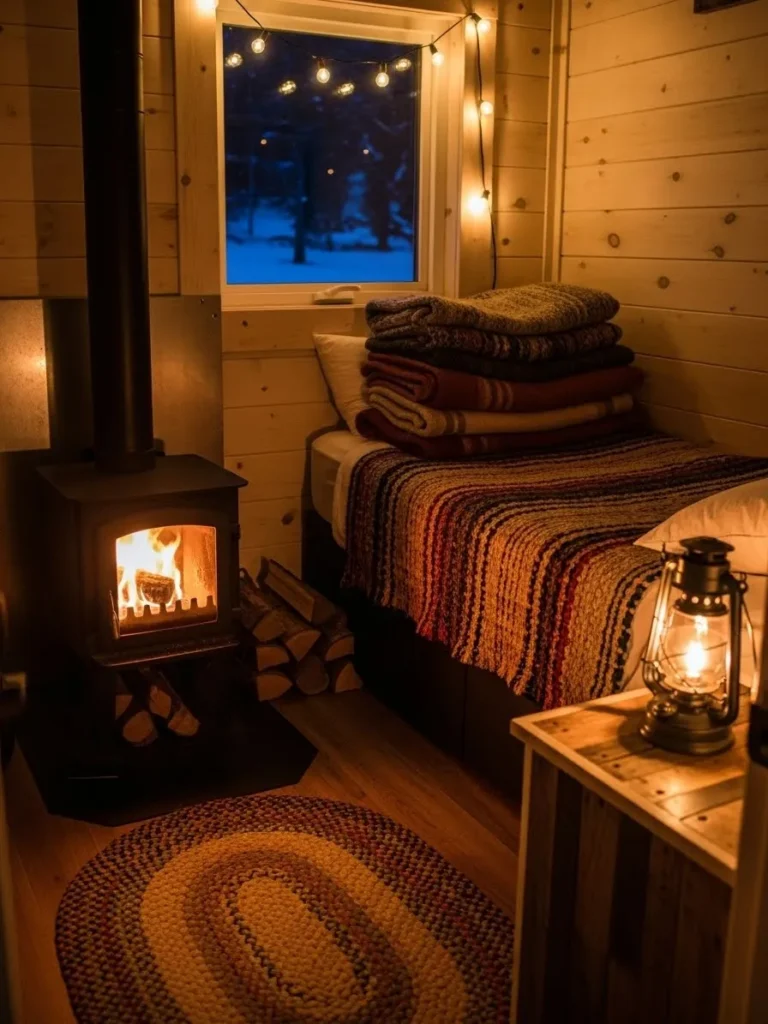
However, bedroom stoves require diligence. Venting must be correct, detectors must be installed, and operators must understand small-fire control. When these safety points are met, a bedroom stove becomes one of the coziest features a home can offer. Many homeowners say they sleep deeper because of the radiant heat and the soft crackle of wood.
8. A Stove Paired With Built-In Seating for Social Comfort
Fire attracts conversation. Over the years, I have seen some of the most successful stove layouts include built-in benches, raised hearth seating, or cushioned window bays nearby. This transforms the heating area into a retreat inside a home. Instead of sitting on a sofa across the room, people lean closer, warm their hands, and linger.
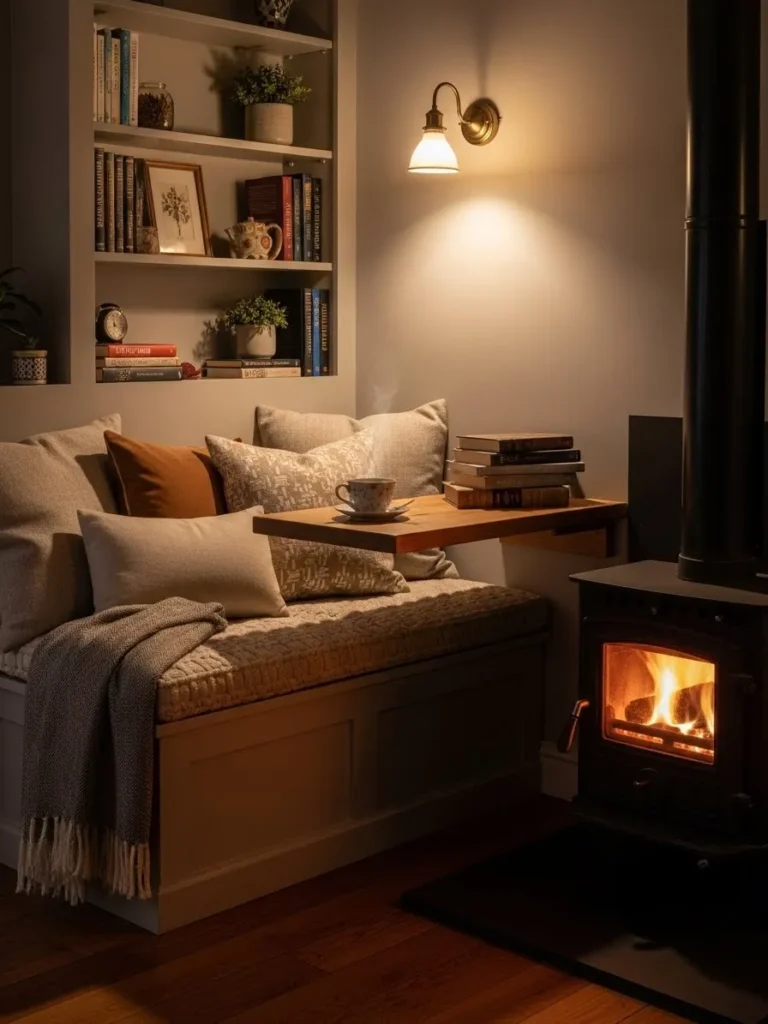
These seating installations also create functional space for reading, phone calls, tea, or late-night thinking. When a stove has a designated seating zone, it becomes more than a heater—it becomes a destination. The psychological effect matters because physical warmth encourages emotional openness.
9. A Cooktop-Ready Stove to Add Utility and Backup Heat
Many wood stoves include a surface hot enough to heat a kettle or pan. In rural areas, homeowners value this feature for resilience during power failures. In everyday life, it becomes a casual way to warm cider, simmer soup, or boil coffee. I have seen retirees use it as a slow-cooking method that reminds them of farm kitchens.
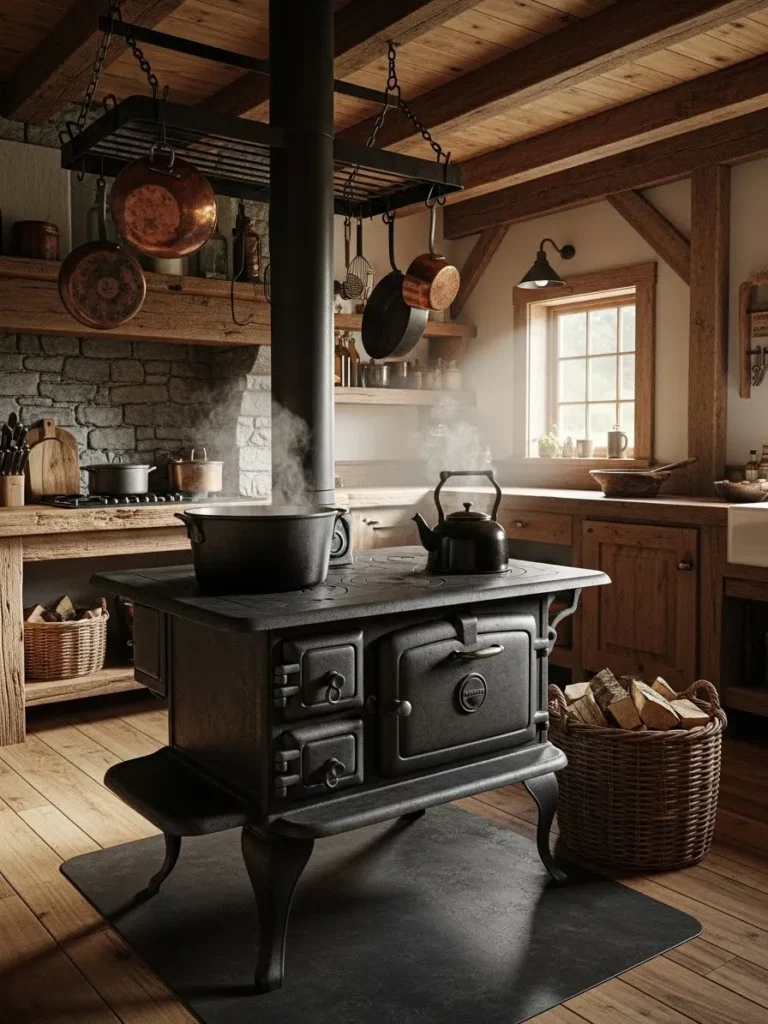
The added utility does not cost extra fuel because the stove is already burning. It simply turns unused heat into productivity. During winter storms, this can be a major advantage. When central systems fail, the stove continues providing heat and cooking ability at the same time.
10. A Freestanding Stove Against Exposed Brick
Brick and wood heat belong together. Many older homes already include brick chimneys, but even newer builds can gain character by adding a brick accent wall behind a freestanding stove. Brick protects the wall, satisfies clearance rules, and absorbs heat for extended output. But beyond those benefits, it creates a style that readers often associate with lofts, row houses, and industrial conversions.
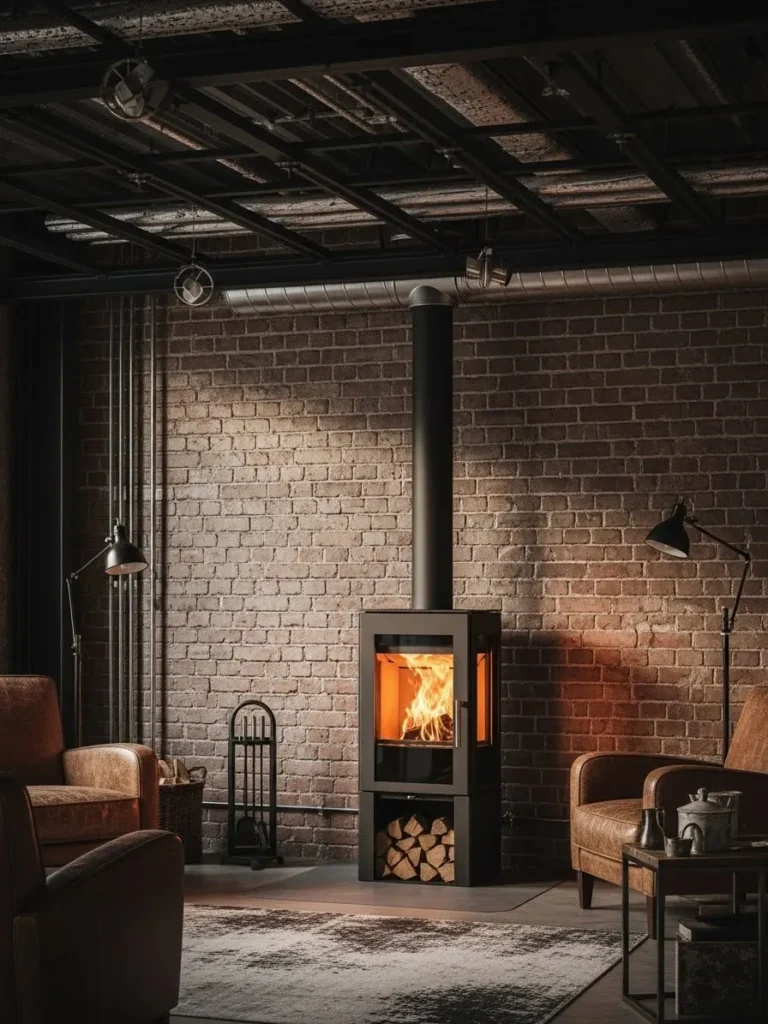
The stove becomes part of a textured backdrop rather than something floating in space. That visual integration matters for homeowners concerned with interior design. The brick wall frames the stove like art, giving a subtle historical tone even in contemporary rooms.
11. A Large-Format Stove for Great Rooms and High Ceilings
Homes with tall ceilings lose heat faster because rising air concentrates near the highest point. A larger stove with greater firebox volume helps counter this problem. Bigger units burn longer loads, throw stronger radiant output, and cycle heat for hours. I have seen this difference clearly in mountain homes where a smaller stove simply cannot sustain comfort.
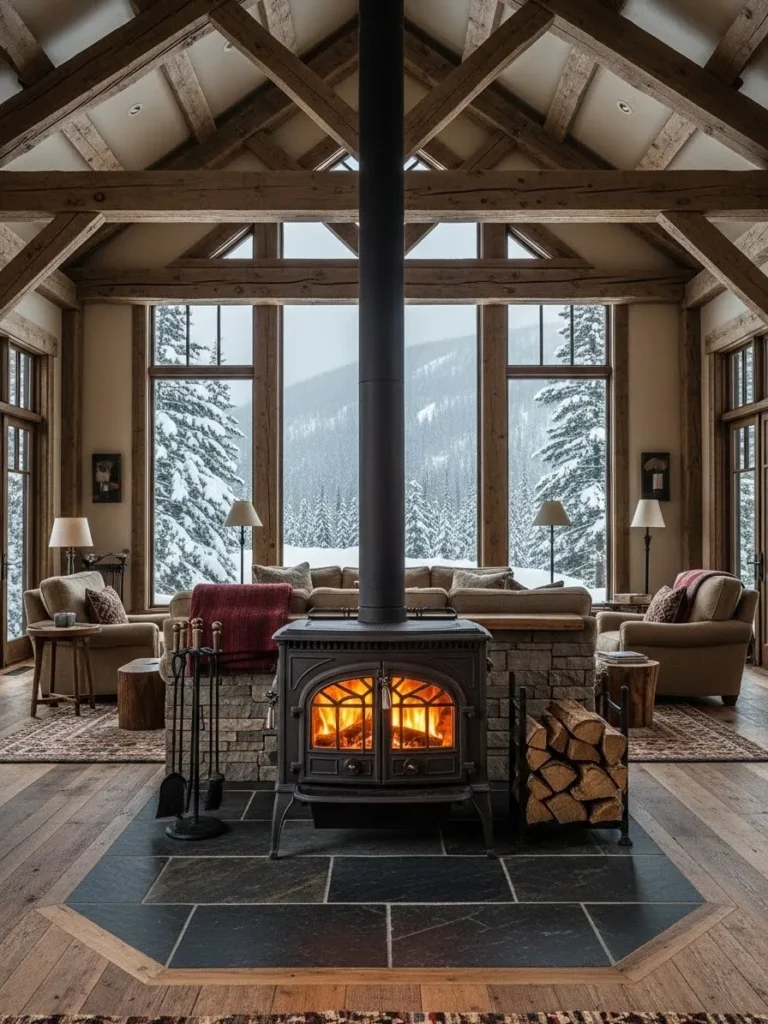
Large stoves also anchor scale. A tiny unit looks lost under a vaulted peak, but a stronger body with visible mass balances the architectural proportions. The heat output must match the cubic volume of air, not just square footage. When homeowners size correctly, they waste less wood and gain deeper comfort.
12. A Compact Stove for Small Cabins and Seasonal Properties
Not every space needs a major heater. Small cabins, hunting shacks, and seasonal rentals often benefit from compact stoves that heat quickly and shut down cleanly. The fast response helps when owners want warmth on arrival rather than hours later. The scale also reduces installation expense.
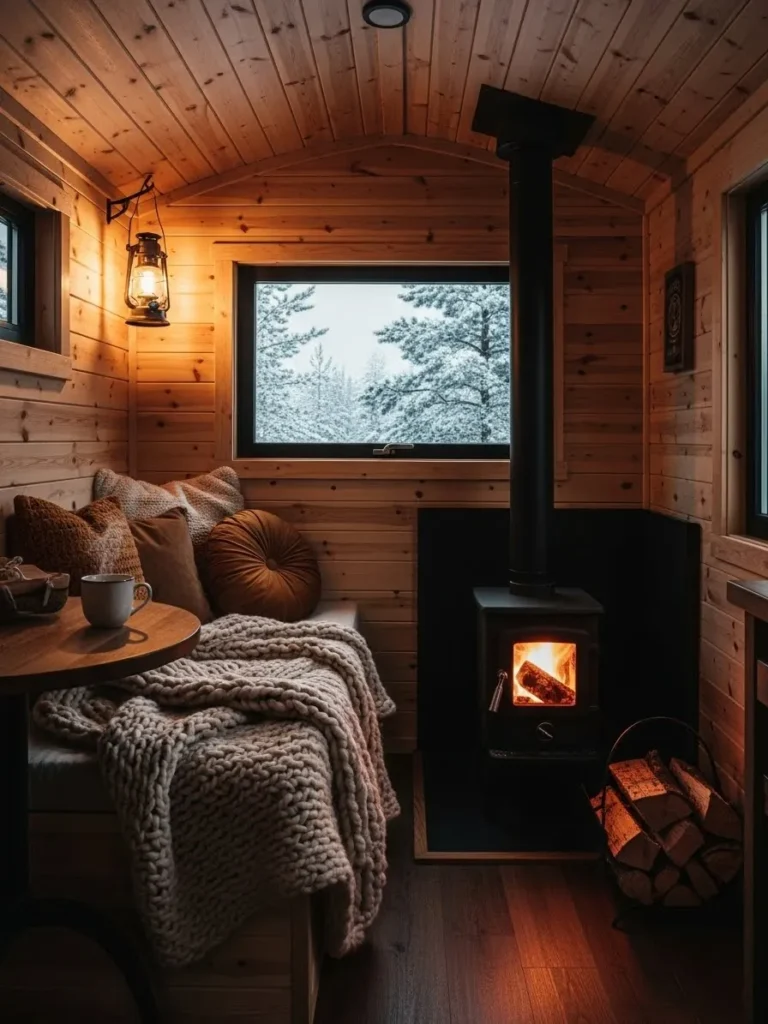
Compact stoves work well in bunk rooms, micro-cabins, garages, or converted sheds where people want warmth without major renovations. The emotional reward is significant because small spaces heat fast, creating a cozy pocket of comfort even in bitter weather.
13. An Enamel-Coated Stove for Color and Easy Cleaning
Some homeowners want personality. Enamel-coated stoves come in cream, red, green, navy, and black, giving families a chance to express taste. Over decades, I have seen these units used in kitchens, sunrooms, and cottage-style interiors where aesthetics matter as much as function. The glossy surface resists soot staining and wipes clean.
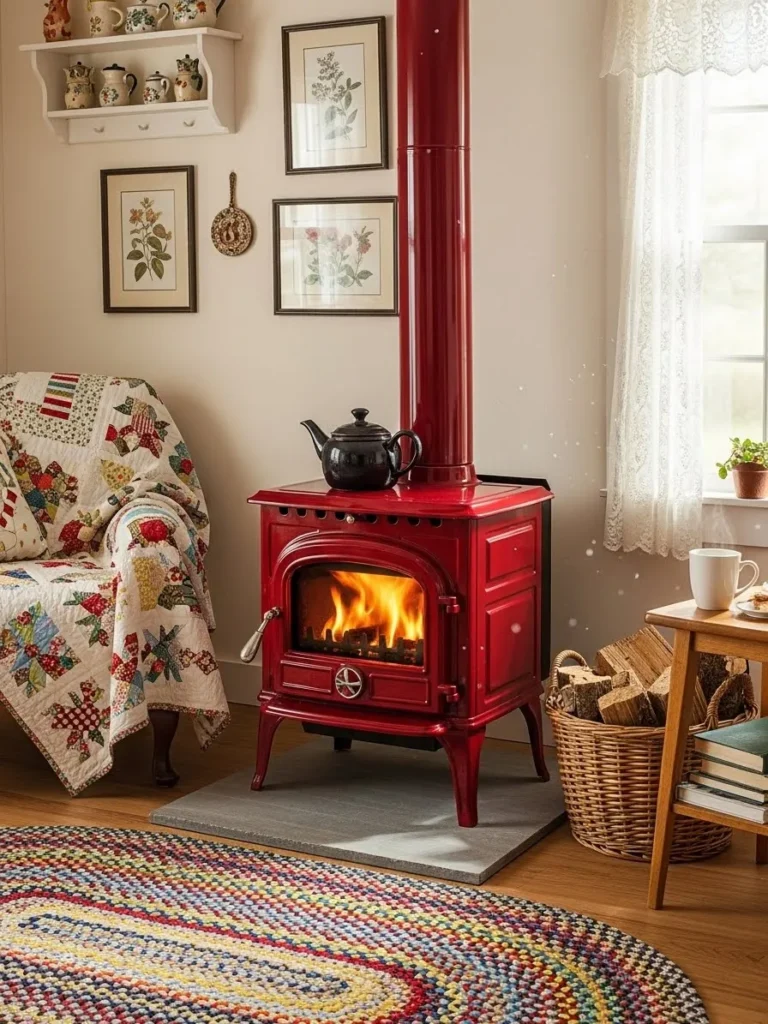
Color changes the emotional impression of heat. A deep red stove feels festive in winter. A cream stove feels gentle in a neutral room. The coating also protects the metal beneath, extending the lifespan. When owners tire of stainless appliances, enamel offers a warmer visual counterpoint.
14. A Stove Installed in a Sunroom for Four-Season Use
A sunroom can feel unusable in cold months because glass walls leak heat. Adding a wood-burning stove solves this limitation and turns an occasional room into year-round square footage. I have seen many homeowners shocked by the difference because they expected a mild improvement—not a full seasonal change.
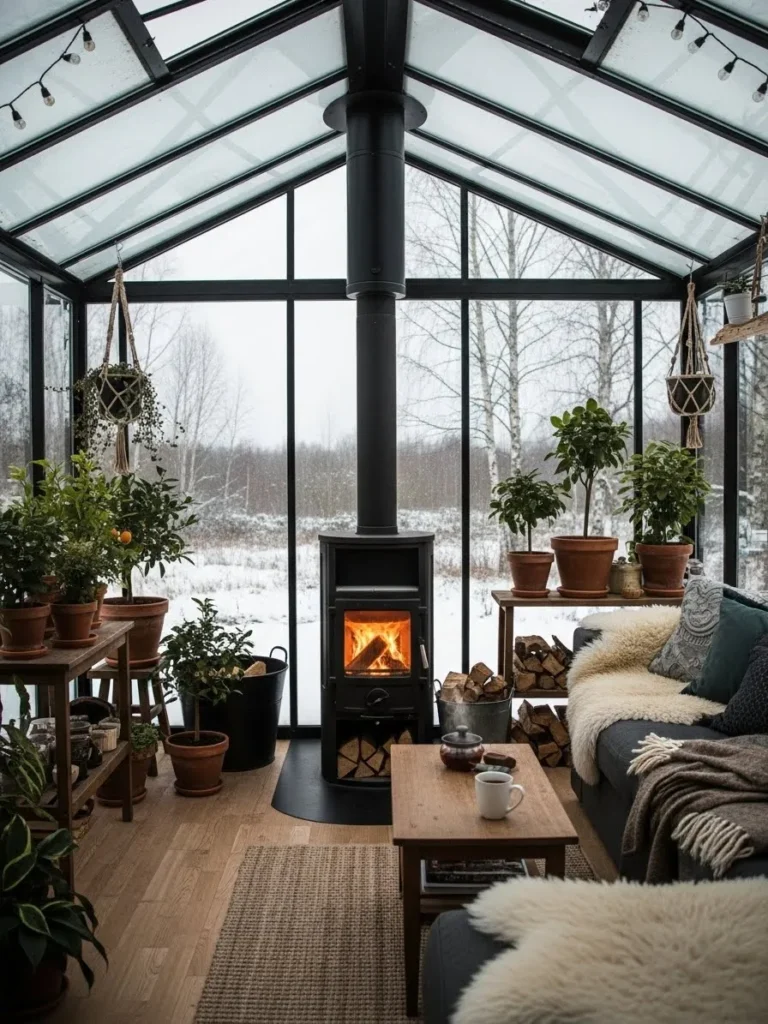
When the stove runs, the sunroom becomes a winter garden. Plants thrive, mornings stretch longer, and the house gains a peaceful retreat. Instead of closing the room from November to March, homeowners treat it as a second living room bathed in natural light and natural warmth.
15. A Stove Near a Staircase to Heat Upper Floors Naturally
Wood heat travels upward. A stove positioned near a stairwell takes advantage of convection and sends warmth upstairs without mechanical systems. This is a traditional strategy in older farmhouses, where a single stove could heat both levels simply because hot air rises. In modern homes, this still works if stairways remain open.
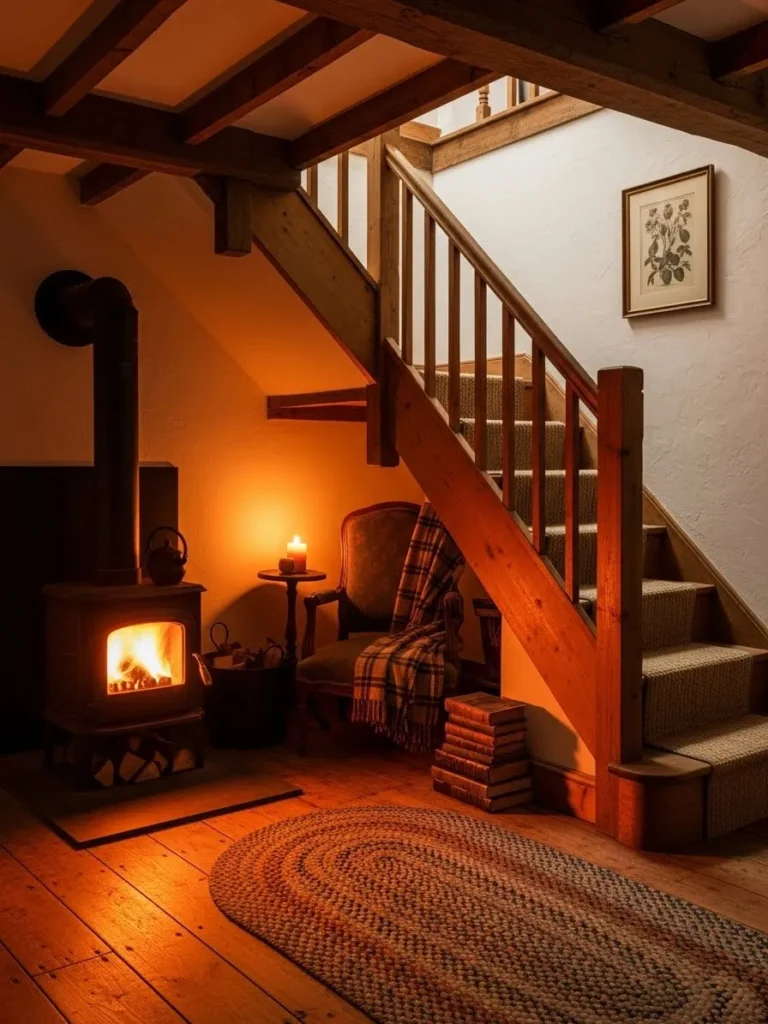
The approach reduces strain on upper-floor heating and helps stabilize temperature during cold snaps. Families often notice they sleep warmer without extra blankets. The stove serves both floors, maximizing return on fuel.
16. A Stove With an External Air Supply for Better Combustion
Older homes often leak air around windows and doors, which feeds a wood stove enough oxygen for proper combustion. Newer homes are tighter. Without an external air supply, a stove may compete with kitchen fans or dryers for airflow. Installing a stove with a dedicated air intake solves that problem.
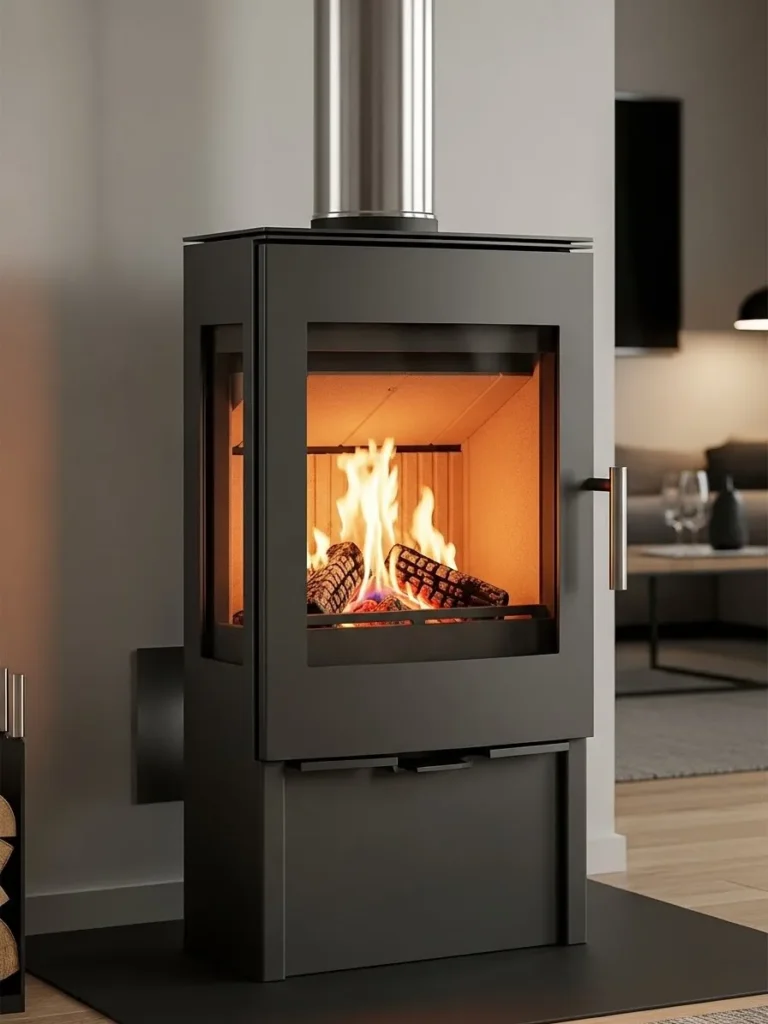
Combustion becomes stronger, fumes reduce, efficiency improves, and interior air remains stable. The stove burns more predictably, requiring fewer adjustments. This setup also prevents backdrafts and maintains indoor air quality, which matters for families with children or sensitive lungs.
17. A Hearth-Level Stove for Safer Loading and Visual Focus
Some homeowners want the stove raised to hip or knee height. This makes loading wood easier, reduces bending, and protects backs. It also places the flame closer to eye level, improving enjoyment. I have seen many older clients choose this option because they want to keep wood heat without physical strain.
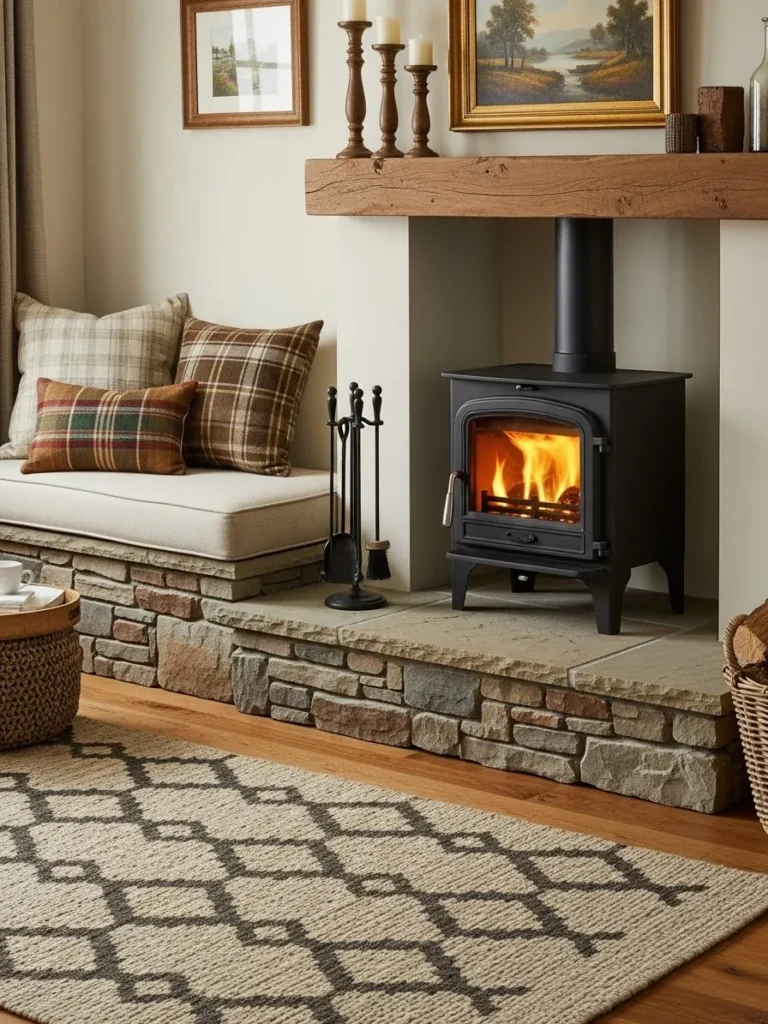
The raised hearth doubles as seating or display. It stores heat, and it creates a natural line in the room. The visual hierarchy changes, turning the stove into something closer to a built-in fireplace without compromising efficiency.
18. A Stove Inserted Into an Existing Fireplace Opening
Not every home needs a freestanding unit. Fireplace inserts slide into old masonry fireplaces, converting a drafty system into a high-efficiency heater. These inserts typically include blowers, sealed doors, and modern burn technology.
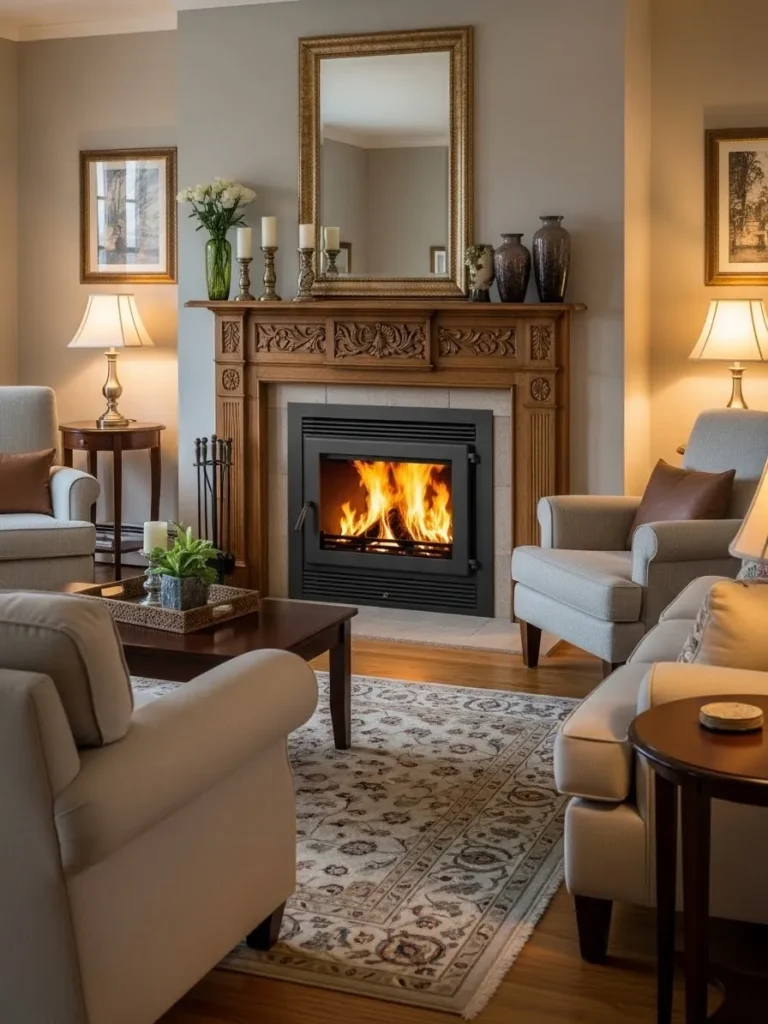
The upgrade surprises many first-time users because the fireplace suddenly becomes a serious heater rather than a scenery piece. The wood burns longer, the heat stays in the room, and the chimney pulls more cleanly. This is one of the most cost-effective ways to modernize older homes.
19. A Stove in a Kitchen for Old-World Practicality
Before central heating, many houses depended on kitchen wood stoves as the primary heat source. Today, kitchen stoves deliver a nostalgic, useful warmth. People gather at a table longer. Early mornings become less harsh. The room feels like the emotional center of the home again.
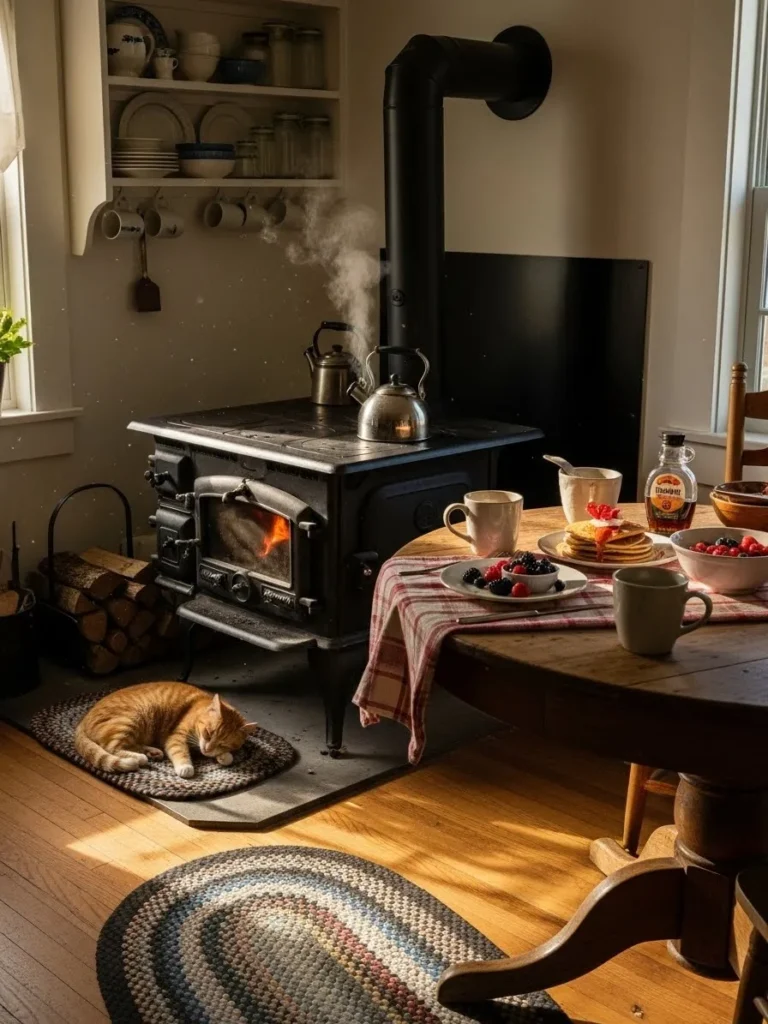
Some families cook on their stoves or heat water for dishwashing. Despite modern appliances, the stove becomes a backup system that adds a natural rhythm to daily life. Kitchens are social spaces, and the stove extends that sense of hospitality.
20. A Stove in a Cabin-Style Bathroom for Spa-Level Comfort
Few upgrades shock homeowners like adding a wood stove to a bathroom space that meets code. When done correctly, the effect is spa-like. Stepping from a bath into radiant wood heat feels luxurious and calming. The room dries quicker, moisture settles less, and mornings become easier.
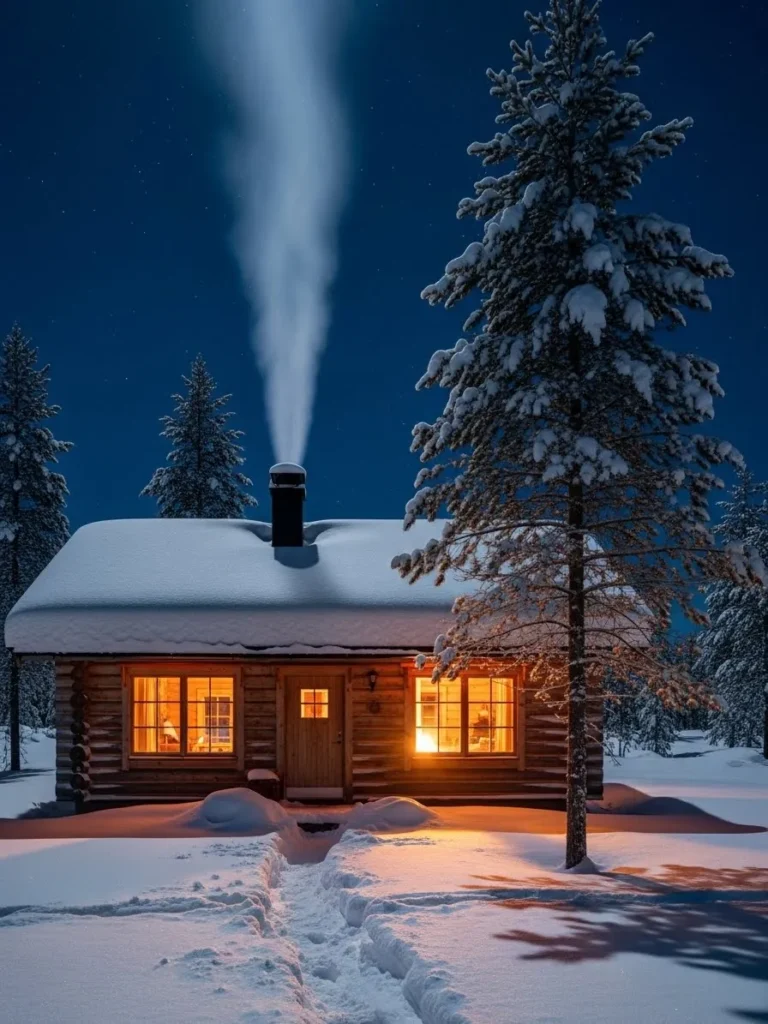
Bathroom stoves must stay compact and require excellent ventilation. But when installed safely, they deliver personal comfort that central heating cannot copy. Heat becomes a sensory experience rather than just a thermostat setting.
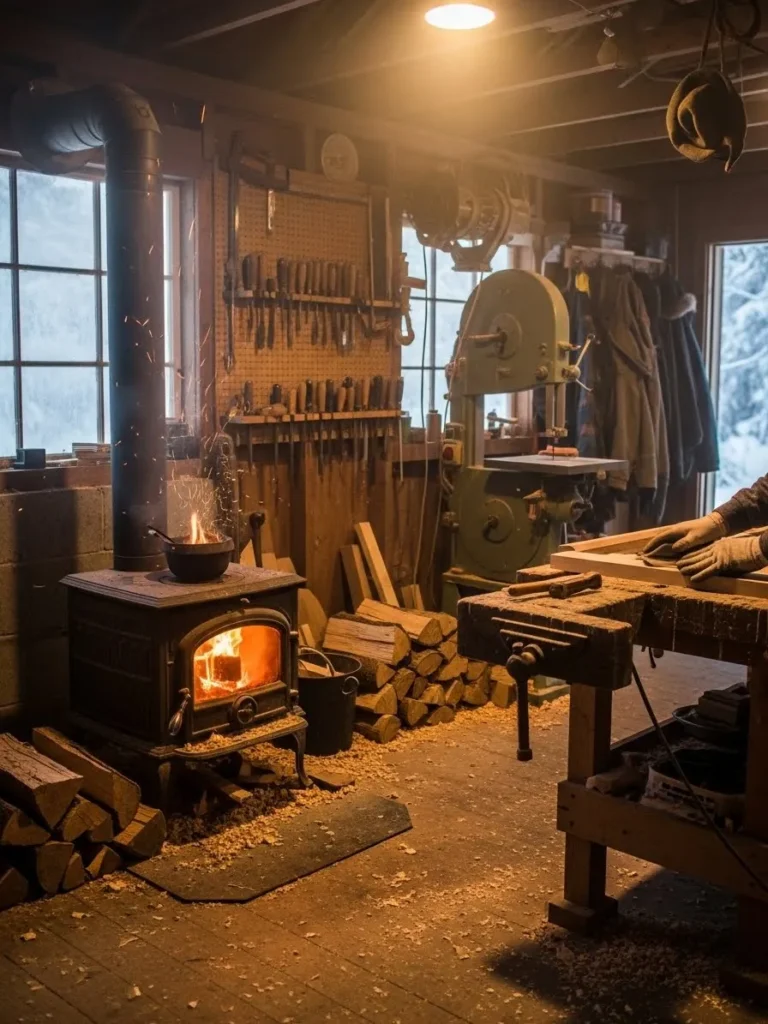
21. A Stove in a Workshop or Garage for Winter Productivity
Many homeowners lose entire seasons of productivity because their garage or workshop is too cold. A simple wood stove solves that problem. It keeps tools functional, reduces rust, and encourages hobby work through winter months.
Heat also affects mood. Working with your hands while hearing wood crackle creates a steady, focused mindset. I have seen people spend whole Saturdays in their workshop simply because the environment now supports it.
22. A Stove as a Backup System for Energy Security
In an age of rising utility costs, a wood-burning stove offers security. If gas prices spike, or electrical outages occur, wood heat stays reliable. Many homeowners who experienced winter blackouts decided afterward never to rely on a single heating source again. A wood stove protects comfort and safety.
It also encourages more intentional living. Cutting, stacking, and managing wood fuel becomes a seasonal ritual. The effort rewards households with warmth, resilience, and a sense of independence. A stove is more than a heater—it is a safeguard against vulnerability.