
1. Clean Symmetry for a Balanced Look
One of the most reliable approaches is creating a symmetrical design on both sides of the fireplace. Matching floating shelves bring a sense of order and calm. This works especially well in formal living rooms or spaces where you want everything to feel structured.
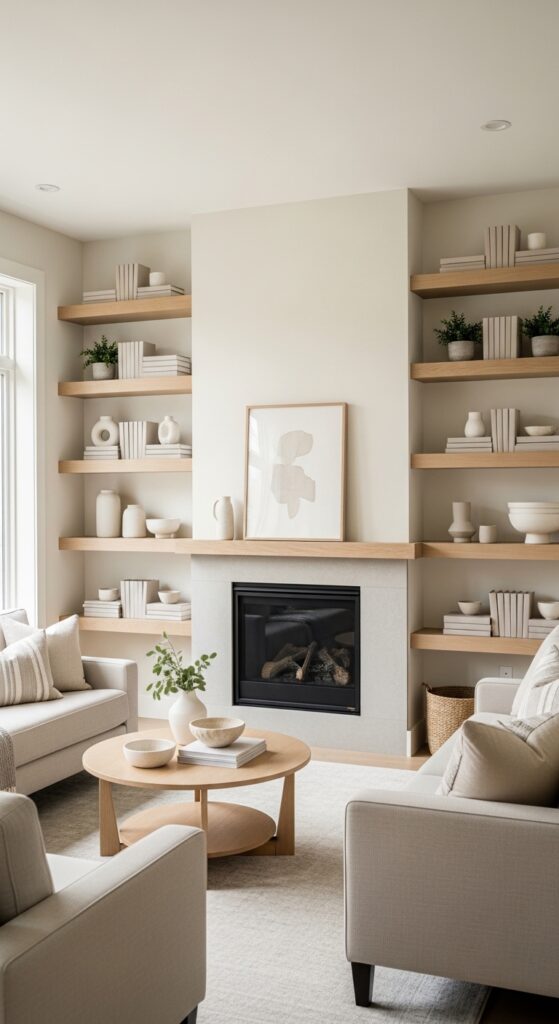
The trick is to keep spacing consistent. Equal shelf height and equal gaps between them make the whole wall look intentional. If the fireplace is centered, symmetry will always feel natural.
2. Minimalist Open Shelving
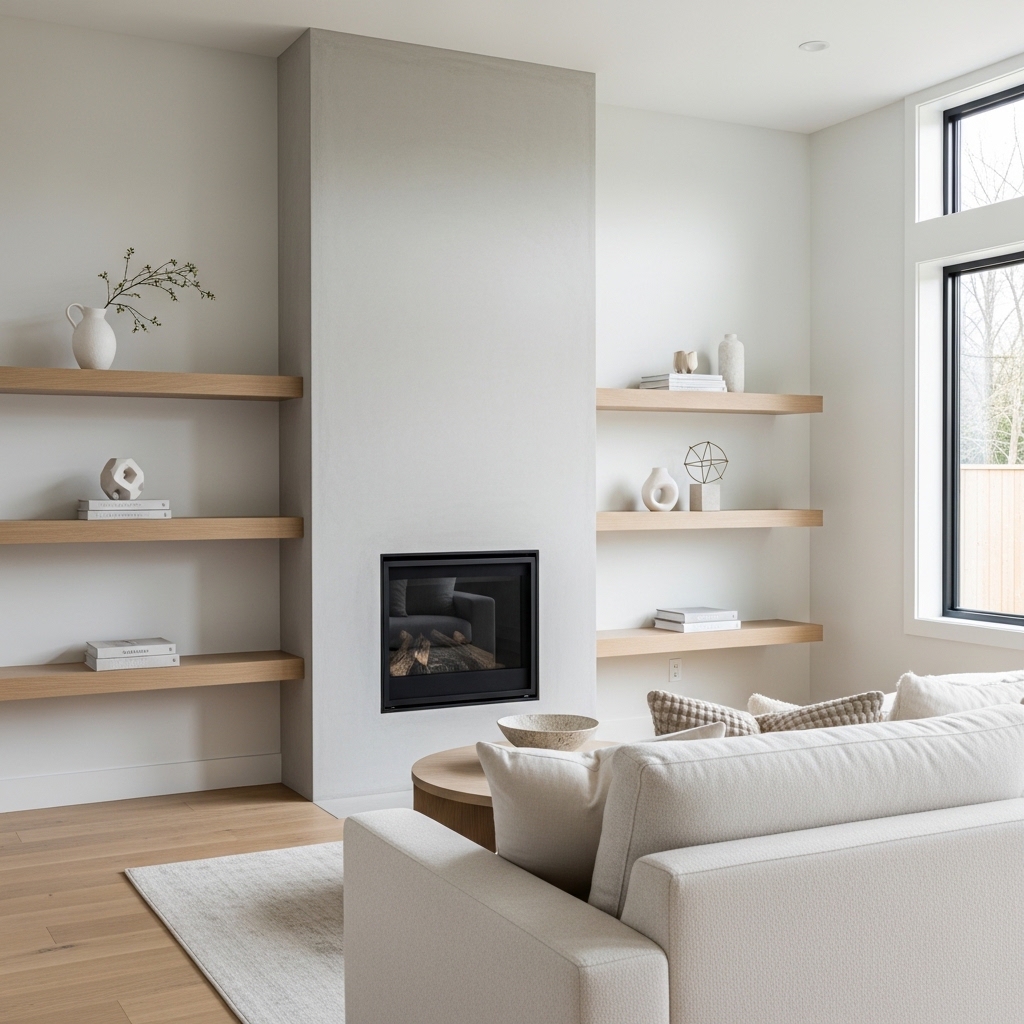
If you prefer a modern look, fewer shelves with more breathing room is the way to go. I often recommend installing two or three wide shelves on each side instead of stacking many narrow ones.
This gives each item space to stand out. It also prevents the area from feeling cluttered. Minimal shelving works best when you choose décor carefully and avoid overfilling.
3. Full-Height Vertical Shelves
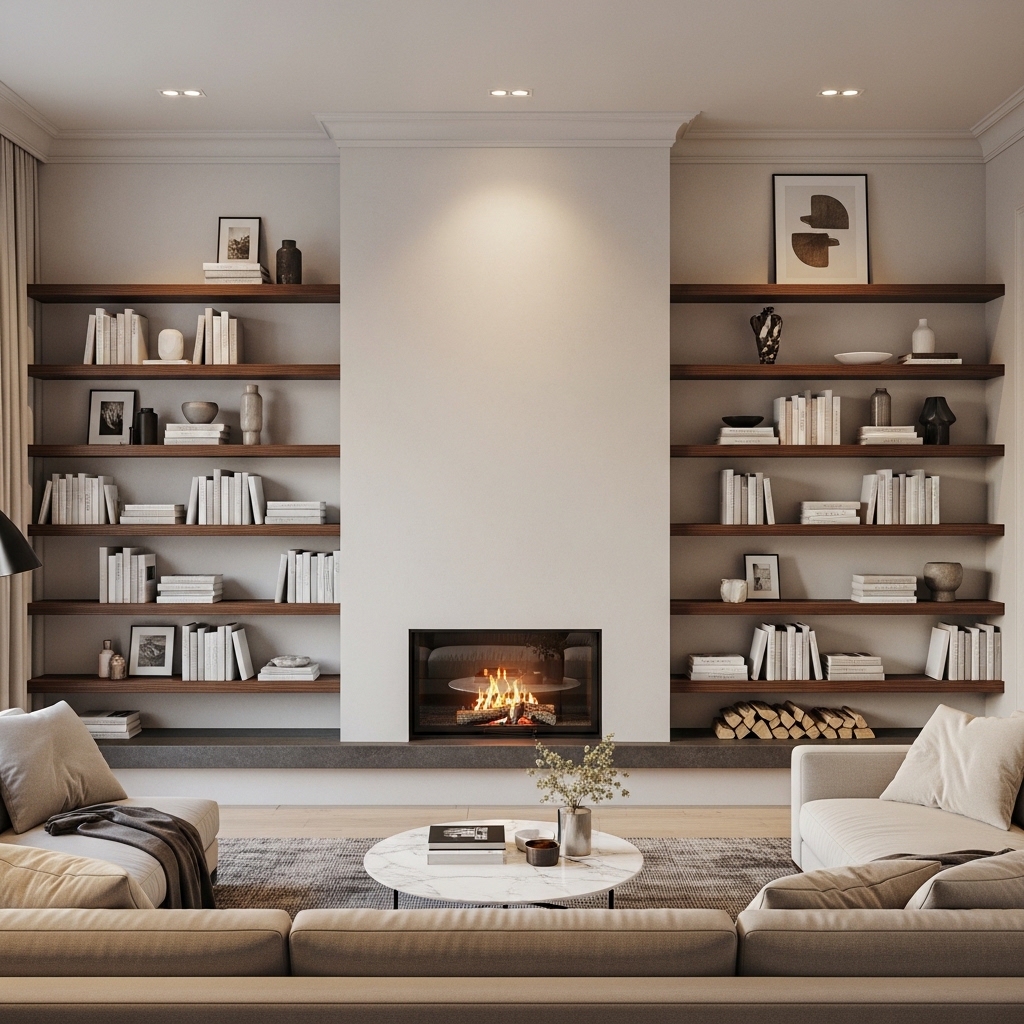
Taking shelves from floor to ceiling creates a strong visual frame around the fireplace. This design draws the eye upward and makes the room feel taller.
It works especially well in homes with high ceilings. Even in smaller rooms, vertical shelves can make the space feel more open when styled lightly.
4. Wood Shelves for Warmth
Natural wood floating shelves bring warmth that balances the hard surface of a fireplace, especially if you have stone, tile, or brick.
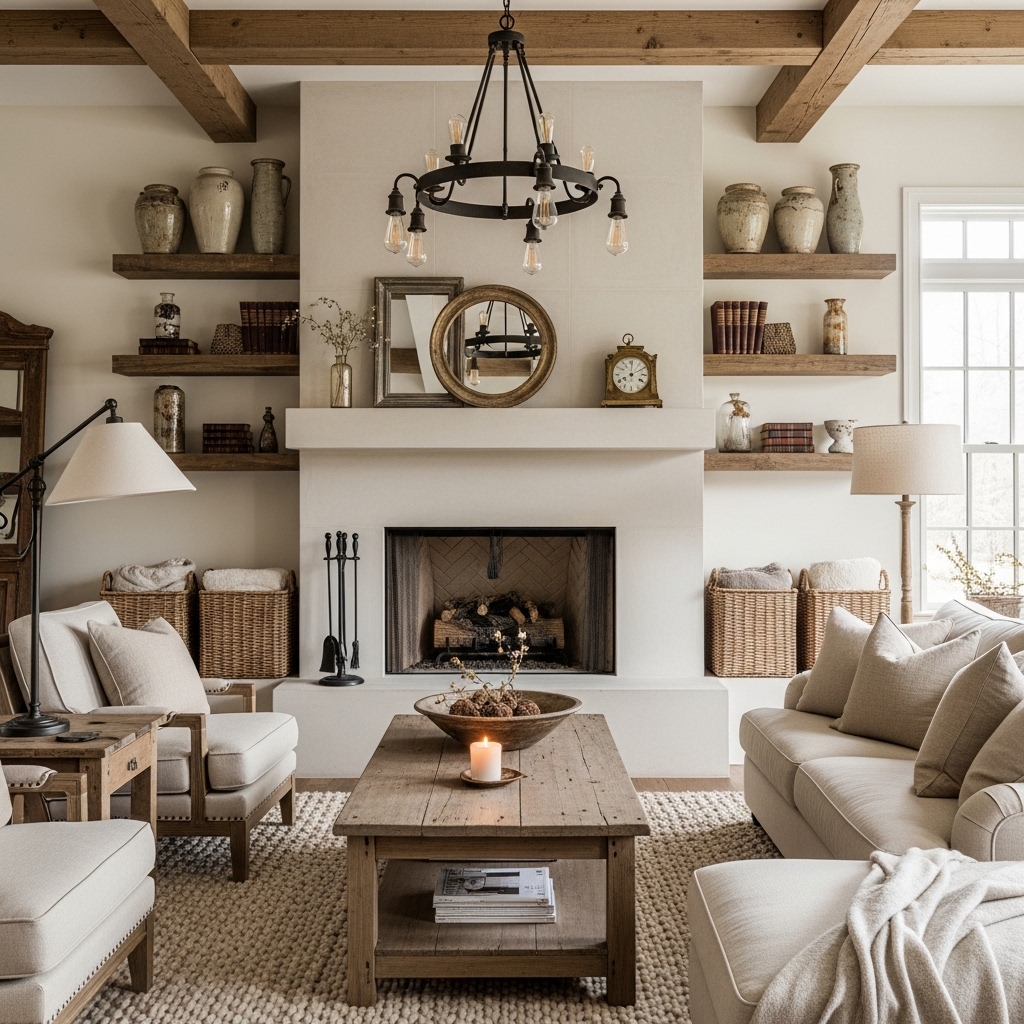
In my experience, medium-toned wood works best because it’s versatile. It pairs easily with both light and dark interiors and doesn’t go out of style quickly.
5. Painted Shelves for a Seamless Look
If you want the shelves to feel like part of the wall rather than separate pieces, paint them the same color as the wall.
This approach works well in modern homes and smaller spaces where you want everything to blend together. It creates a calm, unified look without visual clutter.
6. Mixing Shelves with Built-In Cabinets
One of the most practical setups combines floating shelves on top with closed cabinets below. This gives you the best of both worlds.
You can display decorative items on the shelves while hiding everyday clutter in the cabinets. It’s a solution I often suggest for families who want both style and storage.
7. Asymmetrical Layout for a Modern Feel
Not everything has to be perfectly balanced. An asymmetrical design can feel more relaxed and modern.
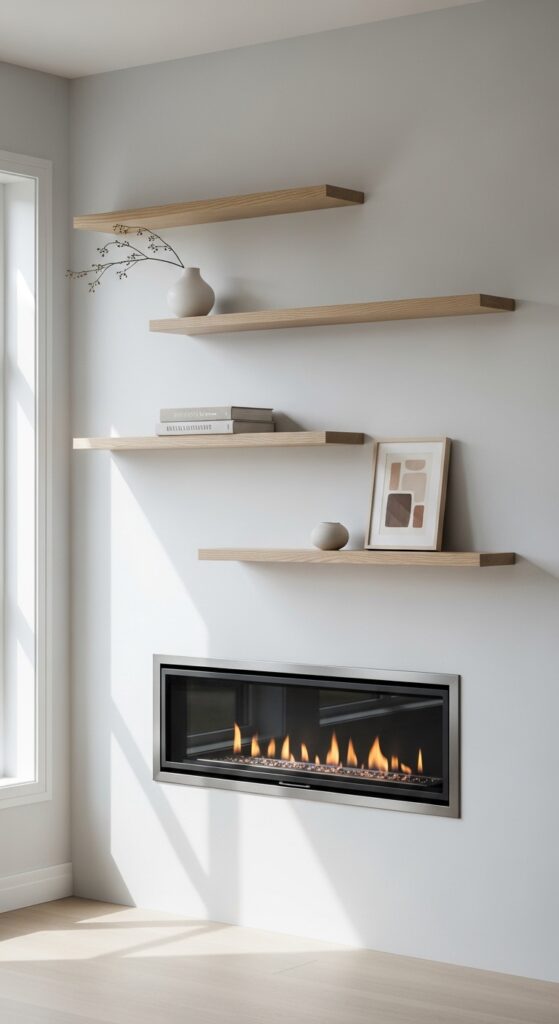
For example, you might have more shelves on one side or vary their spacing slightly. This works well in casual spaces where you don’t want the room to feel too formal.
8. Floating Shelves with a TV Above the Fireplace
Many homes place a TV above the fireplace. Floating shelves can help balance that setup.
By adding shelves on both sides, you create a frame that makes the TV feel less dominant. It also gives you space to add décor that softens the overall look.
9. Thin Shelves for a Light Appearance
Using thinner shelves instead of thick, heavy ones keeps the design light and modern.
This is especially useful in smaller rooms where thick shelves might feel overwhelming. Thin shelves also draw less attention to themselves, allowing your décor to stand out.
10. Deep Shelves for Functionality
If you actually plan to use the shelves for storage, go deeper. Shallow shelves look great, but they limit what you can place on them.
Deeper shelves allow for books, baskets, and larger decorative pieces. Just be careful not to go too deep, or the shelves may start to feel bulky.
11. Layered Styling for Depth
Floating shelves look best when items are layered rather than lined up flat. This means placing some items slightly in front of others.
In practice, this creates depth and makes the shelves feel more natural. It’s a small detail, but it makes a big difference in the final look.
12. Using Neutral Tones for Timeless Design
Neutral colors always last longer than bold trends. Shelves styled with whites, beiges, soft grays, and natural textures feel calm and timeless.
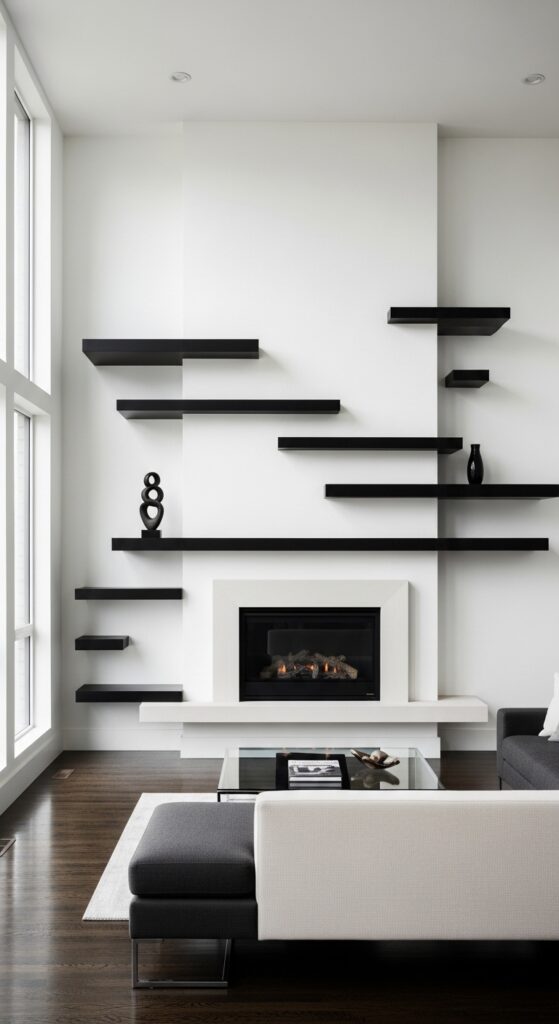
This doesn’t mean the space is boring. It means you can change small accents over time without needing to redo everything.
13. Black Shelves for Contrast
If your walls are light, black floating shelves can create a strong contrast.
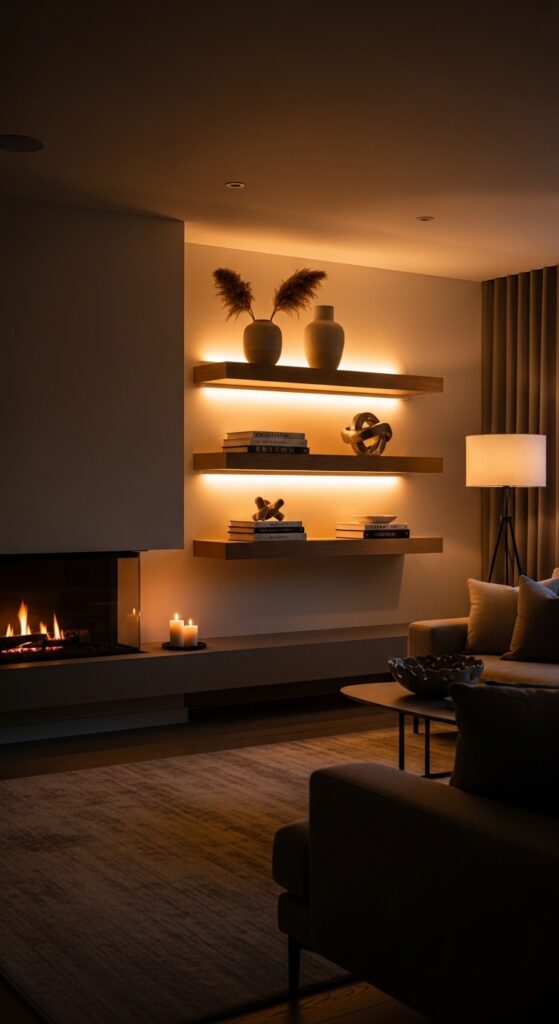
This approach works particularly well in modern or industrial-style homes. The shelves become a design feature on their own instead of blending into the background.
14. Floating Shelves with Lighting
Adding lighting above or below floating shelves can completely change the atmosphere of the room.
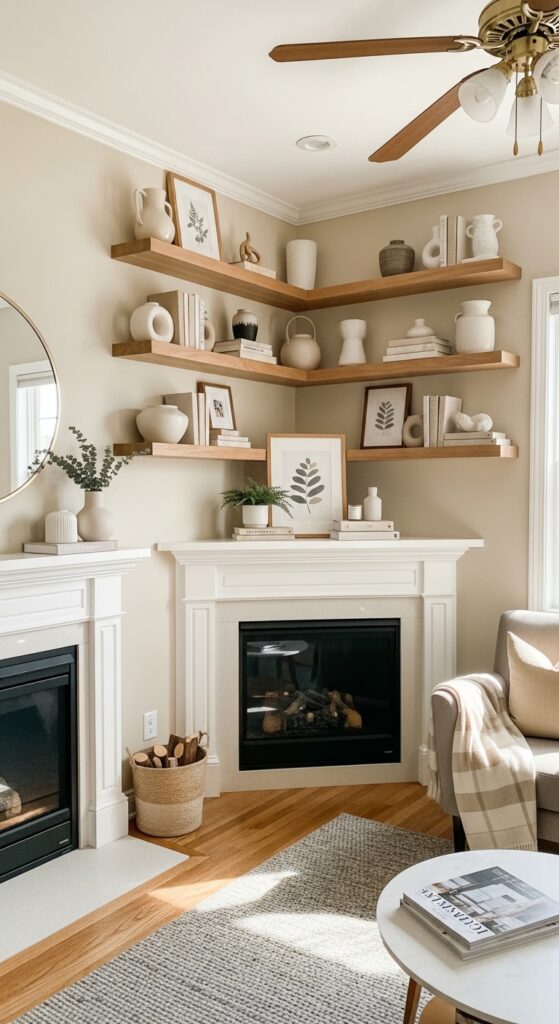
Soft lighting highlights the décor and makes the fireplace area feel more inviting in the evening. It’s a detail many people overlook, but it adds a lot of value.
15. Corner Shelves for Unique Layouts
Not all fireplaces are centered on a wall. If yours sits closer to a corner, floating shelves can help balance the space.
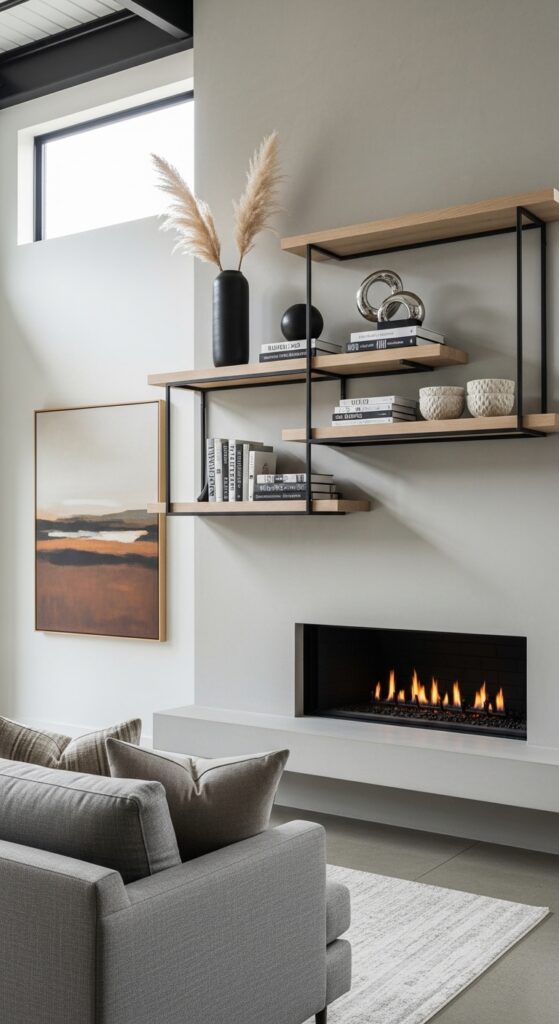
You can extend shelves into the corner or adjust their length to match the available space. The goal is to make the layout feel intentional rather than forced.
16. Mixing Materials for Interest
Using more than one material can make the design more interesting. For example, wood shelves paired with metal brackets or stone surroundings create contrast.
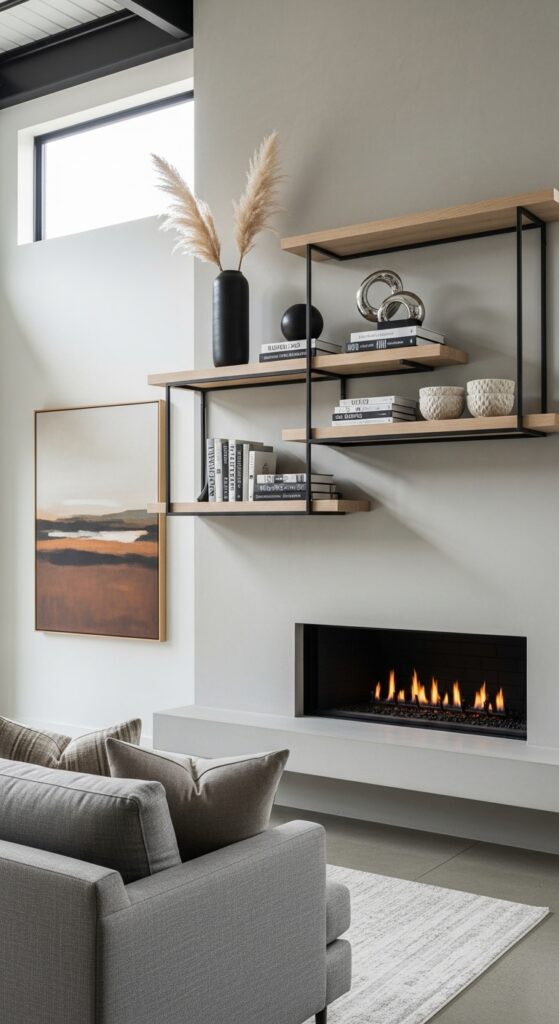
The key is not to overdo it. Stick to two or three materials at most so the space still feels cohesive.