
1. Black Hollyhock
Black hollyhock has been a classic favorite for moody gardens for more than a century. Its tall flower spikes rise dramatically above other plants, giving the garden a vertical structure that instantly creates a sense of height and shadow. These flowers appear almost velvety in certain light, and although they look deep black from a distance, they actually hold dark wine tones that make them shimmer in the sun. Gardeners often place them at the back of borders to create a backdrop that enhances every lighter bloom in front.
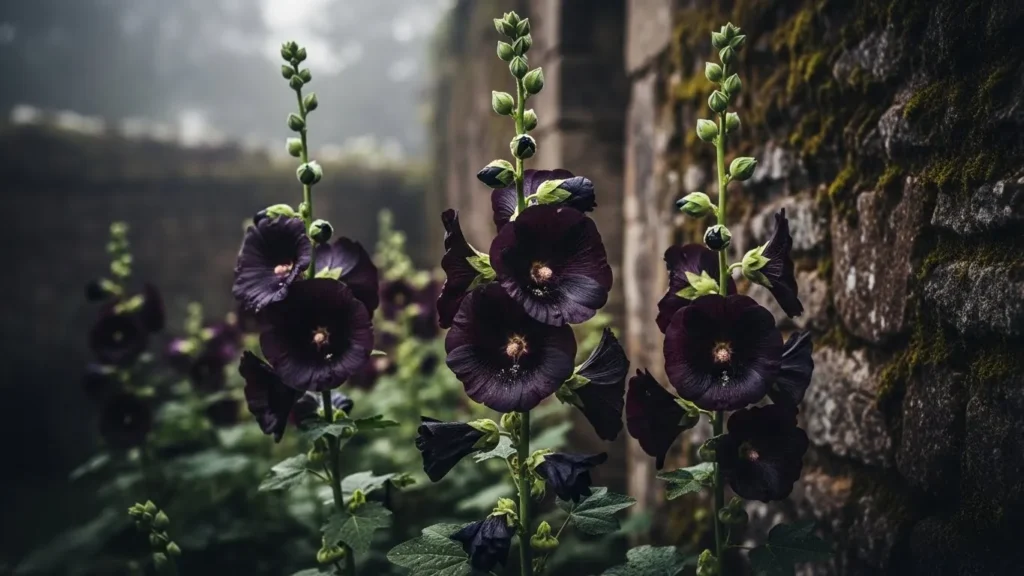
This plant thrives in full sun, yet it still manages to bring depth to bright spaces. It handles heat well, attracts pollinators, and grows reliably from seed. Even though it naturally leans toward a wild or cottage-style look, it blends beautifully with gothic aesthetics because of its rich color. When paired with silver foliage or white roses, Black Hollyhock adds a dramatic and elegant contrast.
2. Queen of the Night Tulip
The Queen of the Night tulip is one of the darkest tulips available, and it brings an instant sense of luxury to any garden. Its smooth, almost lacquered petals have a richness that looks like a blend of deep plum and black cherry. These tulips are especially striking when the morning sun hits them, giving their surfaces a soft glow that feels perfectly suited for a moody or dramatic garden theme. Their shape is simple but bold, making them stand out even in minimalistic garden designs.

Because they bloom in spring, these tulips are a powerful way to begin your gothic garden’s seasonal story early in the year. Planting them in clusters amplifies their visual impact, creating pools of shadow among lighter spring flowers. They pair beautifully with white narcissus, pale pink tulips, or dusty green foliage. While their blooming season is brief, their effect is unforgettable and sets the tone for the rest of the year.
3. Black Baccara Rose
The Black Baccara rose has an almost satin-like texture that makes it one of the most desirable roses for gothic gardens. Its petals appear black in low light, but in full sun you can see deep red undertones that make the flower even richer. This rose is known for its tight, elegant form that looks almost sculpted. It adds sophistication to any garden space and works beautifully in both formal and relaxed garden beds.
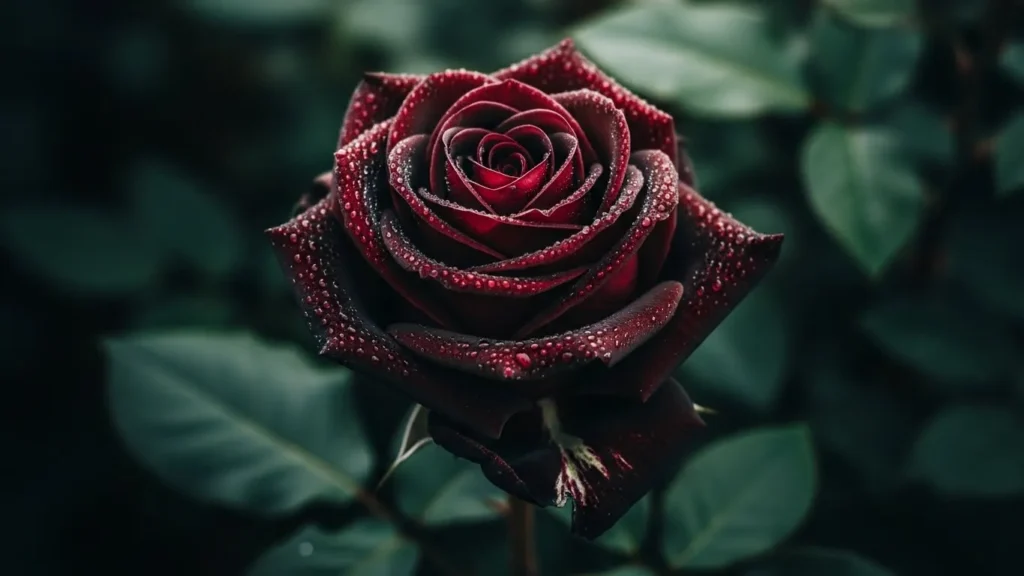
Black Baccara roses appreciate warmth and sunlight, and with proper care their blooms can last for weeks. They also make exceptional cut flowers, allowing you to bring the moody beauty indoors. When placed alongside dark foliage plants, their color deepens even more, while pairing them with white roses creates a dramatic, high-contrast effect that feels theatrical and romantic at the same time.
4. Chocolate Cosmos
Chocolate cosmos is famous for its deep burgundy petals and its natural, soft fragrance that actually resembles cocoa. This combination alone makes it a favorite in atmospheric gardens. The flowers are small but noticeable, and they create moments of subtle darkness without overwhelming the garden. Their velvet-like appearance adds an elegant softness that works well with stone pathways or weathered planters.
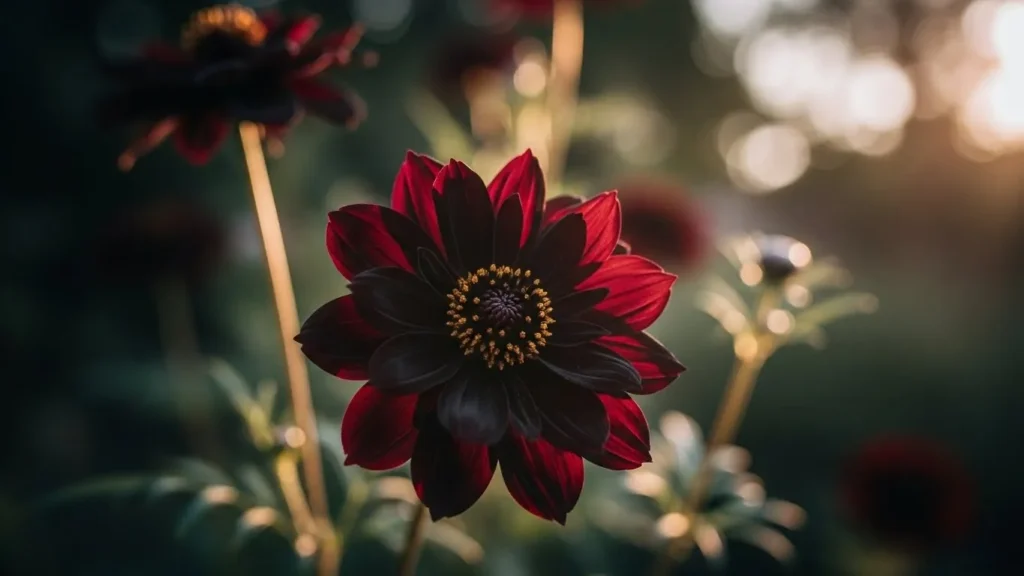
This plant thrives in warm weather and rewards gardeners with blooms that continue late into the season. Even in a garden filled with large flowers, chocolate cosmos holds its own because of its unique scent and striking color. Gardeners often use it near seating areas or entryways so visitors can appreciate its aroma. While delicate in appearance, it is surprisingly resilient when placed in the right conditions.
5. Black Mondo Grass
Black Mondo Grass adds texture and structure rather than traditional floral beauty, and this is what makes it essential in moody garden design. Its deep black, glossy blades create dramatic edges along pathways and borders. Unlike many dark plants, Black Mondo holds its color year-round, giving your gothic garden a consistent backbone through every season. It also contrasts beautifully with pale gravel, concrete, or natural stone.
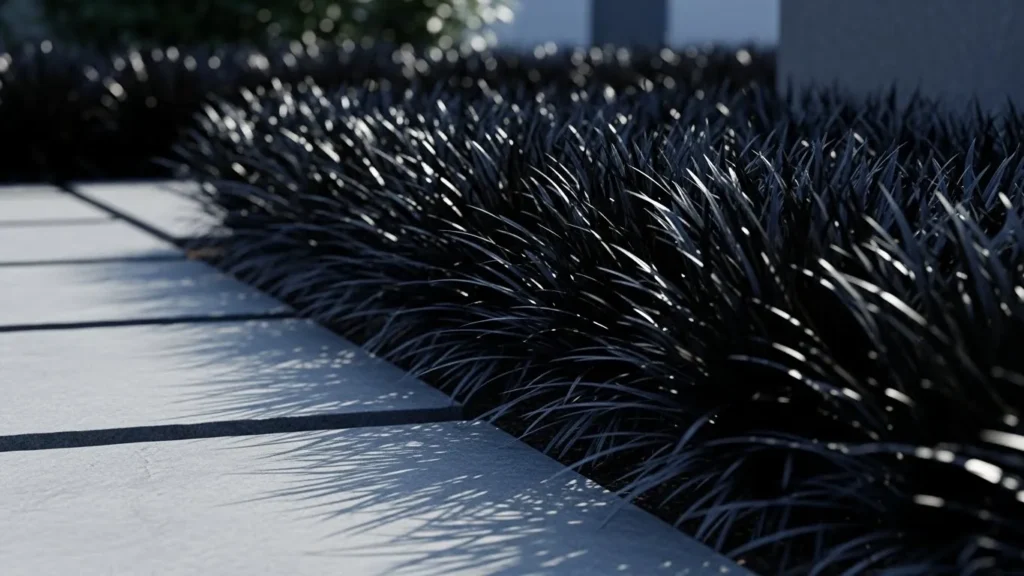
Because it stays compact, Black Mondo is easy to incorporate into smaller gardens. It adds a minimalist but impactful touch that pairs well with both modern and vintage garden styles. This plant is also low maintenance, making it a favorite for gardeners who want a dramatic look without constant upkeep. It works well under trees, alongside water features, or clustered in large groups for a bold visual statement.
6. Bat Flower
The Bat Flower is one of the most theatrical plants available. Its long black bracts and whisker-like filaments give it an exotic, almost otherworldly appearance. With its unusual shape and mysterious presence, this plant becomes an immediate focal point in any garden. Many gardeners grow it in shaded spots where its deep tones stand out against lush green backgrounds.
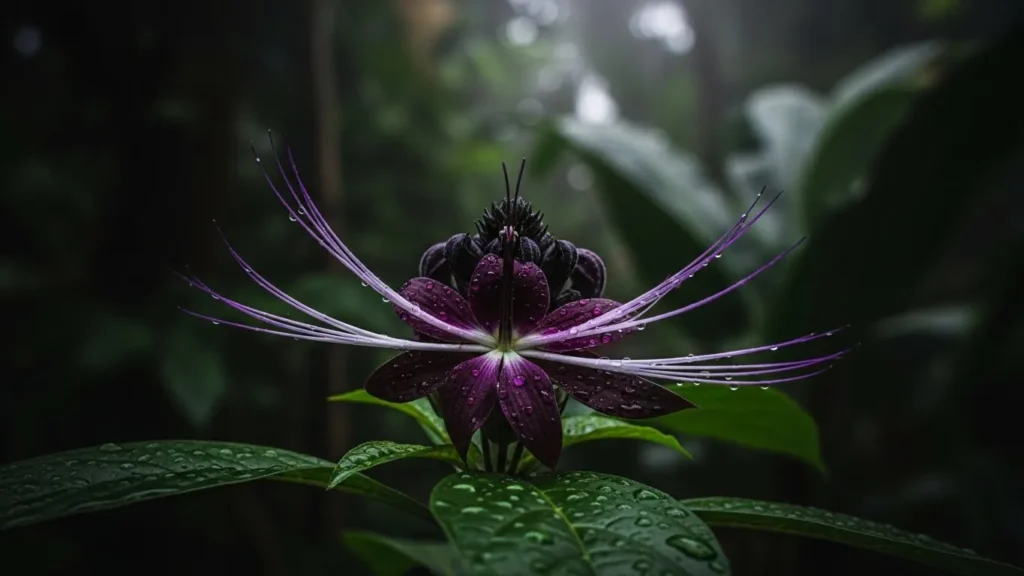
This plant prefers warm, humid environments, making it ideal for gardeners who enjoy more tropical conditions. When it blooms, it becomes a conversation piece and adds a level of intrigue that few other plants can match. While it can be more challenging than other species in this list, the effort is well rewarded with blooms that feel sculptural and eerie in the best way.
7. Black Lace Elderberry
Black Lace Elderberry offers dark, finely cut foliage that resembles black lace or delicate filigree. Its leaves are a deep purple-black that creates an elegant, feathery texture in the garden. What makes it even more interesting is its pink flowers, which appear like soft clouds against the dark background. This contrast builds a beautiful sense of drama that feels soft rather than harsh.
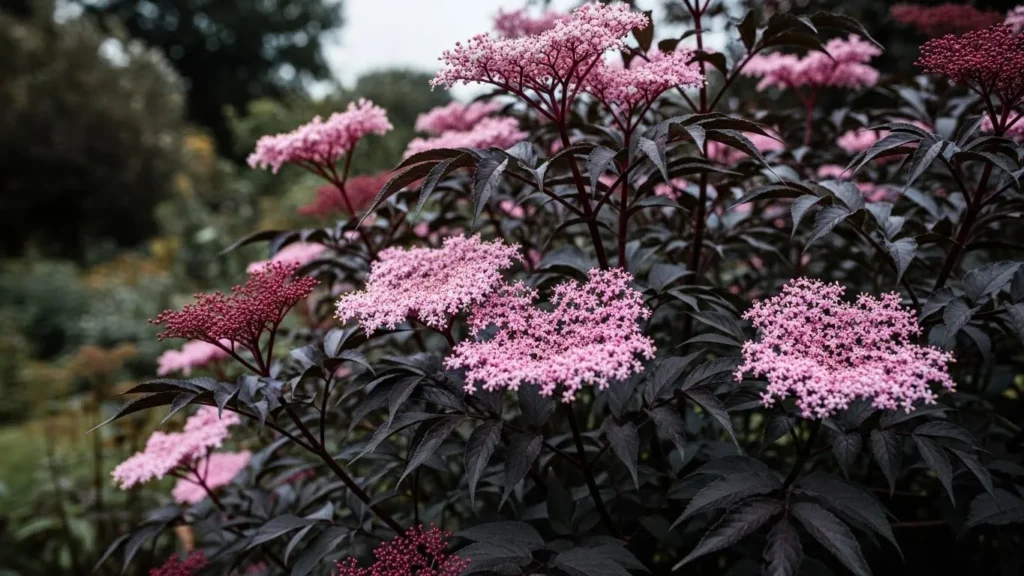
This shrub is surprisingly hardy and fast-growing. It works beautifully as a backdrop plant, helping to define boundaries or frame lighter flowers in front. While its foliage carries strong gothic energy, the pink blooms add a romantic element that prevents the garden from feeling flat. As it grows, it brings a sense of movement and depth that enhances the entire design.
8. Black Pansy
Black pansies are small, but they bring a richness that few other cool-season flowers can provide. Their petals look velvety and absorb light in a way that intensifies their color. From close up, you’ll see that they are not pure black but more of a deep purple, which makes them even more visually interesting. When planted in clusters, they create soft pockets of shadow that complement larger, taller plants.
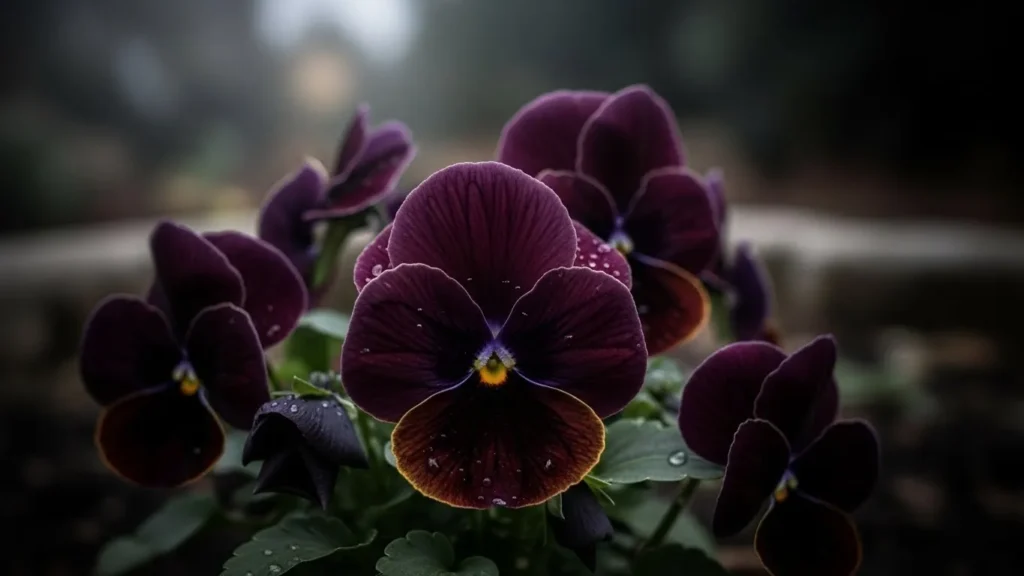
These flowers thrive in cooler months and offer a long blooming period. They’re excellent for edging garden beds, filling pots, or bringing detail to shaded corners. Because they’re easy to care for, they’re a good starting point for gardeners experimenting with moody tones for the first time. Despite their small size, they consistently deliver strong visual impact.
9. Black Aeonium
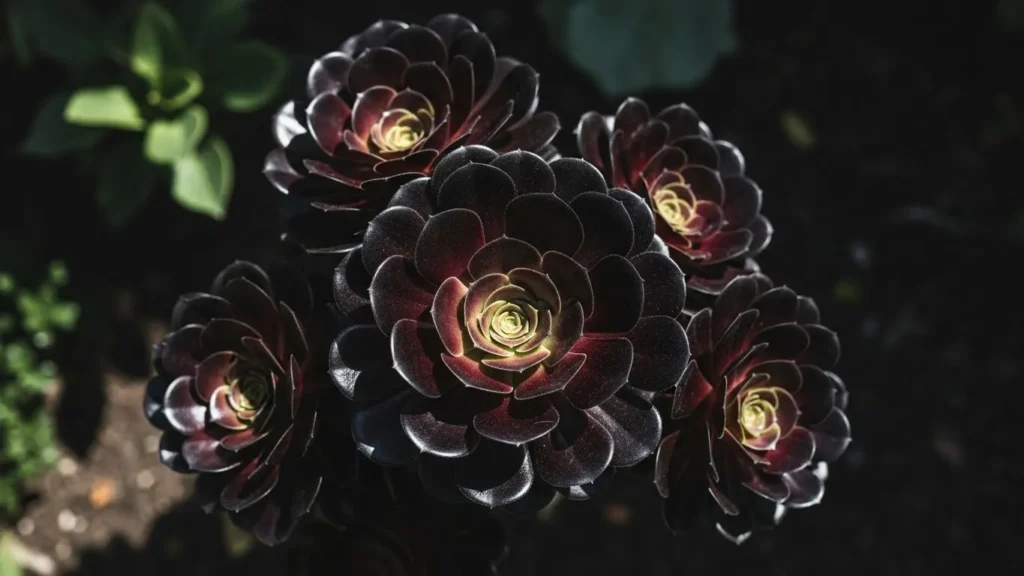
Black Aeonium is a succulent with rosettes so dark they appear nearly black. The glossy texture of its leaves gives it a modern, sculptural quality. This plant is perfect for gardeners looking to create a gothic look without relying entirely on flowers. Its architectural form adds a sense of structure, which is essential for any garden design with a dramatic theme.
These succulents are happiest in bright light, where their color deepens even more. They’re excellent choices for container gardens, rock gardens, and minimalist outdoor spaces. Even when paired with traditional flowers, Black Aeonium helps balance the design by grounding it with a strong, bold form that feels both contemporary and timeless.
10. Black Calla Lily
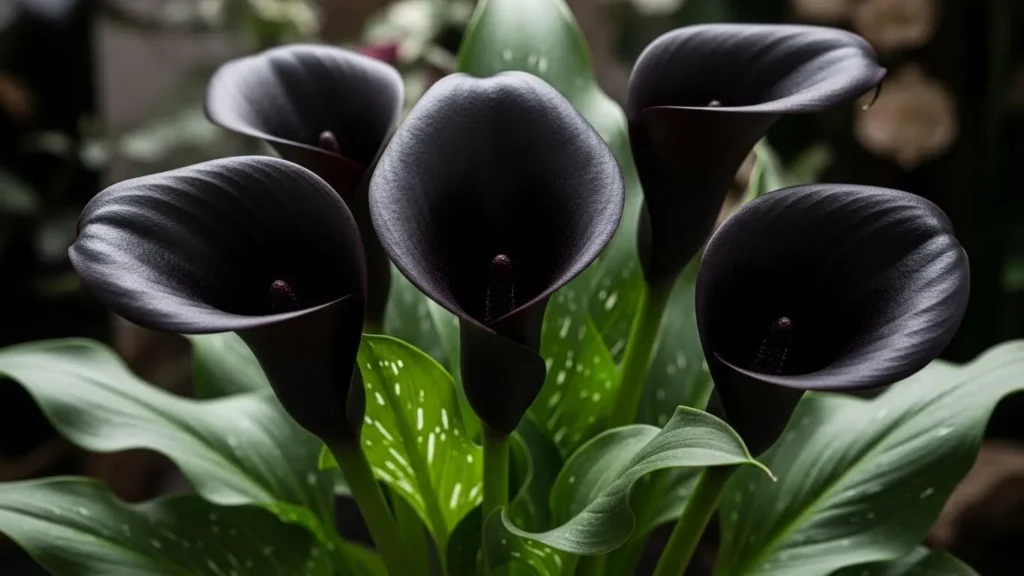
Black calla lilies have a sleek, polished look that makes them one of the most sophisticated flowers for a gothic garden. Their deep, funnel-shaped blooms appear glossy and smooth, creating a sense of elegance that fits well in both formal and natural garden designs. They often carry subtle burgundy tones that add dimension, especially in sunlight.
Calla lilies thrive in moist soil and can handle both sun and partial shade. Their vertical lines help draw the eye upward, adding structure and balance. These flowers are also long-lasting when cut, making them useful for creating moody indoor arrangements. Their combination of dark color and sculptural shape makes them an unforgettable addition to the garden.
11. Black Iris
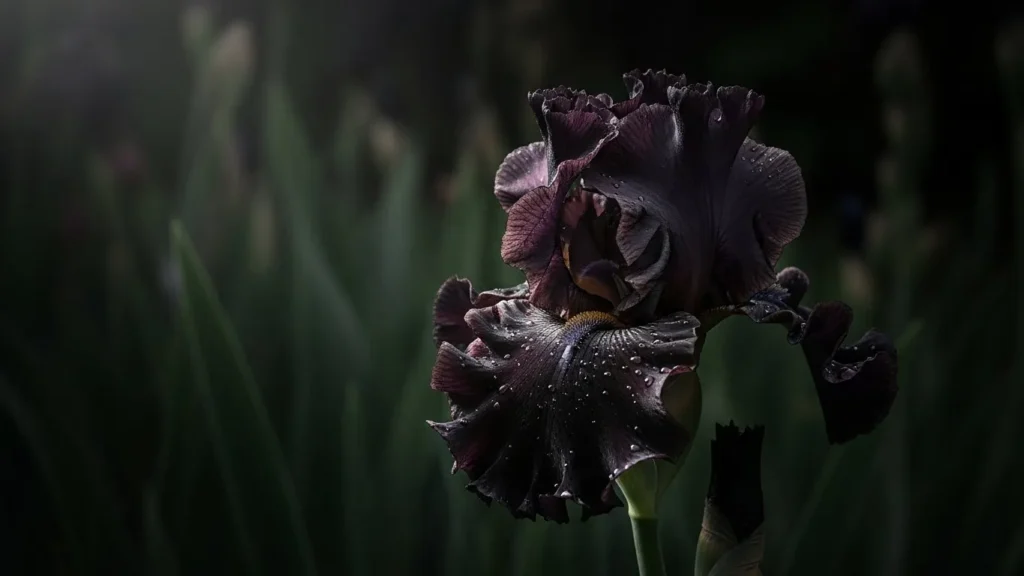
Black iris varieties, especially the variety known as “Before the Storm,” bring a dramatic flair that almost feels theatrical. Their ruffled petals look like layered satin fabric, giving them a sense of luxury and movement. The color ranges from deep plum to near black, making them ideal for gardeners who want to add instant depth.
These irises bloom in late spring and are surprisingly easy to grow. They appreciate sun and well-drained soil and can naturalize over time, creating larger clumps each year. Because of their strong shape and richness, they work beautifully alongside pale blooms such as cream irises or white peonies. Their presence commands attention without overwhelming the surrounding plants.
12. Black Snakeroot (Bugbane)
Black Snakeroot offers dark, smoky foliage that adds a layer of softness to the gothic garden. Its leaves are a deep bronze-purple that darken with age. In late summer, tall spires of white flowers appear, creating a striking contrast that feels almost ghostly against the foliage. This seasonal shift is one of the reasons gardeners love this plant so much.
It thrives in part shade and moist soil, making it useful for shadowy areas where many dark plants struggle. The vertical flower spikes add movement on breezy days, creating a garden experience that feels alive and dynamic. Black Snakeroot helps balance gardens filled with heavy, bold plants by bringing a lighter texture and gentle motion.
13. Black Velvet Petunia
Black Velvet petunias are some of the truest black flowers available. Their petals look plush and velvety, giving them a softness that balances their dark color. These flowers bloom consistently throughout the warm months, making them an easy way to maintain gothic appeal during the entire summer season.

Because they grow well in containers, they can be placed in key areas to anchor your garden’s overall look. Their deep color enhances pale pots, stone planters, and white garden features. Petunias are generally easy to care for and adaptable, making Black Velvet an excellent choice for both beginners and experienced gardeners who want reliable, long-lasting impact.
14. Heuchera ‘Obsidian’
Heuchera ‘Obsidian’ produces shiny, dark purple foliage that looks almost black depending on the light. Unlike many other plants, its leaves provide year-round color, giving the garden continuity through every season. This dependable foliage makes it invaluable for creating layers in your garden’s design, especially in shaded areas where flowers may bloom less often.

The plant thrives in partial shade and works beautifully along pathways or as a border accent. It pairs wonderfully with ferns, hostas, and lighter-colored heuchera varieties. Because it stays compact, it fits effortlessly into small spaces without looking crowded. Its consistent form and saturation give the garden a polished, cohesive feel.
15. Black Dahlia
Black dahlias deliver a dramatic impact with their large blooms and rich, velvety petals. The depth of color varies between varieties, but most offer deep maroon or wine tones that appear black in shade. These flowers bring a luxurious quality to late summer and fall gardens, creating a strong visual finale for the growing season.
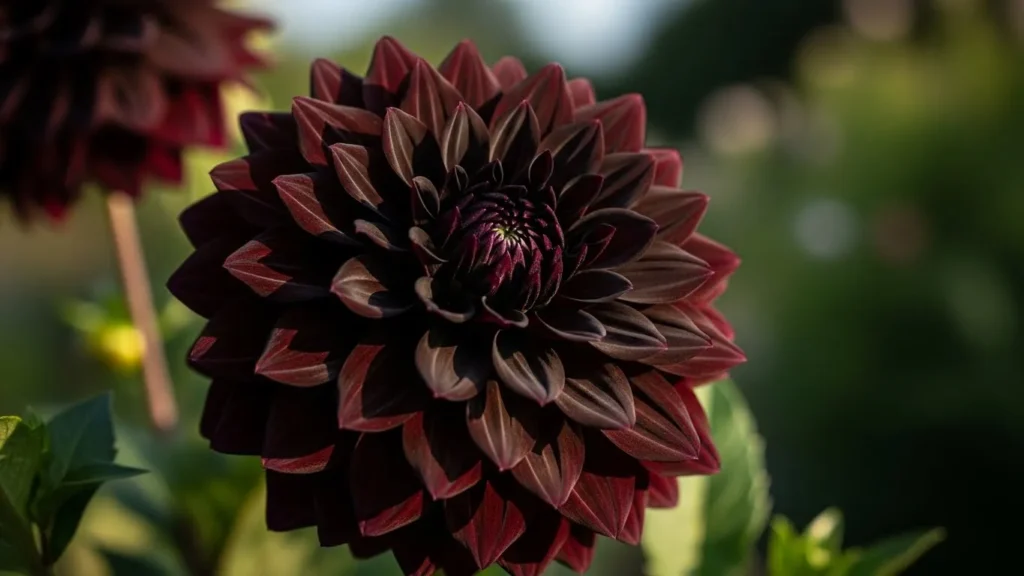
Dahlias appreciate sun and well-drained soil, and with proper care, they reward gardeners with abundant blooms. Their size makes them excellent focal points, and they pair beautifully with soft grasses or pale flowers. Because they bloom later in the year, they help carry the gothic aesthetic into the cooler months, giving the garden lasting mood and texture.