
Aquarium as a Living Wall Feature
One of the most powerful ways to use an aquarium indoors is to treat it as a living wall feature. When installed flush with the wall, an aquarium becomes part of the architecture rather than an add-on. This approach works especially well in living rooms, dining spaces, and large hallways where you want a strong visual anchor.
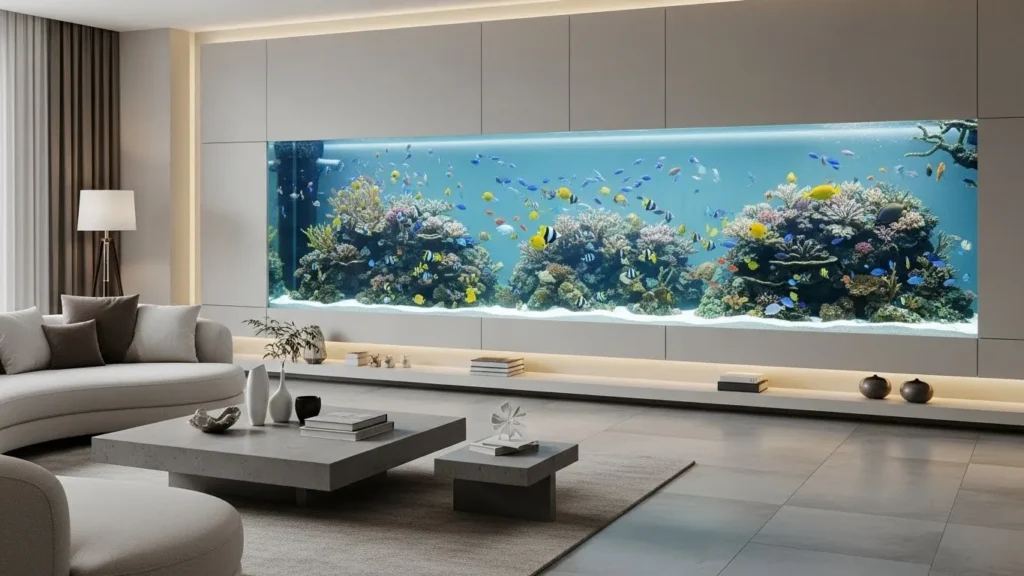
A wall aquarium adds depth, movement, and light to otherwise flat surfaces. Over the years, I’ve seen these installations completely transform plain rooms into spaces people remember. The key is proper sizing and professional installation so the tank feels intentional, not forced. When done correctly, maintenance access is hidden, and the focus stays on the calm movement of fish and plants.
Built-In Aquarium Between Two Rooms
A built-in aquarium placed between two rooms acts as both a divider and a visual connection. I’ve installed these between living rooms and dining areas, home offices and lounges, and even bedrooms and bathrooms. The result is a space that feels open but still defined.
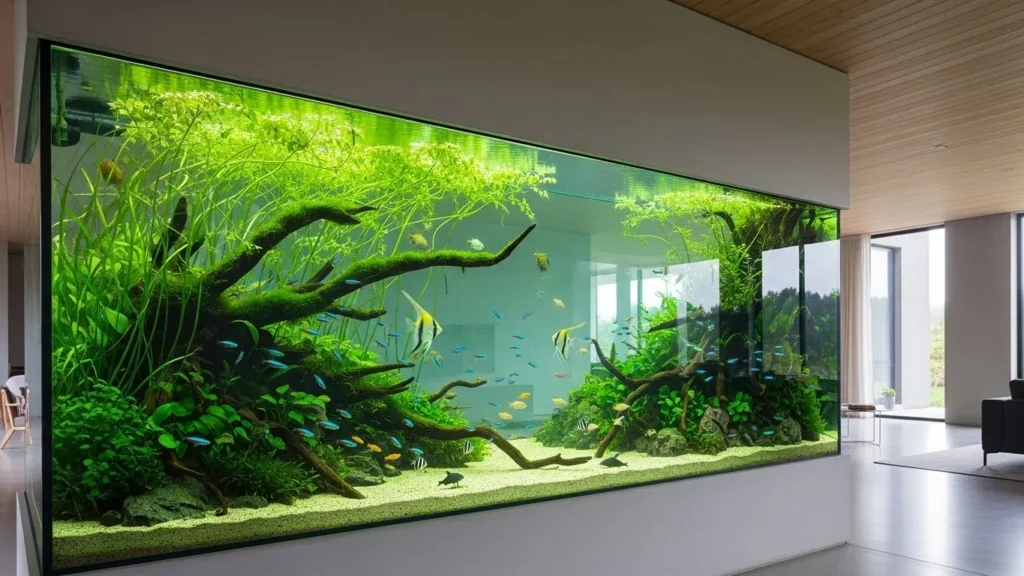
Because light passes through the water, both rooms benefit from the aquarium’s presence. Fish can be viewed from both sides, creating an immersive experience that feels far more special than a standard room divider. From a practical standpoint, these aquariums also help reduce noise and add a soothing atmosphere to shared spaces.
Floor-to-Ceiling Statement Aquarium
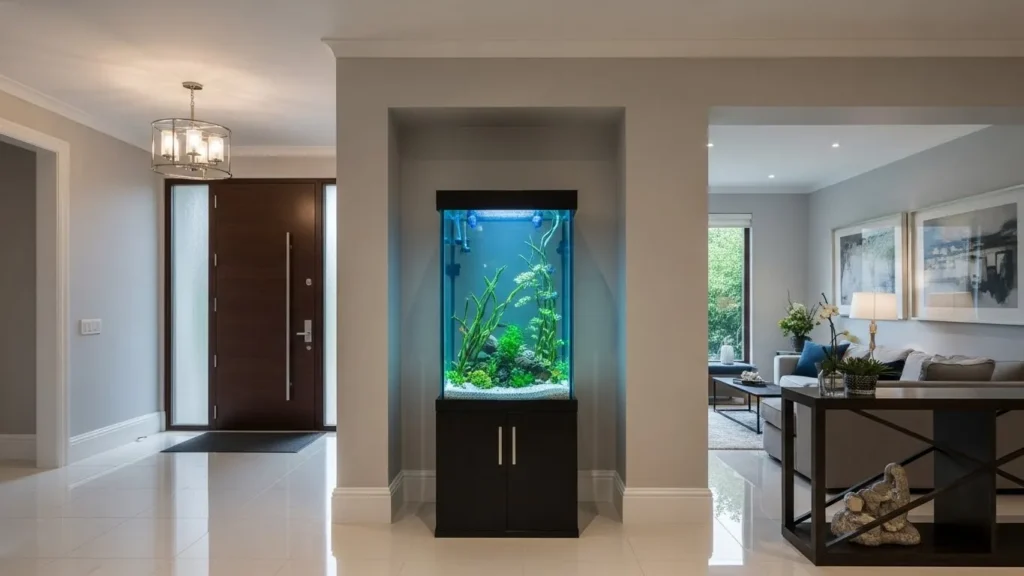
If your goal is to truly elevate your indoor space, few features make a stronger impact than a floor-to-ceiling aquarium. These tall tanks draw the eye upward, making ceilings feel higher and rooms feel more expansive.
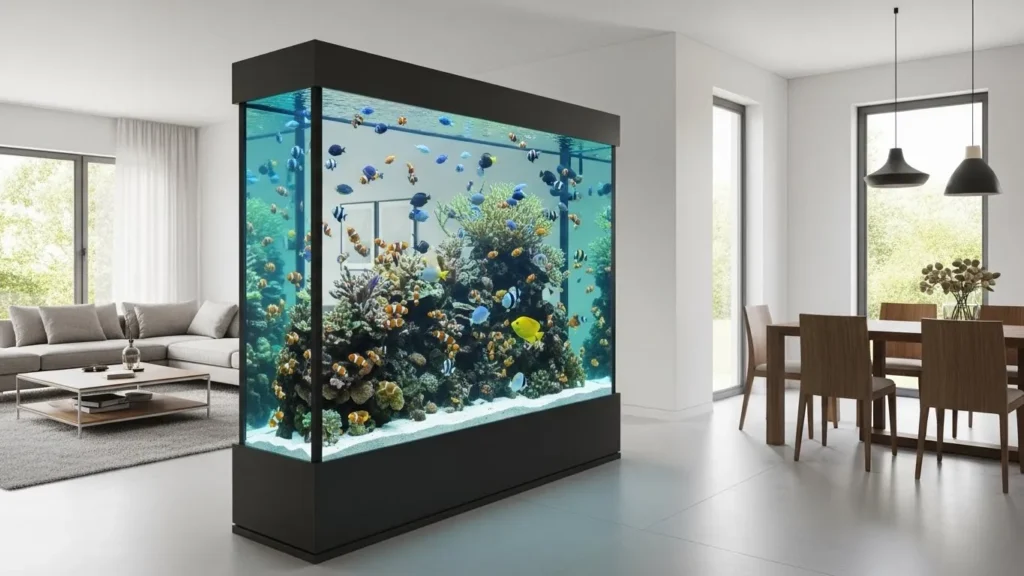
In my experience, these aquariums work best in entryways, stairwells, or open-plan living areas. They immediately communicate luxury and thoughtful design. The height allows for layered aquascaping, which means fish can occupy different visual levels, creating a dynamic scene that changes throughout the day.
Minimalist Aquarium for Modern Interiors
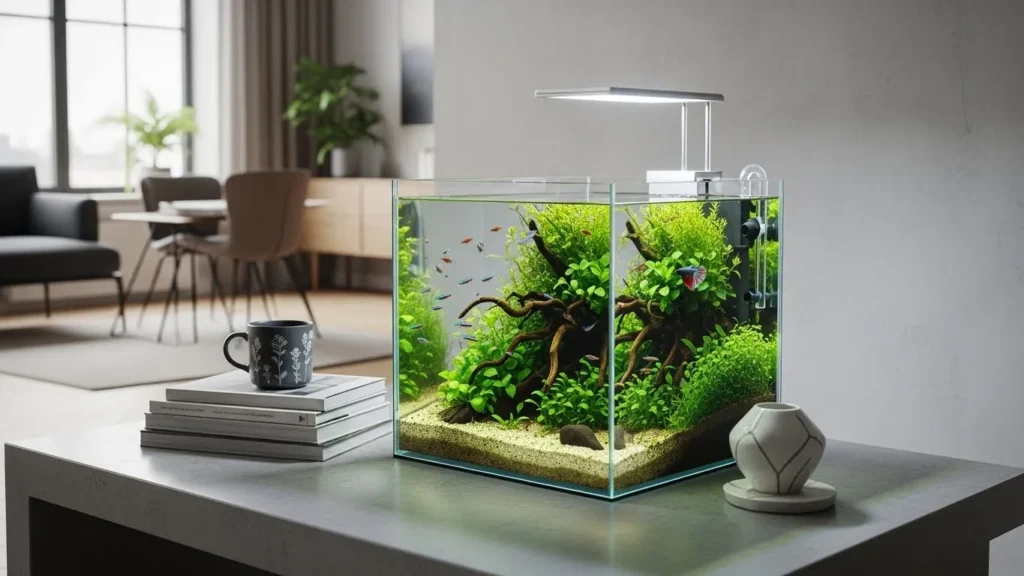
Modern homes benefit from aquariums that follow the same clean and simple design principles. A minimalist aquarium uses clear glass, hidden equipment, and carefully chosen fish to maintain a calm, uncluttered look.
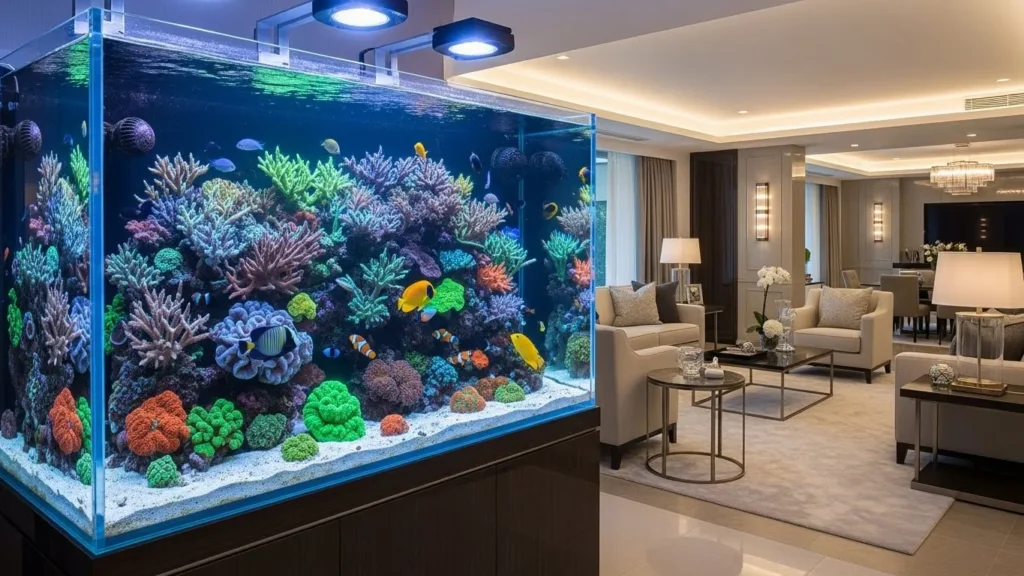
I often recommend this style to homeowners who worry that an aquarium might feel too busy. When done right, it blends seamlessly with modern furniture and neutral color palettes. The simplicity also makes maintenance easier, which is important for long-term success.
Aquarium Integrated Into Custom Furniture
One of the smartest design choices I’ve seen is aquariums integrated directly into custom furniture. This might include coffee tables, media units, or sideboards with built-in tanks.
These designs save space while adding a strong visual feature. They work especially well in apartments or homes where floor space is limited. Over the years, I’ve noticed that people interact more with these aquariums because they are part of everyday furniture rather than something set apart.
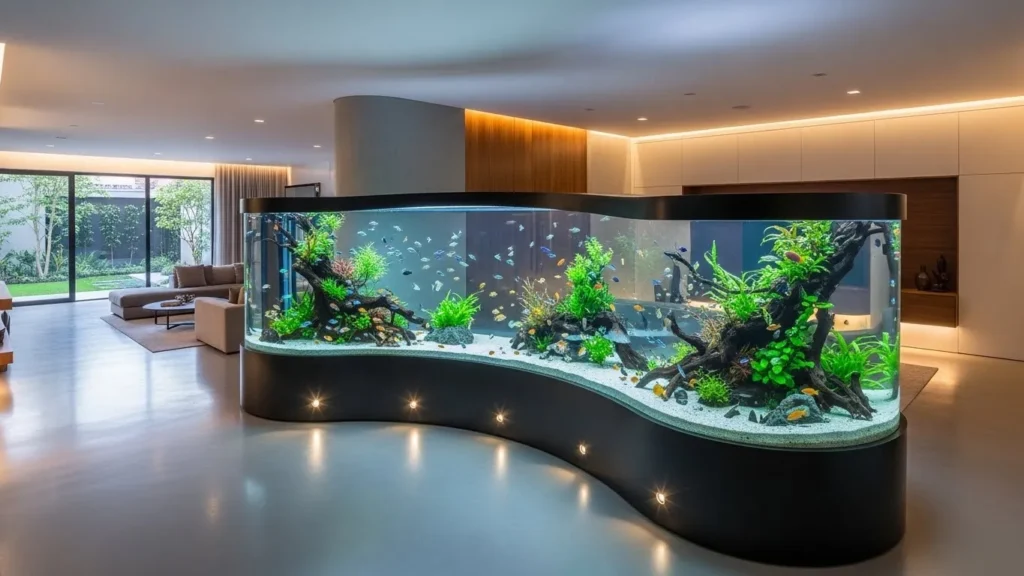
Room Divider Aquarium for Open Layouts
Open-plan homes often struggle with defining zones without closing spaces off. A room divider aquarium solves this problem beautifully. It separates areas visually while keeping the space open and light.
From practical experience, these aquariums are excellent for living and dining combinations. They add structure without walls and create a natural focal point that anchors the layout. Fish movement also softens the transition between zones, making the space feel more relaxed.
Corner Aquarium to Maximize Unused Space
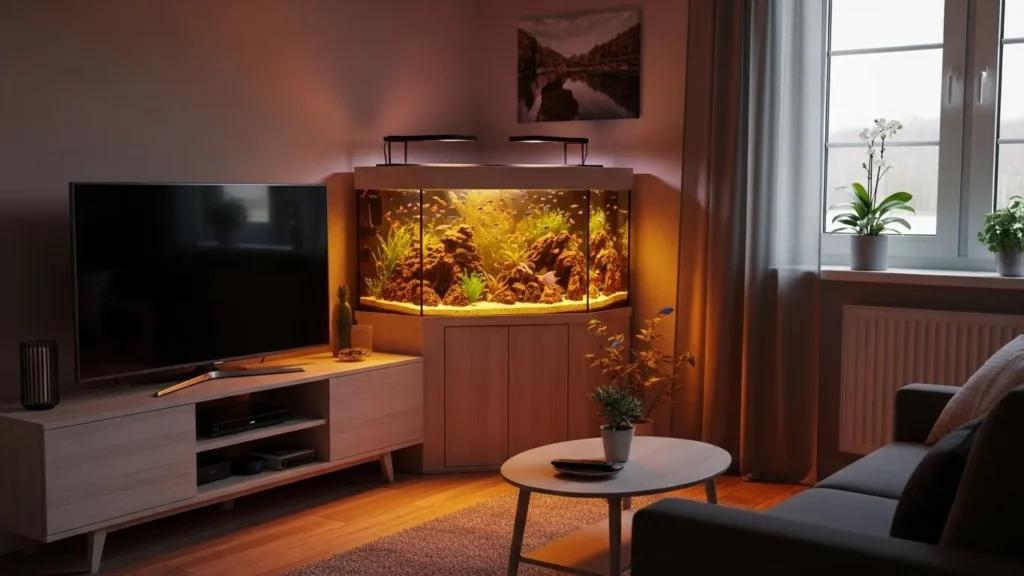
Corners are often underused in interior design, yet they can be perfect locations for aquariums. A well-designed corner tank turns dead space into something engaging and alive.
I’ve installed many corner aquariums in small living rooms and bedrooms where every inch matters. They fit naturally without disrupting traffic flow and still provide a strong visual presence. With proper lighting, a corner aquarium can feel like a glowing feature rather than an afterthought.
Aquarium Under Staircase Design
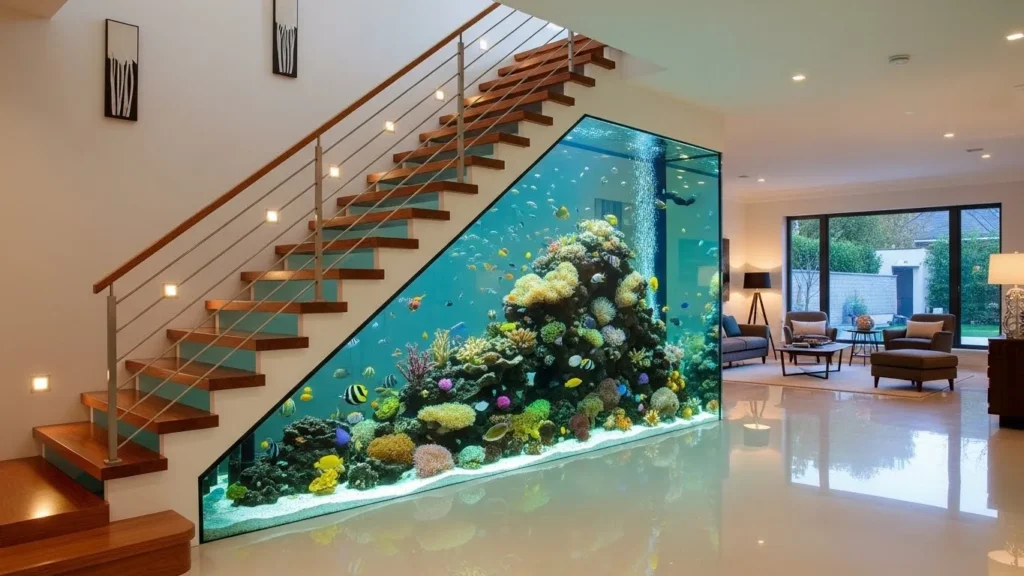
The area under staircases is one of the most overlooked spaces in homes. Turning this space into an aquarium installation adds both function and beauty.

In homes where storage under stairs isn’t essential, an aquarium here becomes a surprising and elegant feature. I’ve seen these designs turn ordinary staircases into conversation pieces. The sloped lines of the stairs also add a unique framing effect to the tank.
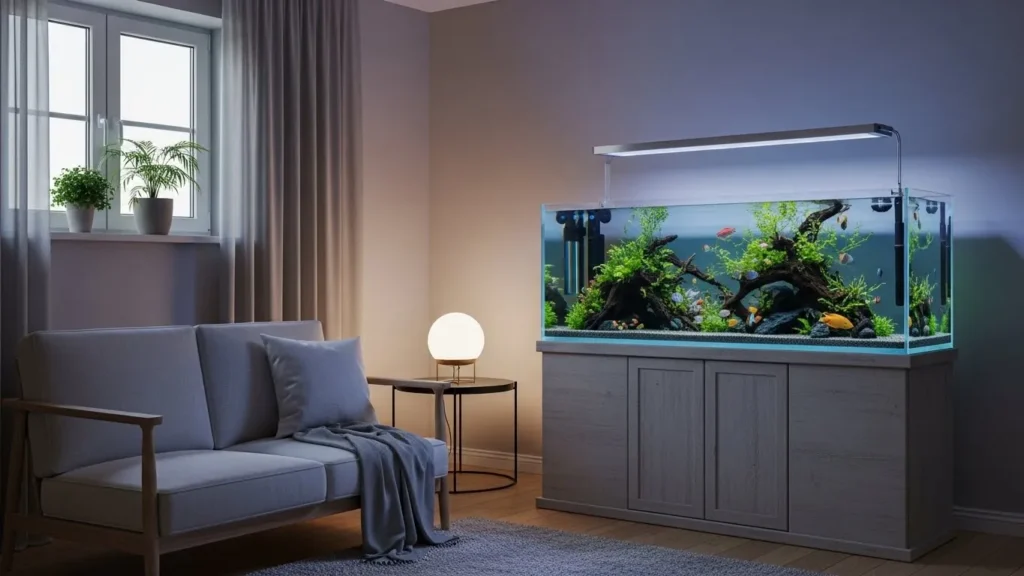
Large Planted Aquarium for Natural Calm
Planted aquariums bring a sense of nature indoors that few other design elements can match. When designed properly, they resemble underwater gardens rather than fish tanks.
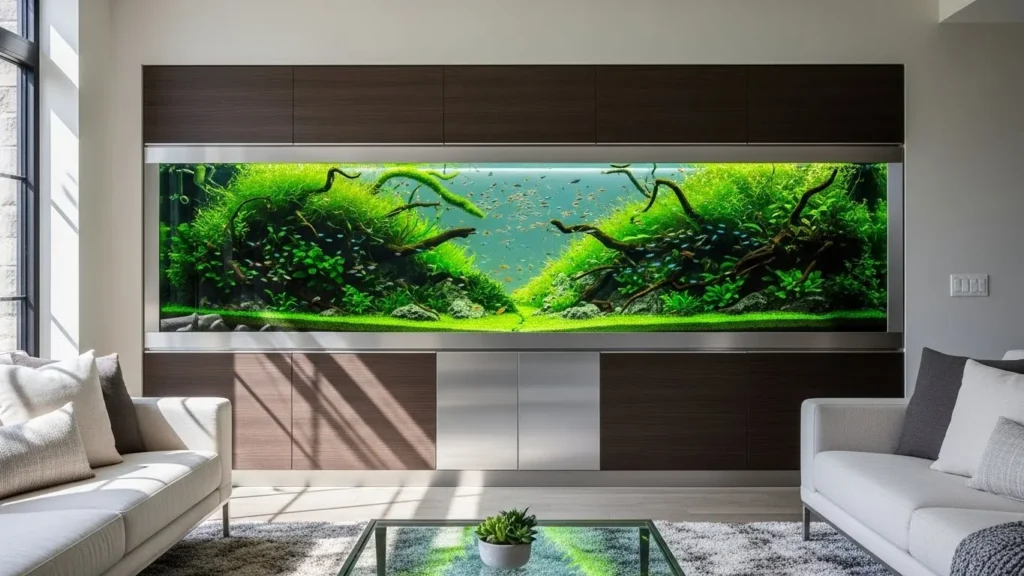
From years of hands-on work, I can confidently say that planted aquariums reduce stress and improve how a room feels. The greenery softens hard surfaces and creates a gentle rhythm that helps people relax. These aquariums work especially well in living rooms, home offices, and bedrooms.
Aquarium as a Home Office Feature
With more people working from home, the need for calming and inspiring environments has grown. An aquarium in a home office can significantly improve focus and reduce stress.
I’ve helped many clients add aquariums to their workspaces, and the feedback is always positive. Watching fish during short breaks helps clear the mind without pulling attention away from work. The key is choosing a quiet filtration system and placing the tank within comfortable viewing distance.
Kitchen Aquarium for Unique Visual Interest
While kitchens may seem like an unusual place for aquariums, they can work surprisingly well when planned carefully. A slim aquarium built into a wall or island adds unexpected visual interest.
In my experience, kitchen aquariums work best when placed away from heat sources and direct sunlight. When done correctly, they add life to a space that is often dominated by hard surfaces and appliances.
Bedroom Aquarium for Relaxation
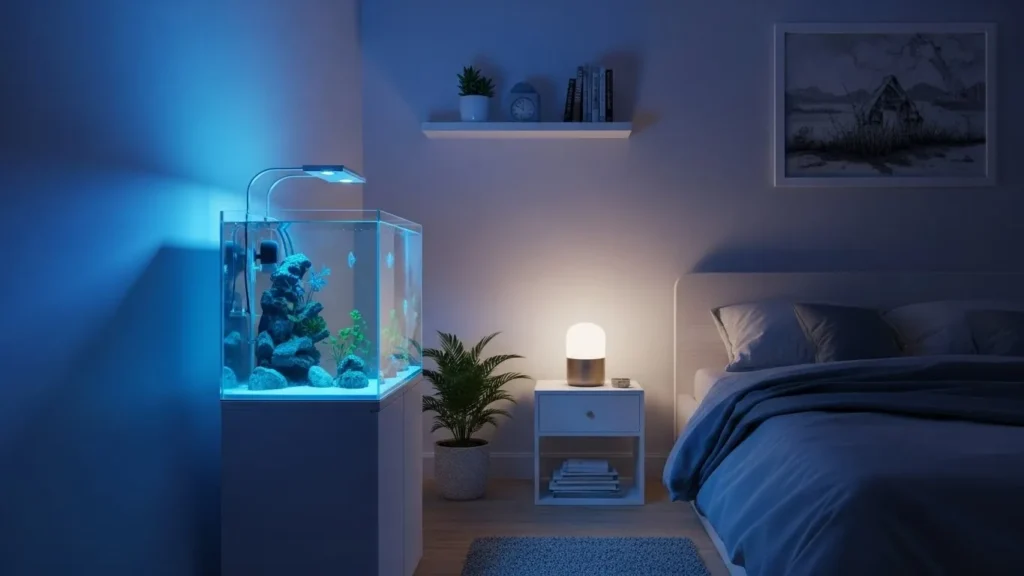
A bedroom aquarium should always focus on calm and simplicity. Soft lighting, gentle water movement, and peaceful fish species help create a relaxing atmosphere.

I often recommend smaller or medium-sized tanks for bedrooms to avoid overwhelming the space. When placed correctly, an aquarium can become part of a nightly wind-down routine, helping improve sleep quality and overall comfort.
Aquarium in a Reading or Meditation Space
Quiet spaces such as reading corners or meditation rooms benefit greatly from aquariums. The slow movement of fish naturally encourages stillness and focus.

Over the years, I’ve seen how these aquariums become part of daily rituals. People sit longer, breathe deeper, and feel more present. The key is keeping the design simple and avoiding bright or distracting colors.
Luxury Reef Aquarium as Art
Reef aquariums are living art pieces when done properly. The colors, textures, and movement create a visual depth that no painting can match.
That said, reef aquariums require commitment and experience. I always advise homeowners to invest in proper equipment and professional guidance. When maintained well, a reef aquarium becomes the centerpiece of a home and a source of constant fascination.
Aquarium Built Into a Media Wall
Integrating an aquarium into a media wall creates a balanced and modern entertainment area. The contrast between a screen and living water adds visual interest without competing for attention.
From a design standpoint, this setup works best when the aquarium is placed to the side rather than directly above or below the screen. This ensures both features can be enjoyed comfortably.
Small Aquarium for Compact Spaces
Not every home needs a large aquarium to feel elevated. Small aquariums can be just as impactful when thoughtfully designed.
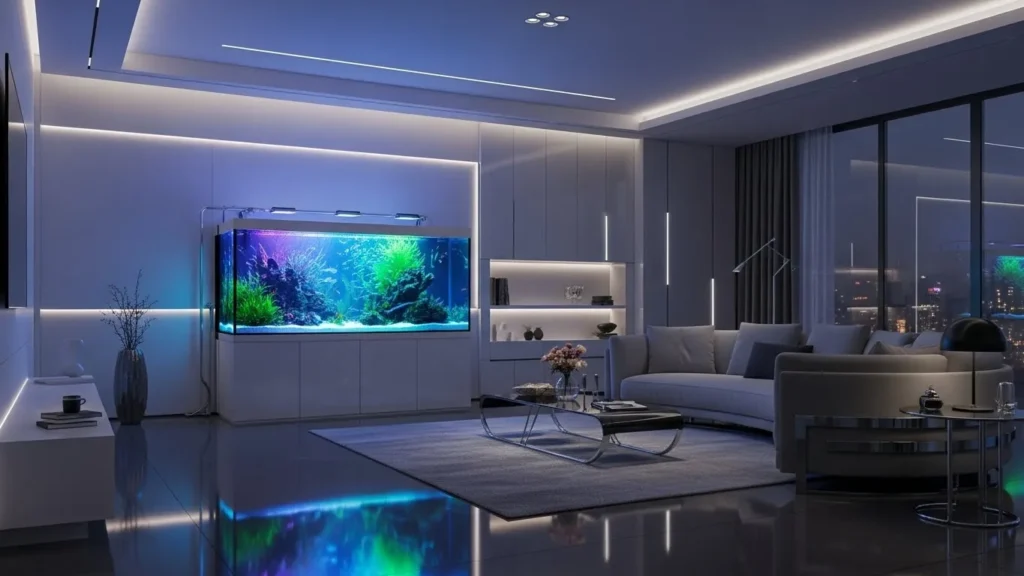
I’ve seen tiny apartments transformed by a single well-placed tank. The key is quality over quantity. Clear glass, good lighting, and healthy fish matter more than size.
Entryway Aquarium for Strong First Impressions
An aquarium in the entryway sets the tone for the entire home. It immediately signals care, calm, and attention to detail.
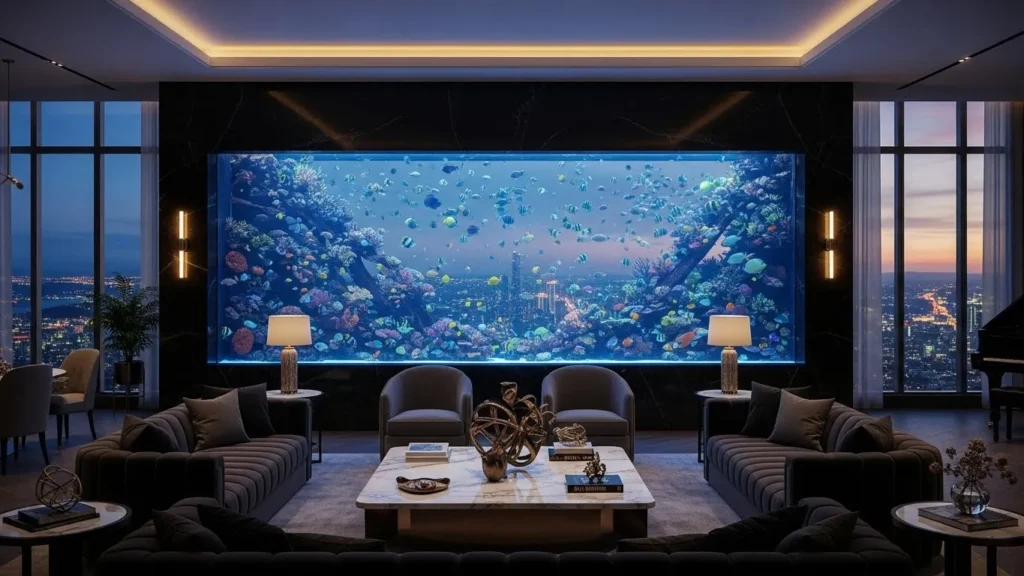
From long experience, I can say that guests always remember homes with entryway aquariums. They create a welcoming atmosphere and help transition from the outside world into a more relaxed indoor environment.
Aquarium Paired With Natural Materials
Pairing aquariums with materials like wood, stone, and concrete creates a grounded and timeless look. The contrast between living water and solid textures adds depth to interior design.
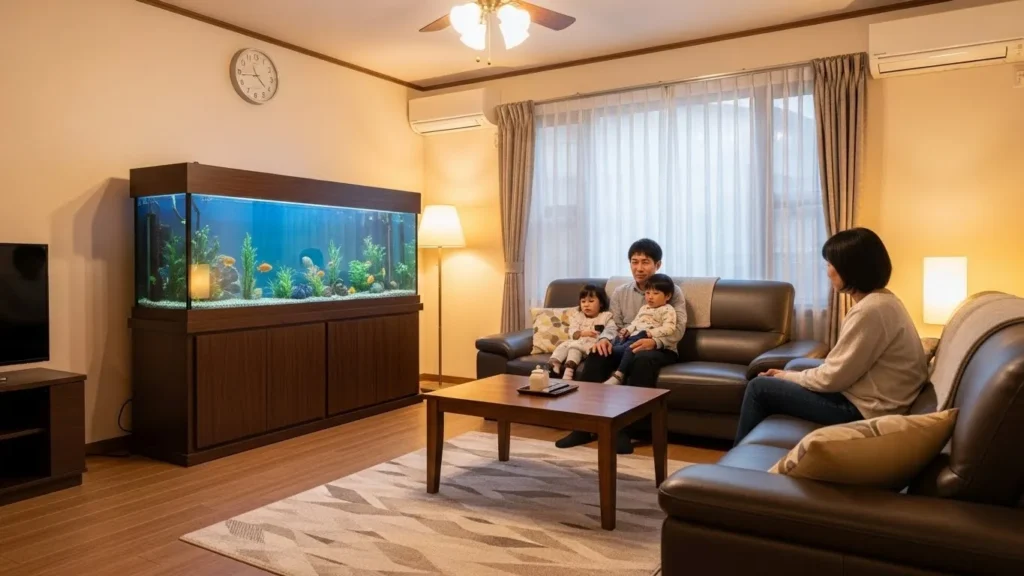
I often recommend this approach for homes aiming for a natural or earthy aesthetic. The result feels balanced and intentional rather than overly decorative.
Custom Aquarium for Unique Floor Plans
Every home is different, and sometimes standard aquariums just don’t fit. Custom aquariums allow you to design a tank that works perfectly with your space.

Over the years, custom builds have consistently delivered the best long-term results. They consider load-bearing capacity, lighting, maintenance access, and visual flow from the start. While the upfront cost may be higher, the payoff in usability and aesthetics is worth it.