
#1.The 2026 Open Layout Kitchen Mindset
Before diving into individual concepts, it helps to understand how open kitchens are being approached today. In the past, open layouts were about removing walls. In 2026, the focus is on control. Homeowners want openness with boundaries, flow with function, and beauty with durability.
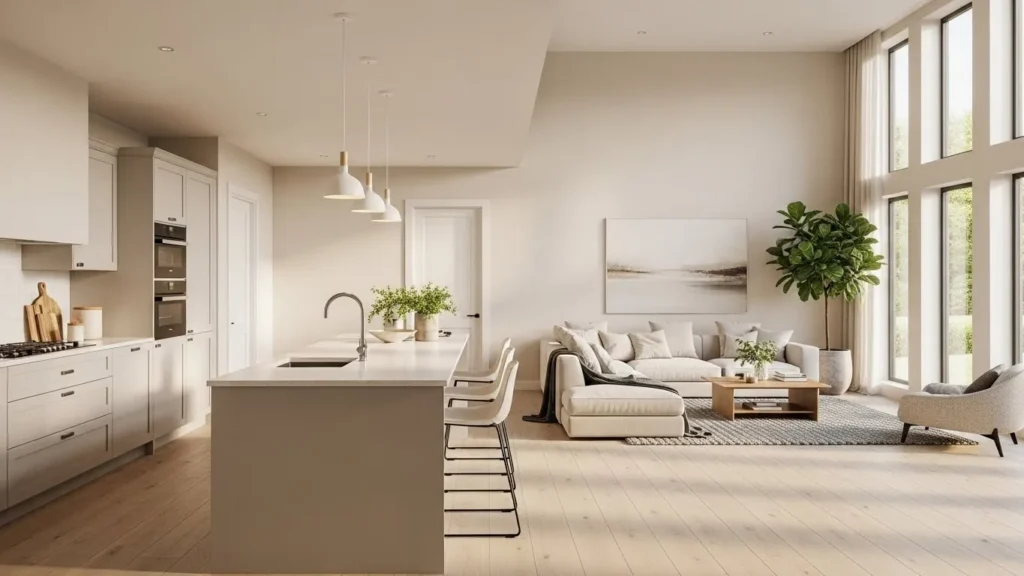
The modern open kitchen must connect visually with living and dining areas while still managing noise, clutter, and smells. Materials are warmer, layouts are more intentional, and technology is quieter and more hidden. Every successful remodel starts with this mindset.
#2.Seamless Kitchen-to-Living Room Flow
This concept focuses on making the kitchen feel like part of the living room without blending everything into one confusing space. Flooring often stays consistent across areas, while cabinetry and ceiling treatments subtly define zones.
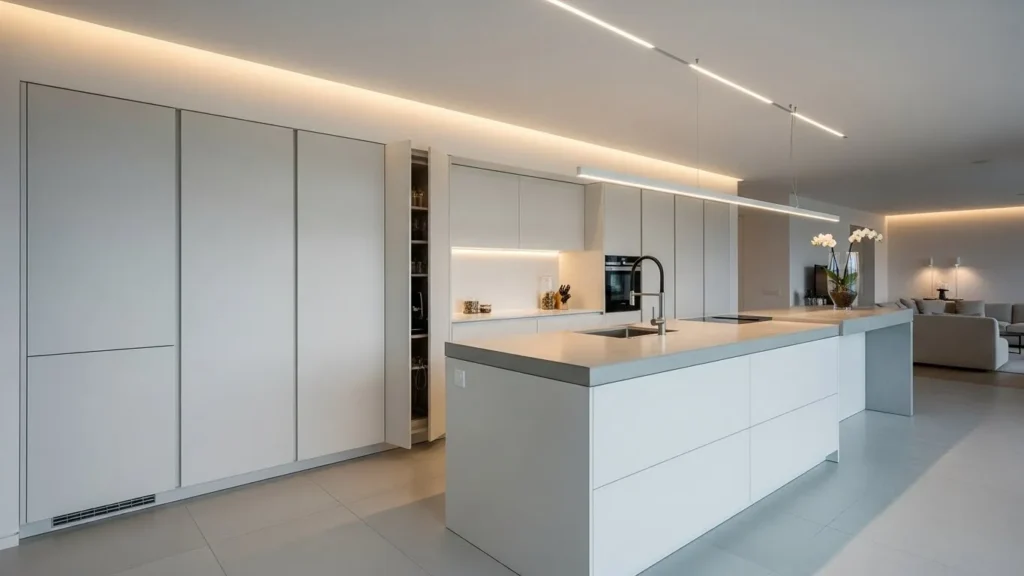
What makes this work is careful alignment. Islands line up with sofas, lighting grids match across rooms, and sightlines stay clean. When done right, the kitchen no longer feels like a work zone but like a natural extension of the home’s main living area.
#3.Hidden Storage for Open Sightlines
Open layouts expose everything, which makes storage more important than ever. In 2026, kitchens are designed with far more hidden storage than visible display.
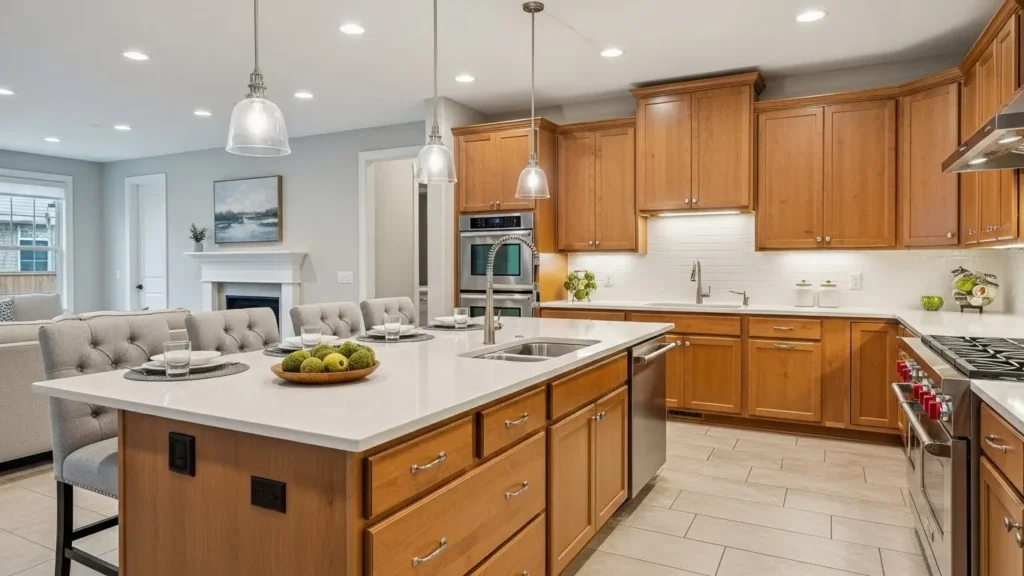
Tall pantry walls, appliance garages, toe-kick drawers, and ceiling-height cabinets reduce visual noise. The goal is simple: when you look at the kitchen from the living room, you see calm surfaces, not clutter. This concept alone dramatically improves how open kitchens feel day to day.
#4.Multi-Use Kitchen Islands
The island is no longer just a prep surface. In current remodels, it serves as seating, storage, dining, charging station, and sometimes even a work desk.
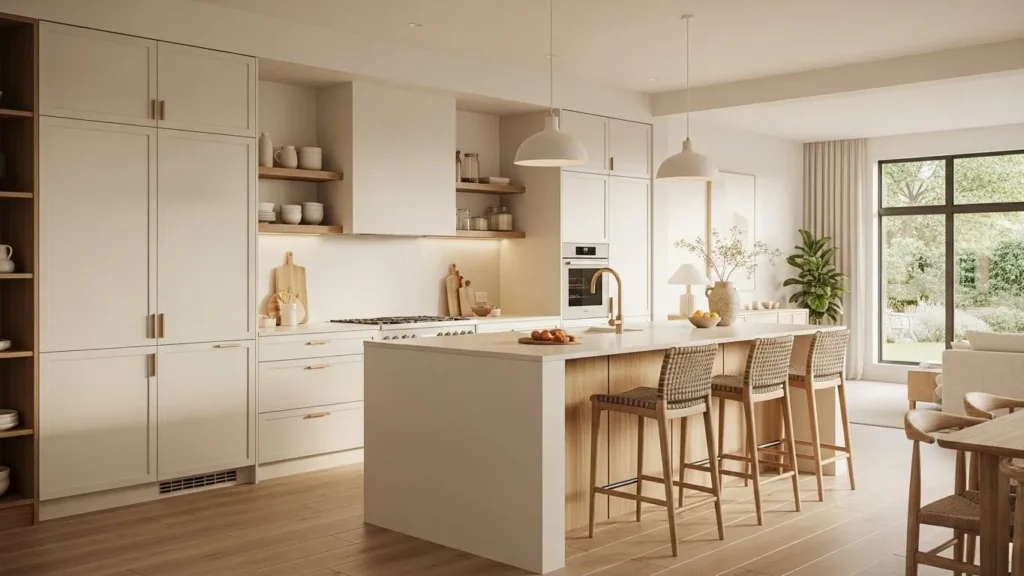
Successful island design focuses on proportion and clearance. Oversized islands that block walkways are a common mistake. The best designs balance seating depth, walking space, and task zones so the island enhances flow instead of interrupting it.
#5.Warm Minimalism Instead of Cold Modern
The stark white kitchens of the past are giving way to warmer, softer minimal designs. Think off-white cabinets, light wood tones, and gentle textures instead of hard contrasts.
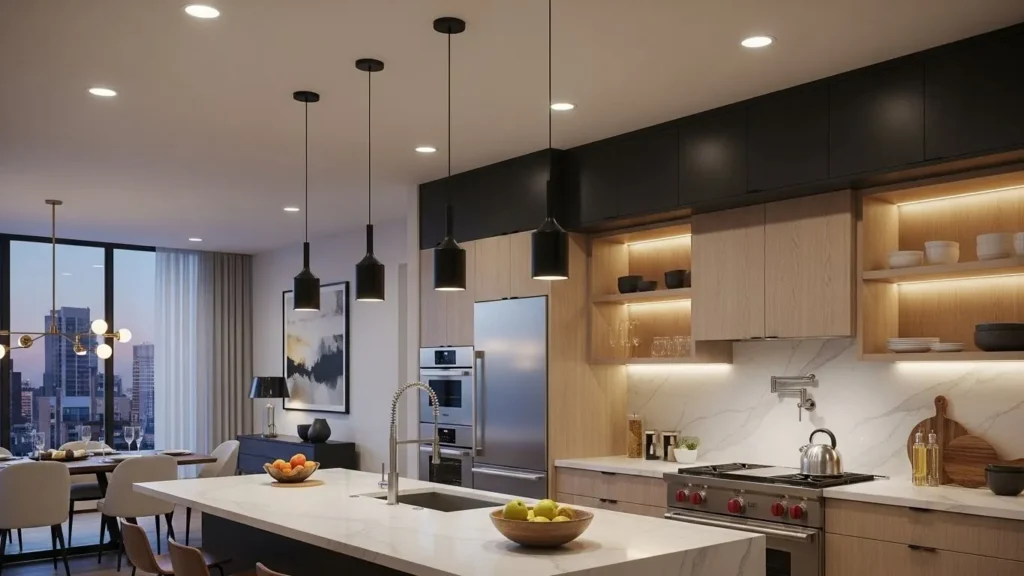
This approach works especially well in open layouts because it blends easily with living room furniture. The kitchen feels designed, not sterile. Warm minimalism also ages better, which matters if you plan to stay in your home long term.
#6.Zoned Lighting for Open Spaces
Lighting is one of the most misunderstood parts of open kitchen remodels. One large ceiling fixture is never enough.
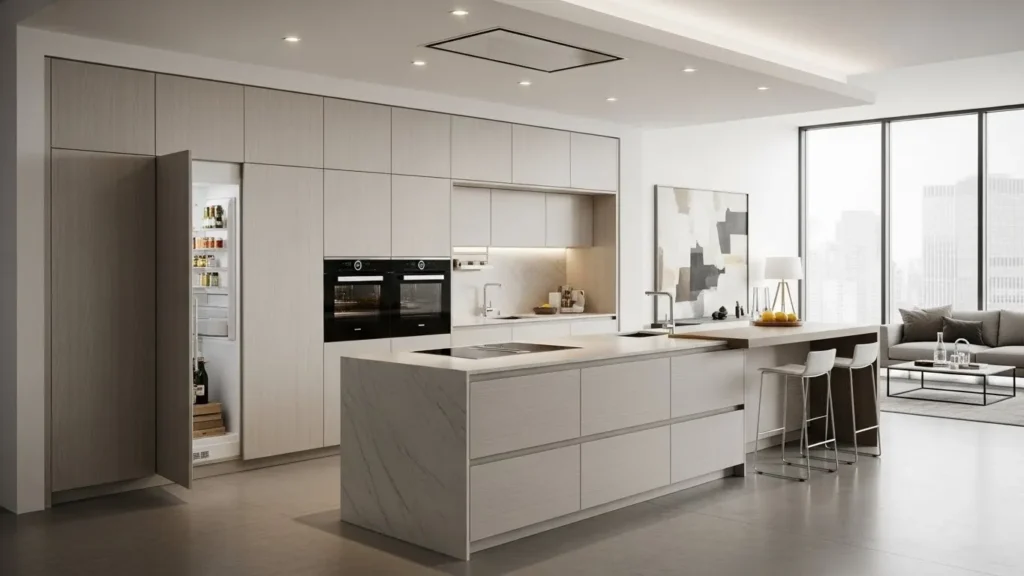
In 2026, open layouts rely on layered lighting. Task lighting supports cooking, ambient lighting connects spaces, and accent lighting adds mood. Proper zoning allows the kitchen to function independently without overpowering nearby living areas, especially at night.
#7.Integrated Appliance Design
Open kitchens demand appliances that blend in rather than stand out. Panel-ready refrigerators, concealed dishwashers, and built-in wall ovens are now standard in high-quality remodels.
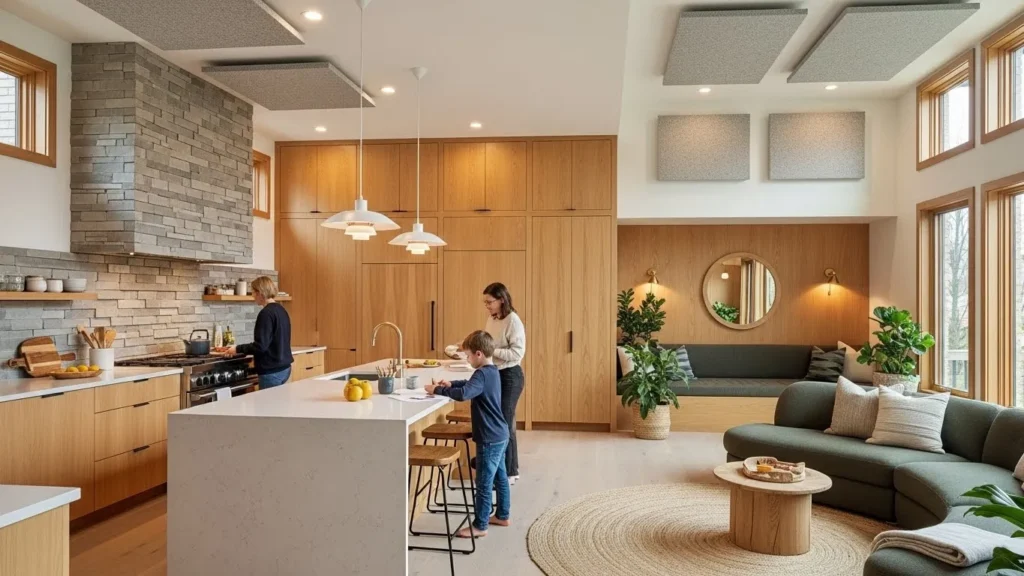
This concept reduces visual clutter and keeps the focus on the overall space instead of individual machines. Integrated appliances also help kitchens feel calmer when viewed from across the room.
#8.Quiet Materials for Open Living
Noise travels quickly in open layouts. In response, remodels now include sound-absorbing materials that don’t look industrial.
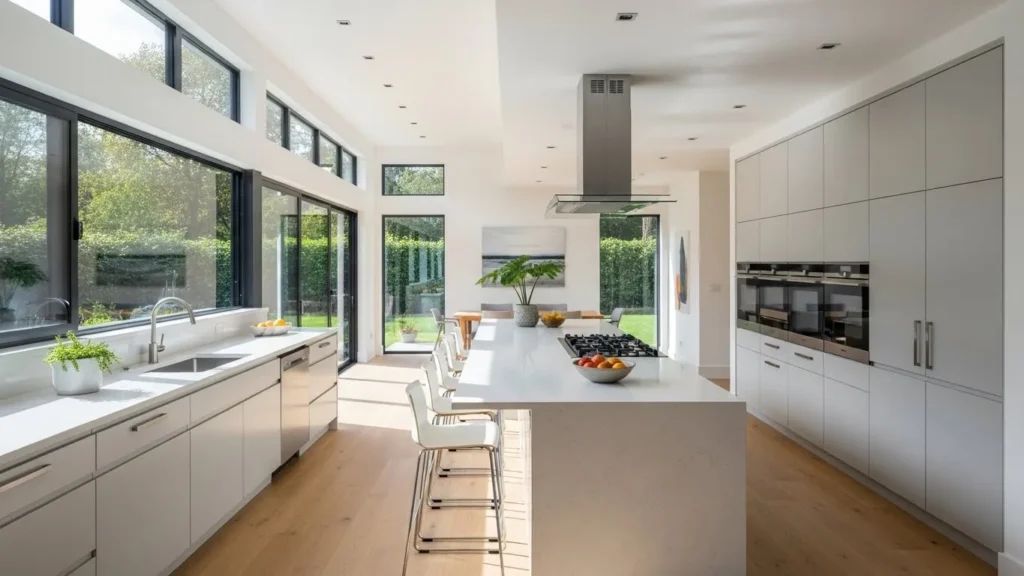
Wood slat panels, upholstered bar seating, textured backsplashes, and acoustic ceiling treatments all help soften sound. These details make open kitchens more comfortable, especially in busy households.
#9.Natural Light Maximization
Open kitchens almost always benefit from better light, and 2026 designs lean heavily into that advantage. Larger windows, extended glass doors, and interior sightlines allow daylight to flow deep into the space.
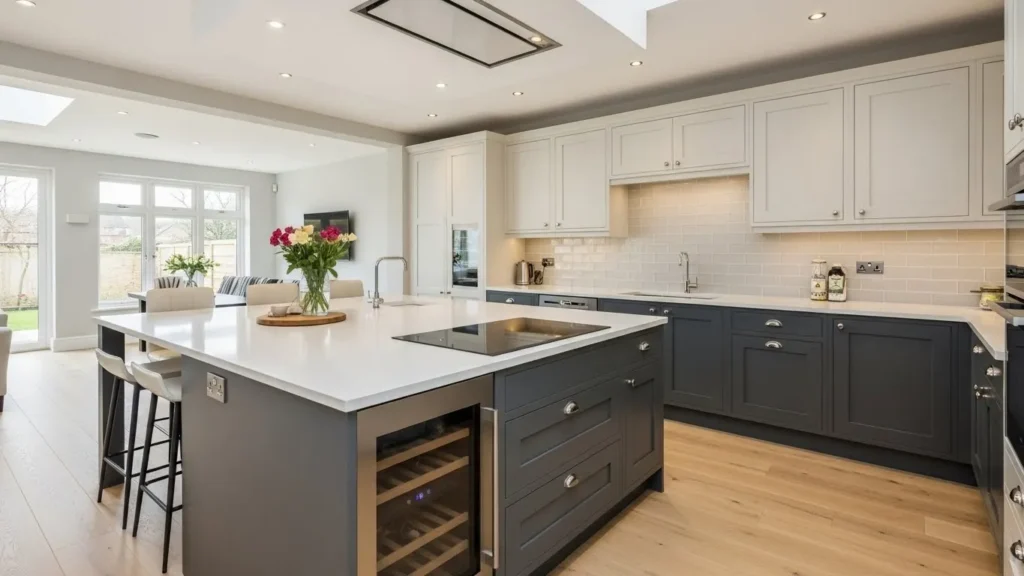
The key is balance. Too much glass without proper shading causes glare and heat issues. Smart placement and proper window treatments make the space bright without becoming uncomfortable.
#10.Two-Tone Cabinet Strategies
Two-tone cabinets remain popular, but they’re used more intentionally now. Instead of harsh contrast, designers use subtle differences in tone or finish.
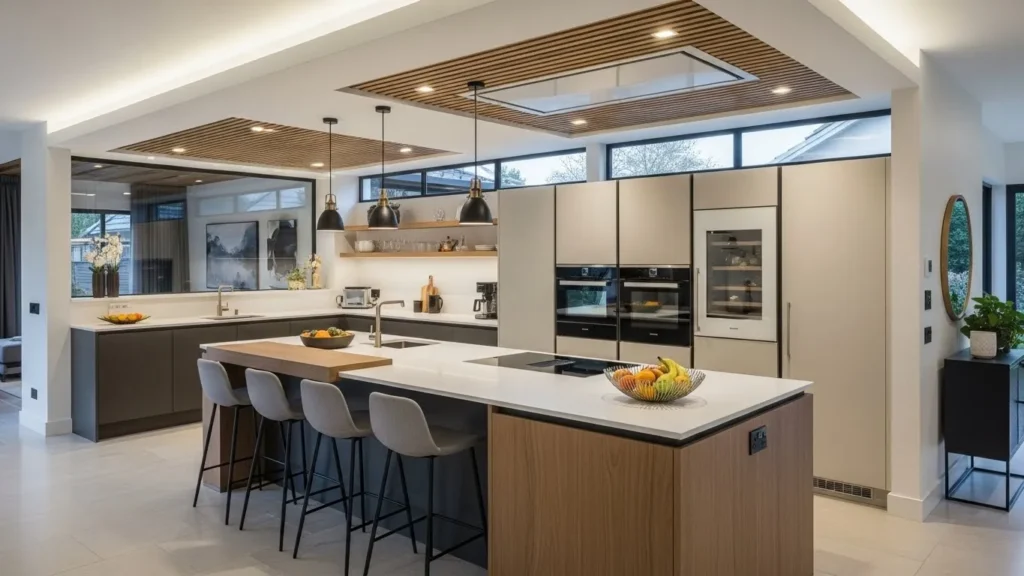
For example, upper cabinets may be slightly lighter while lower cabinets add depth. This creates visual grounding without breaking the open feel. When coordinated with nearby rooms, the effect is cohesive rather than trendy.
#11.Defined But Open Kitchen Boundaries
One major shift in open layout design is the return of soft boundaries. Partial walls, ceiling drops, columns, and furniture placement create separation without enclosure.

This approach solves common complaints about open kitchens feeling chaotic or exposed. It gives the kitchen its own identity while maintaining an open connection to the rest of the home.
#12.Dining Areas Integrated Into the Kitchen
Instead of separate dining rooms, more remodels now integrate dining directly into the kitchen space. Extended islands or adjoining tables serve everyday meals without formal staging.
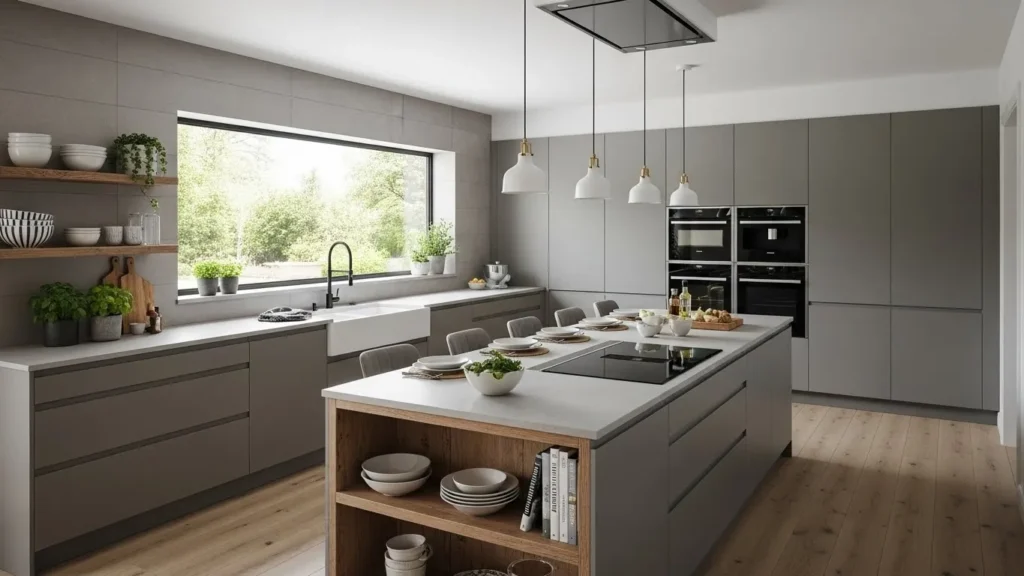
This concept supports real life. Families eat together casually, guests gather naturally, and the kitchen becomes the home’s central hub without feeling crowded.
#13.Durable Surfaces for High Visibility
Open kitchens show wear faster because they’re always visible. In response, homeowners are choosing materials that age gracefully.
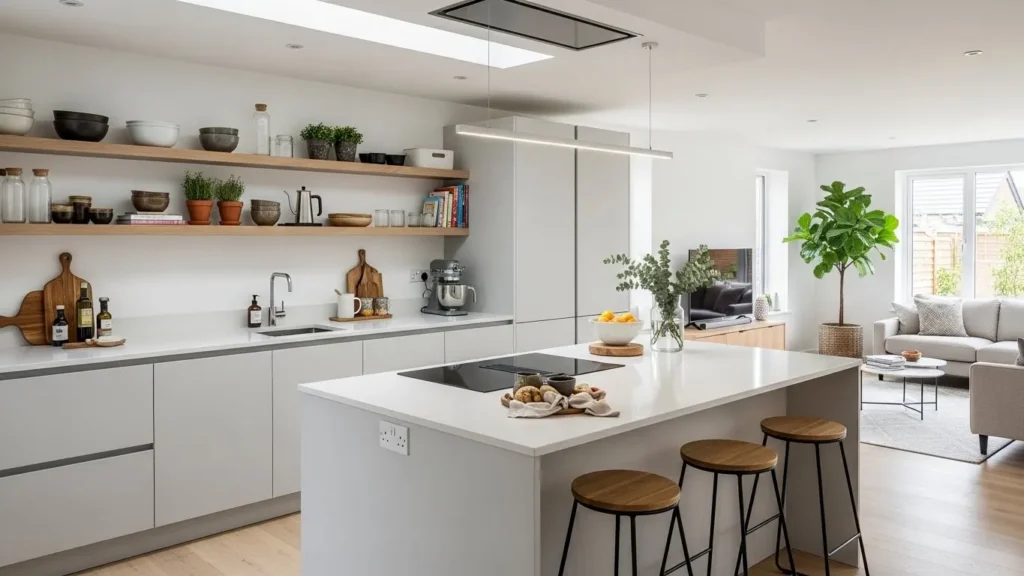
Quartz countertops, matte cabinet finishes, and textured backsplashes hide fingerprints and scratches better than glossy options. Durability is no longer optional when the kitchen is always on display.
#14.Open Shelving With Purpose
Open shelving hasn’t disappeared, but it’s now used with restraint. Instead of covering entire walls, shelves are limited to accent areas or corners.

The focus is on function and balance. Shelves display everyday items or carefully chosen objects, not clutter. This keeps the open layout feeling intentional rather than messy.
#15.Consistent Color Palettes Across Spaces
One of the biggest mistakes in open layouts is mismatched color schemes. In 2026, successful remodels treat the kitchen as part of a larger palette.
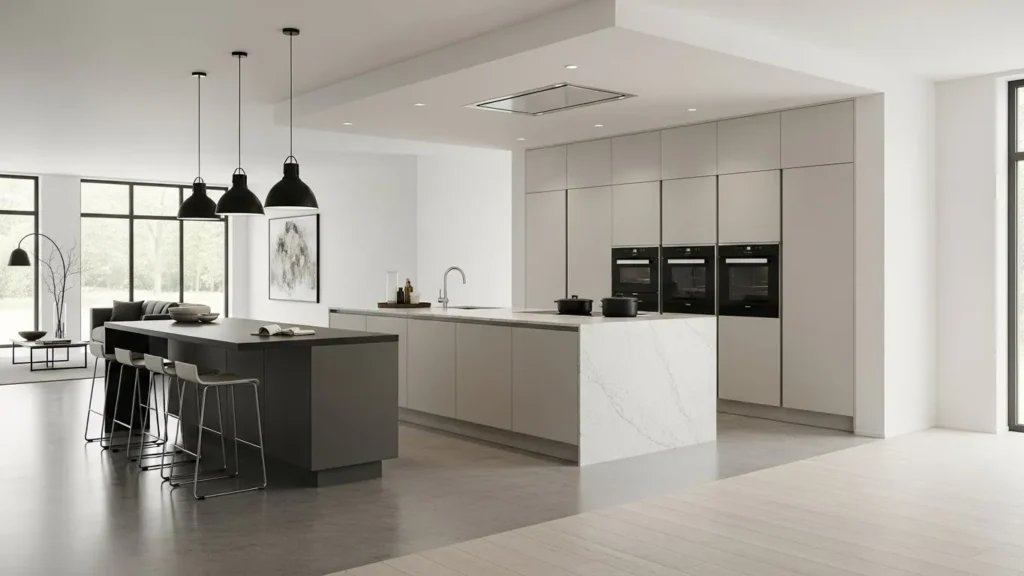
Cabinet colors echo furniture tones, backsplash textures match nearby fabrics, and finishes repeat across rooms. This creates visual flow and reduces the sense of separation without removing distinction.
#16.Smart Ventilation Solutions
Cooking smells spreading through open spaces is a major concern. Modern remodels address this with powerful but discreet ventilation systems.

Ceiling-integrated hoods, downdraft systems, and quiet motors keep air clean without dominating the design. Good ventilation protects comfort without sacrificing openness.
#17.Functional Traffic Flow Design
Open kitchens must handle multiple people moving through the space. Poor traffic planning is one of the most expensive remodel mistakes.

Successful layouts separate prep zones from walkways and avoid forcing guests through work areas. Thoughtful spacing ensures the kitchen remains usable during both quiet mornings and busy gatherings.
#18.Textured Backsplashes for Depth
Flat surfaces can make open kitchens feel bland. In 2026, textured backsplashes add depth without visual chaos.
Subtle variations in tile shape, grout depth, or material finish catch light softly and add interest from a distance. This works especially well when the kitchen is visible from multiple angles.
#19.Connection to Outdoor Living
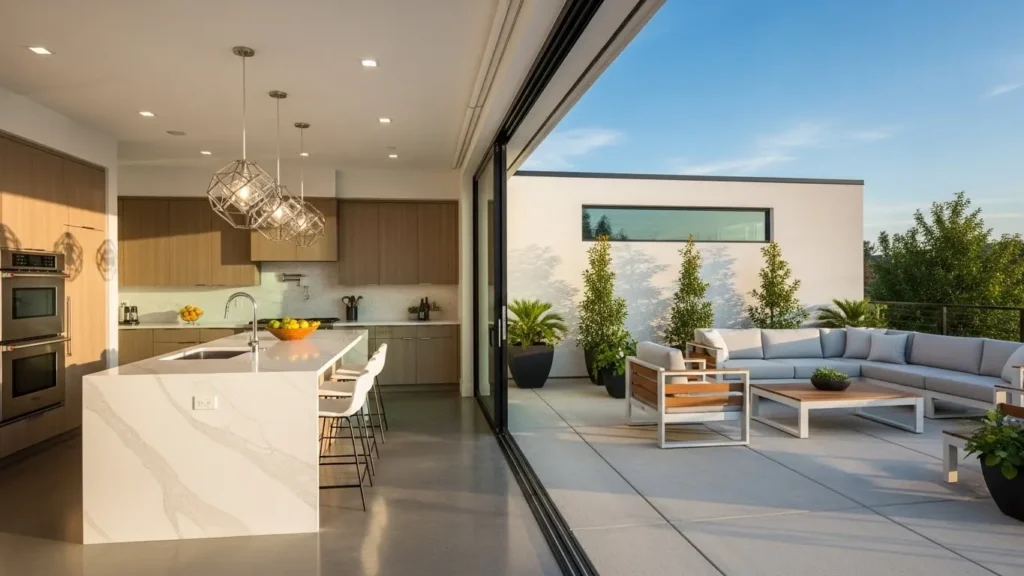
Homes now extend outward, and open kitchens often connect directly to patios or outdoor dining areas. Large sliding doors or folding glass walls create continuity between spaces.
This concept enhances entertaining and everyday enjoyment, especially in mild climates. It also improves airflow and natural light when weather allows.
#20.Minimal Hardware and Clean Lines
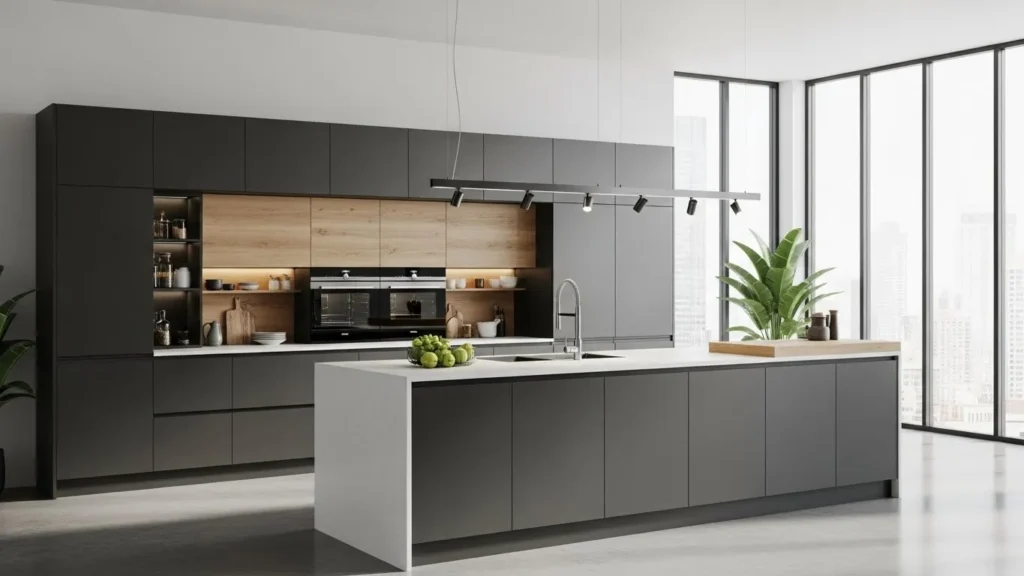
Simple hardware choices help open kitchens blend better with surrounding rooms. In many remodels, handles are integrated or nearly invisible.
The result is a smoother visual experience where the kitchen doesn’t overpower adjacent spaces. Clean lines also reduce visual fatigue over time.
#21.Built-In Seating Solutions
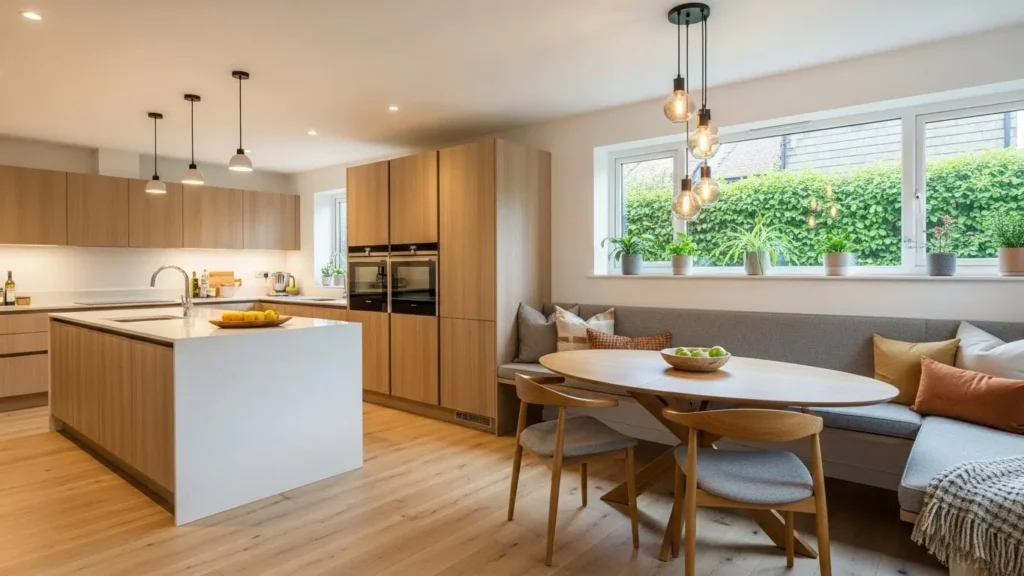
Instead of bulky furniture, built-in benches or banquette seating are becoming popular near open kitchens. These solutions save space and create cozy zones.

They work particularly well in family homes where flexible seating is needed. Built-ins also maintain a cleaner look than loose chairs in open layouts.
#22.Personalized Storage Planning
Cookie-cutter storage doesn’t work anymore. Homeowners now plan cabinetry based on how they actually cook and live.

From custom drawer inserts to dedicated snack zones, storage is tailored to daily habits. This makes open kitchens easier to keep organized and pleasant to look at.
#23.Subtle Statement Pieces
Rather than multiple bold elements, 2026 kitchens often feature one carefully chosen statement, such as lighting, stone, or cabinetry color.
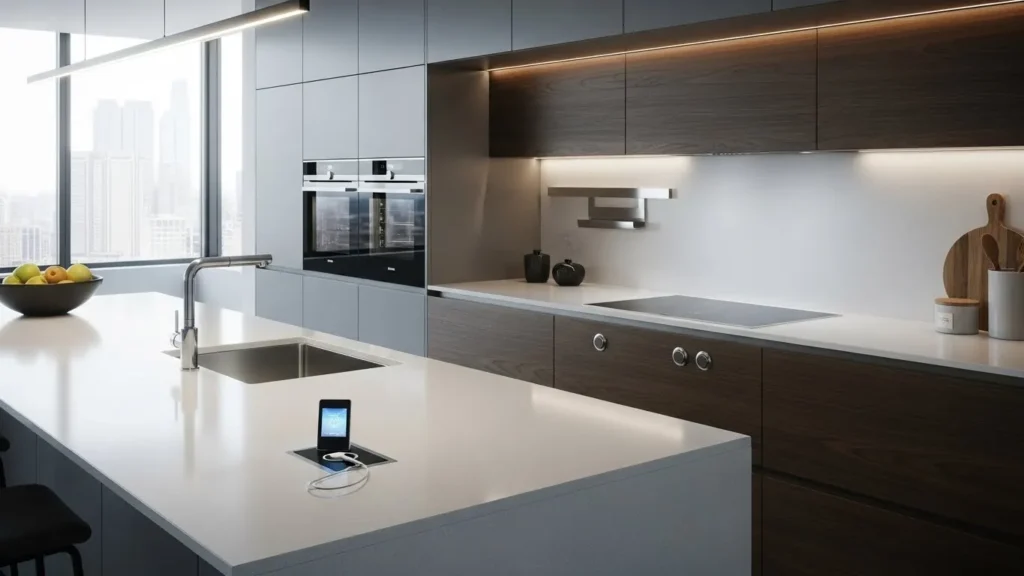
This creates focus without overwhelming the open layout. The surrounding design stays calm so the statement element stands out naturally.
#24.Technology That Blends In
Smart kitchens are here, but visible technology is not. Touchless faucets, hidden charging stations, and app-controlled appliances are integrated quietly.

The kitchen feels modern without turning into a gadget showcase, which is essential in open-plan living environments.
#25.Future-Proof Open Layout Planning
Finally, the best remodels plan for change. Designs consider aging in place, evolving family needs, and future resale.

Clear walkways, adaptable storage, and flexible layouts ensure the kitchen remains functional years down the line. This long-term thinking separates truly successful remodels from short-lived trends.