
1. Exposed Wood Ceiling Beams
Heavy wood beams instantly create Tudor character. In historic homes, beams were structural. Today, they can be added, but they must look authentic. Thick timber with visible grain works best. Avoid thin, hollow beams that feel decorative.
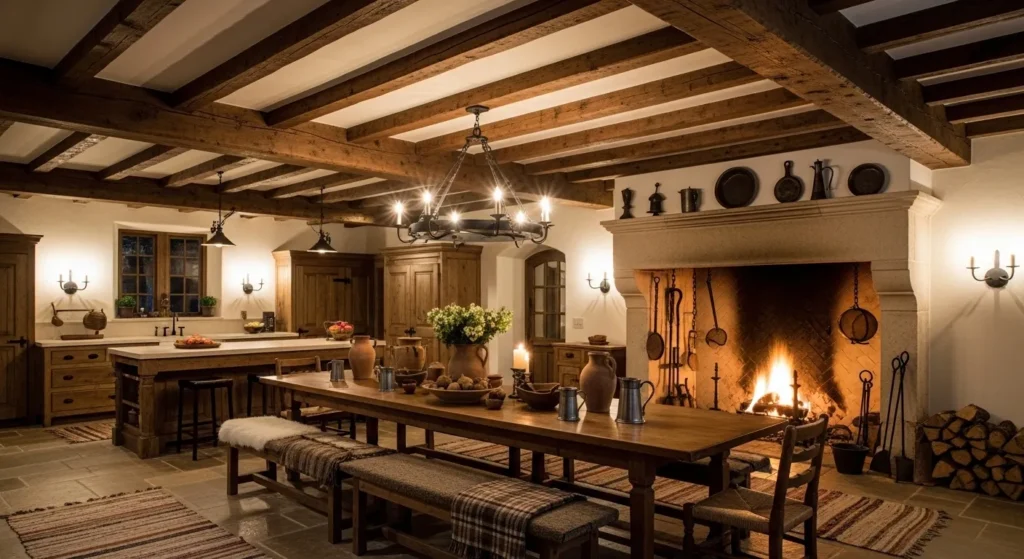
The contrast between dark wood beams and lighter plaster ceilings creates depth and warmth.
2. Natural Stone or Brick Walls
Stone or brick brings age into the kitchen. A stone accent wall behind the range or a brick backsplash adds texture and weight. Choose materials with natural variation in tone. Uniform, flat finishes do not look historic.
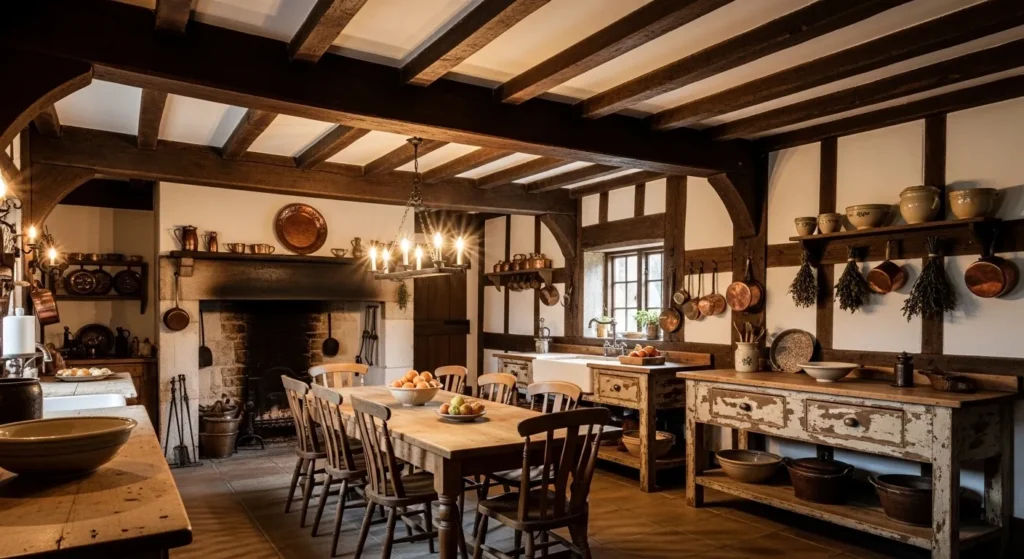
If the stone feels too heavy, a soft limewash can tone it down while keeping the texture.
3. Dark Wood Cabinetry
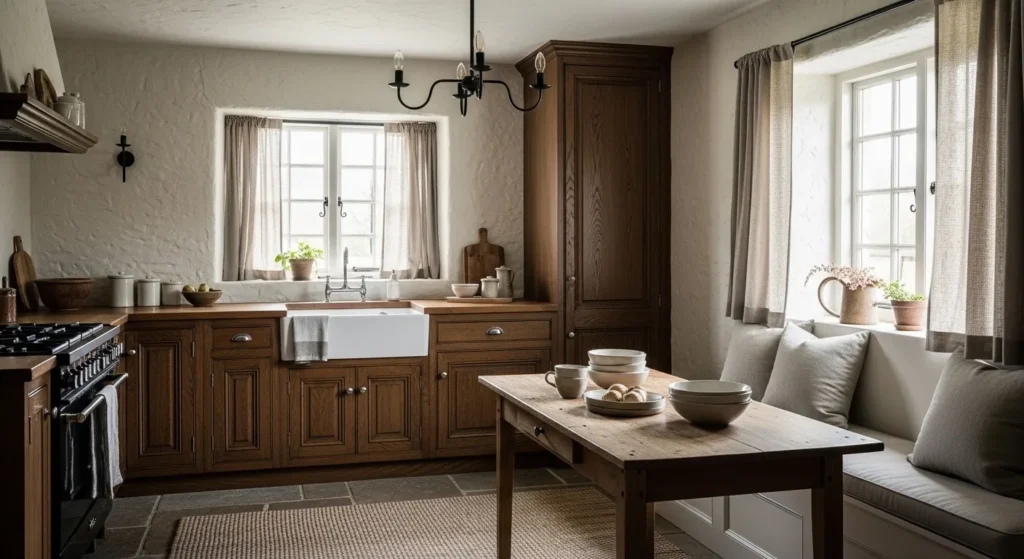
Oak cabinetry is traditional in Tudor kitchens. The grain should be visible and the finish should not be overly glossy. Raised panel doors and subtle detailing feel more authentic than flat modern fronts.
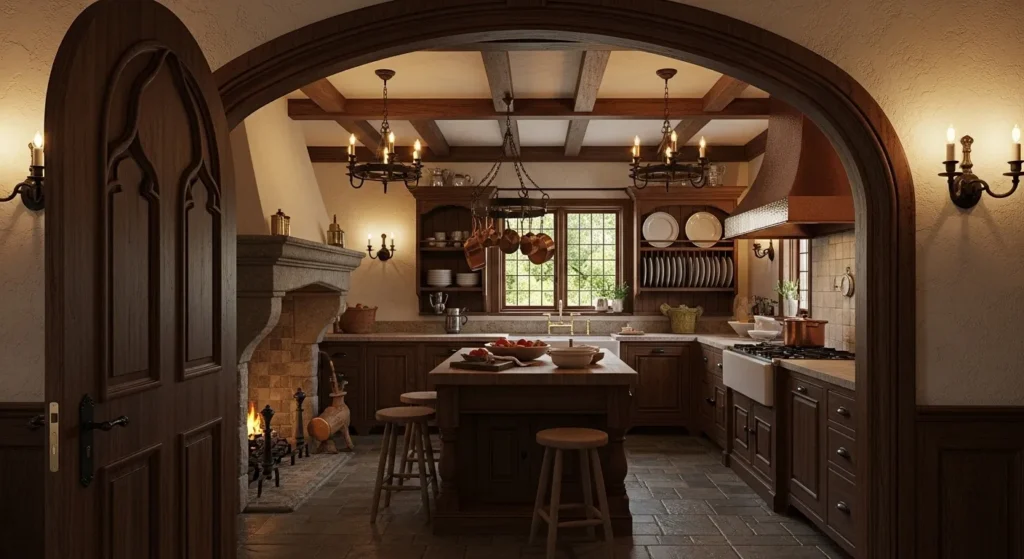
If an entire dark kitchen feels overwhelming, balance it with lighter walls or stone counters.
4. Arched Doorways
Arches soften the space and add historic charm. A rounded kitchen entrance or an arched niche for open shelving creates instant character. Even small architectural curves can change the feeling of a room.
5. Leaded Glass Details
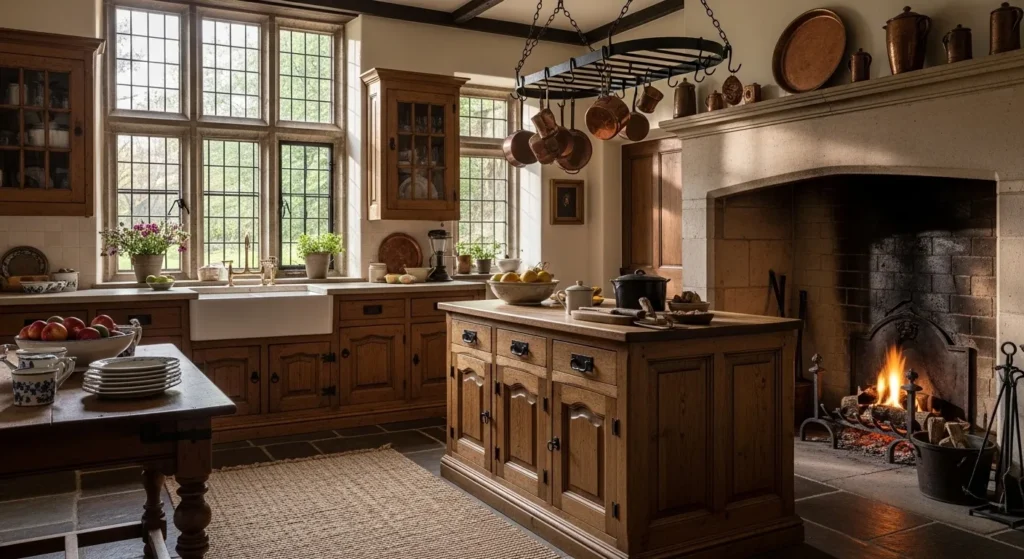
Traditional Tudor homes often featured small-pane windows with leaded glass. If replacing windows is not possible, consider leaded inserts in cabinet doors or pantry doors.
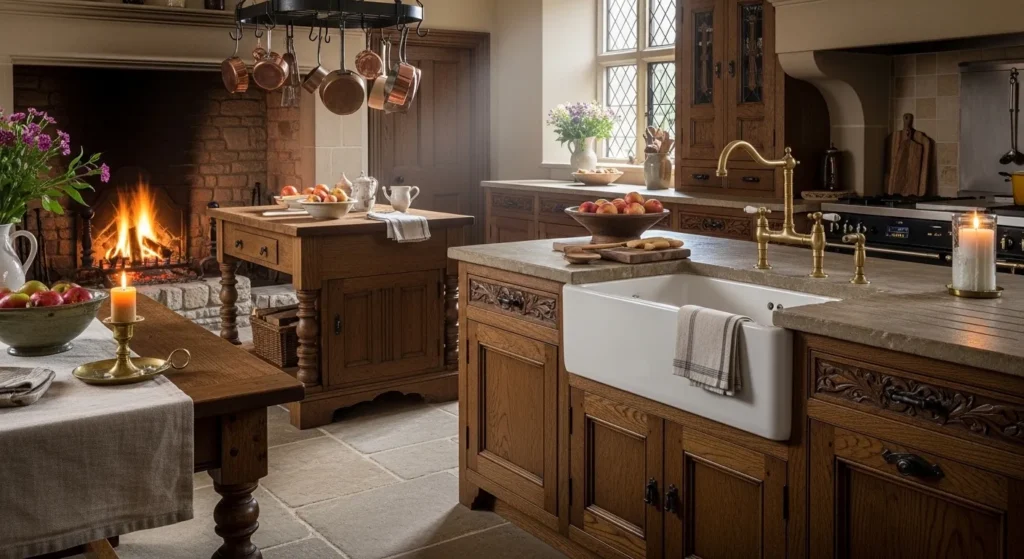
These details add texture and catch light in a beautiful way.
6. Warm, Earthy Colors
Tudor kitchens rely on warm neutrals. Think soft cream, warm beige, muted sage green, deep brown, and gentle gray. Avoid bright white or cool blue tones.
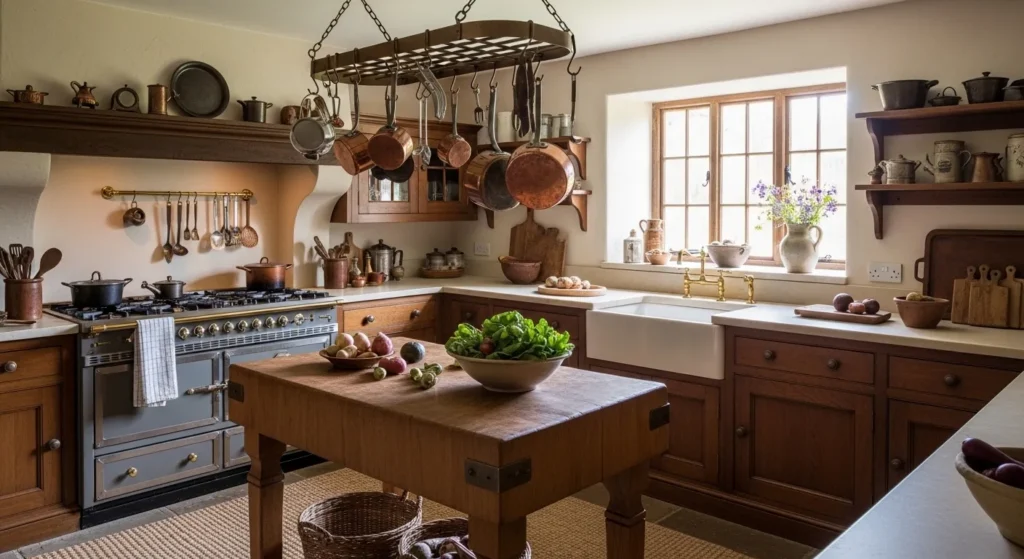
The goal is comfort. The color palette should feel grounded and timeless.
7. Farmhouse Sink
A deep apron-front sink fits naturally in a Tudor kitchen. Fireclay or cast iron models work especially well. Pair the sink with aged brass or oil-rubbed bronze fixtures.

This combination feels sturdy and practical, not trendy.
8. Soapstone or Butcher Block Countertops
Honed stone or thick butcher block counters add authenticity. Soapstone is particularly suitable because it develops character over time.
Highly polished, shiny surfaces do not fit the Tudor aesthetic.
9. Statement Range Hood
The cooking area should feel substantial. A custom wood or stone range hood adds presence. It should look built into the architecture, not attached as an afterthought.
This is often the visual anchor of the entire kitchen.
10. Built-In Breakfast Nook
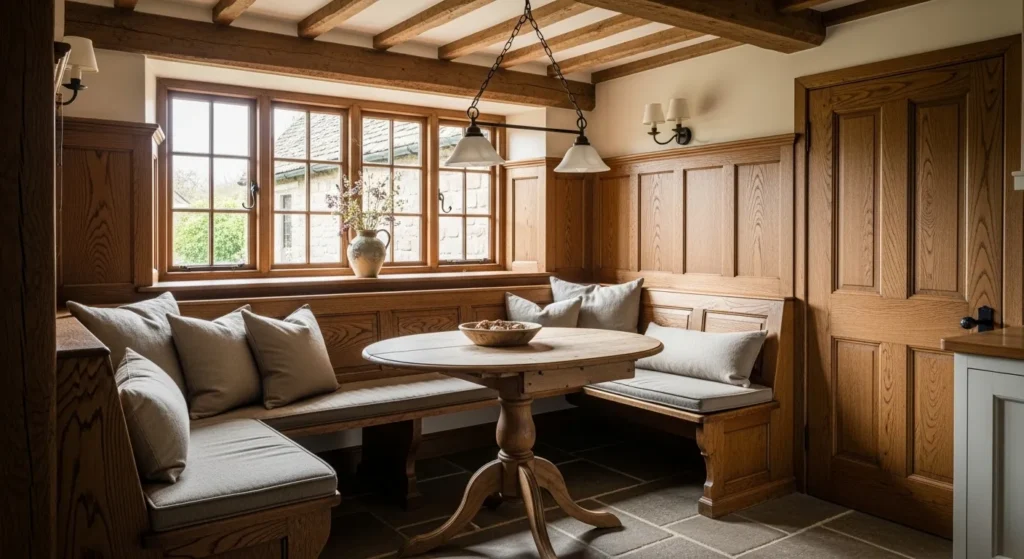
A cozy corner bench near a window makes the kitchen feel lived in. Add simple cushions in neutral fabrics.

Tudor kitchens are gathering spaces. They are meant to feel intimate and welcoming.
11. Wrought Iron Hardware
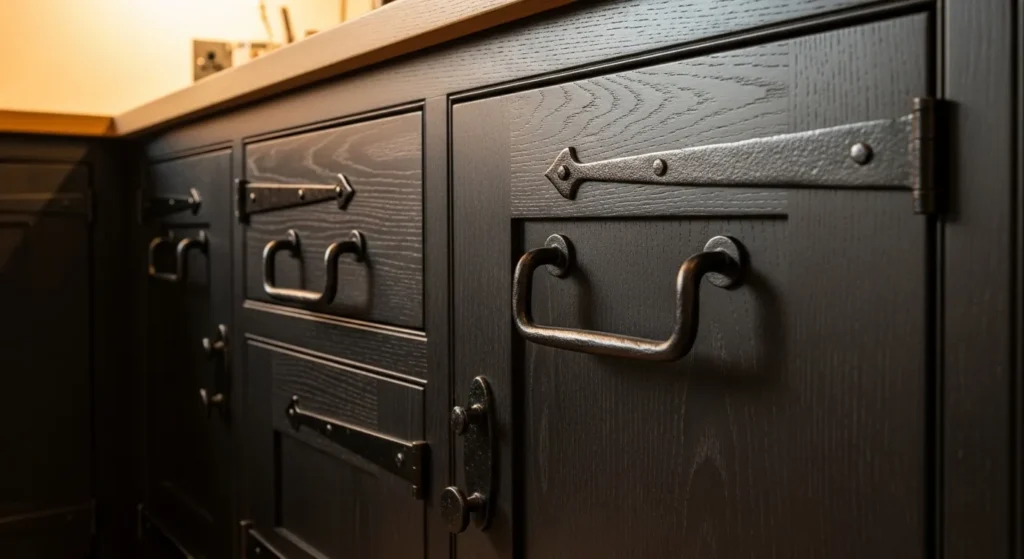
Cabinet pulls, hinges, and lighting in matte black or aged iron reinforce the style. The finish should look slightly worn, not polished and shiny.

These small details support the overall historic look.
12. Open Wood Shelving
Thick wooden shelves display pottery, dishes, and copper cookware. Keep styling simple. Everyday items work best.

The shelves should feel functional, not decorative.
13. Textured Plaster Walls
Perfectly smooth walls feel modern. Slight texture in plaster creates warmth and depth. Lime or clay finishes add a handcrafted feel that fits Tudor history.

14. Wide Plank Wood Floors
Wood floors with visible grain and a matte finish ground the space. Avoid high-gloss finishes. The floor should look durable and slightly aged.

15. Decorative Wood Corbels
Simple wood corbels under shelves or a range hood add architectural interest. They should feel sturdy, not overly carved or ornate.

16. Antique-Style Furniture
A solid wood table or vintage worktable can replace a standard island. Real wood with signs of wear brings character that new pieces often lack.

17. Layered Warm Lighting
Tudor kitchens should not feel harshly lit. Use warm bulbs and layer lighting with sconces, pendants, and under-cabinet lights.
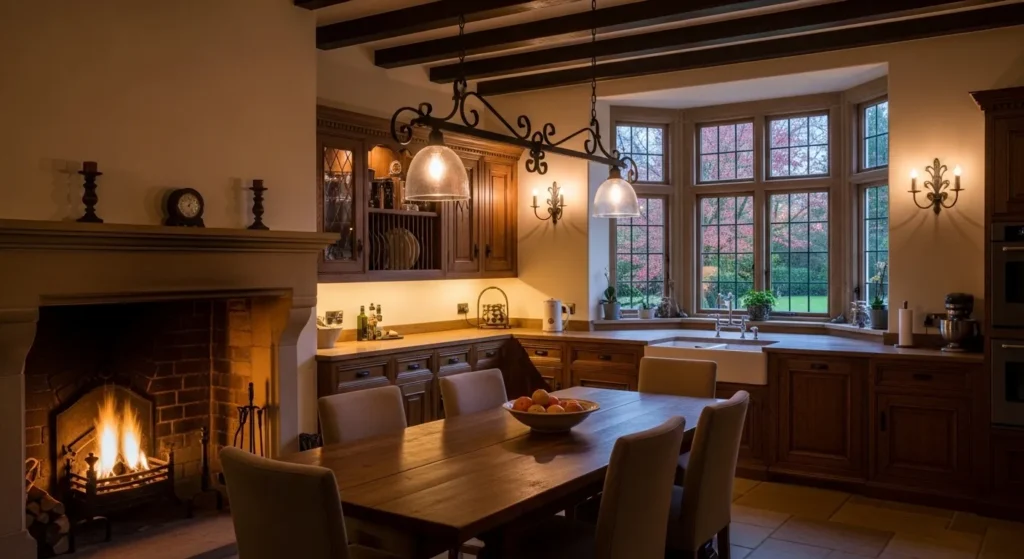
Soft lighting enhances the cozy atmosphere.
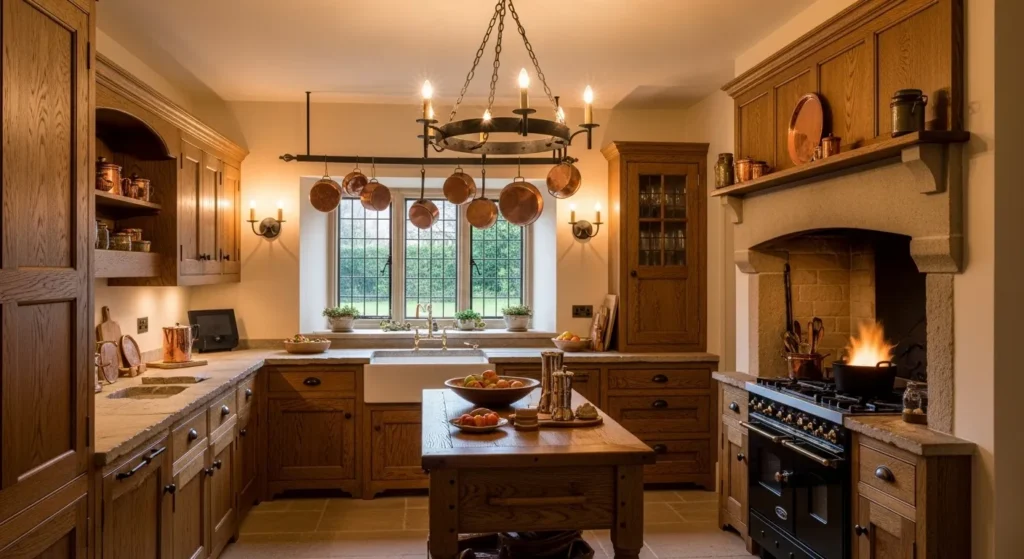
18. Paneled Cabinet Ends
Cabinet sides with panel details make the kitchen feel like furniture rather than built-in boxes. This small upgrade makes a noticeable difference.
19. Muted Tile Backsplash
If using tile, choose handmade or slightly irregular tiles in soft tones. Cream, beige, or muted green works well.
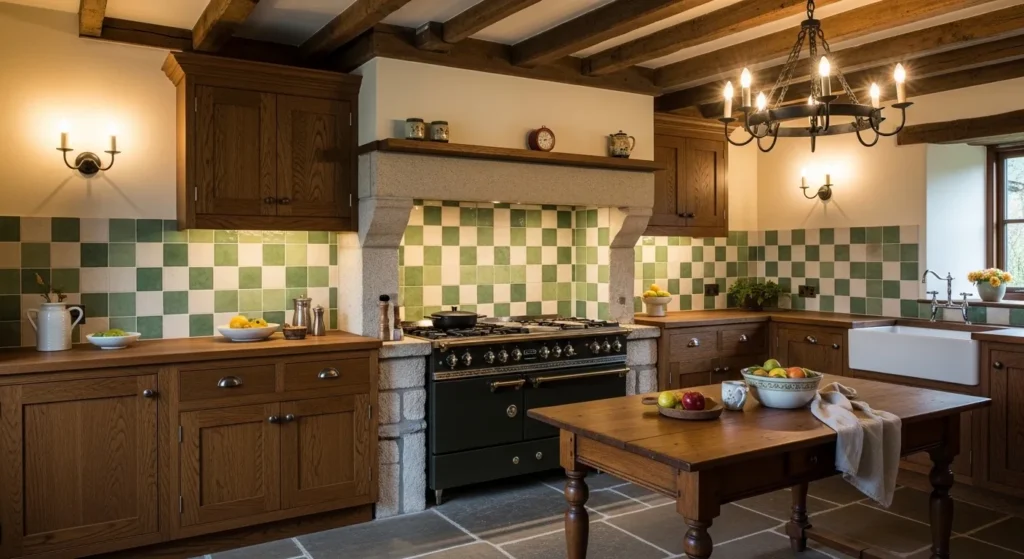
Bold patterns or glossy finishes feel out of place.
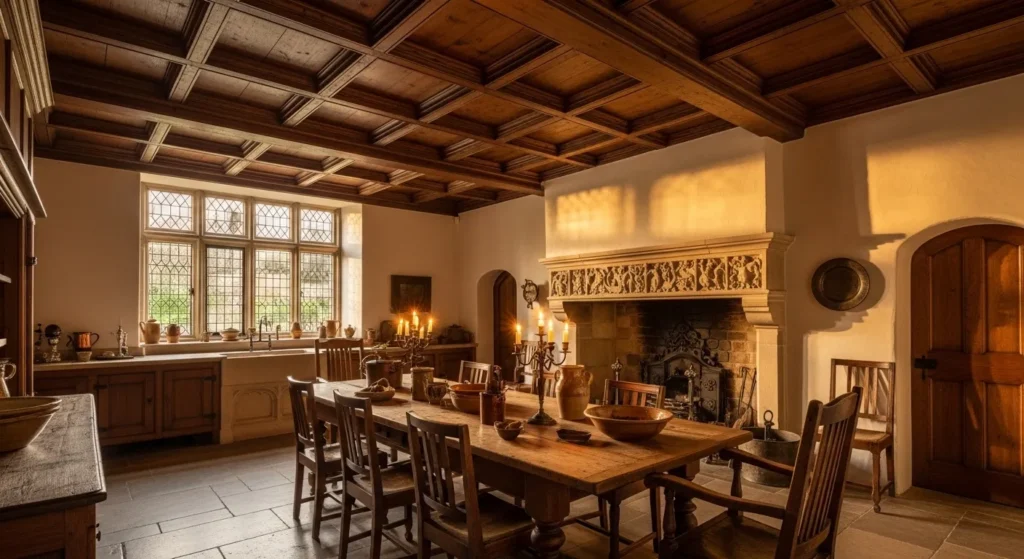
20. Ceiling Details
Beyond beams, consider wood trim or subtle coffered ceilings. Tudor design pays attention to every surface, including overhead.
21. Natural Textiles
Use linen curtains, woven rugs, and simple seat cushions. Natural fabrics add comfort without overpowering the space.
22. Fireplace or Hearth Element
A small fireplace or decorative hearth anchors the room. Even if non-functional, it brings strong historic presence.

In traditional Tudor homes, the hearth was the heart of the house. Bringing that element into the kitchen connects the space to its roots.